
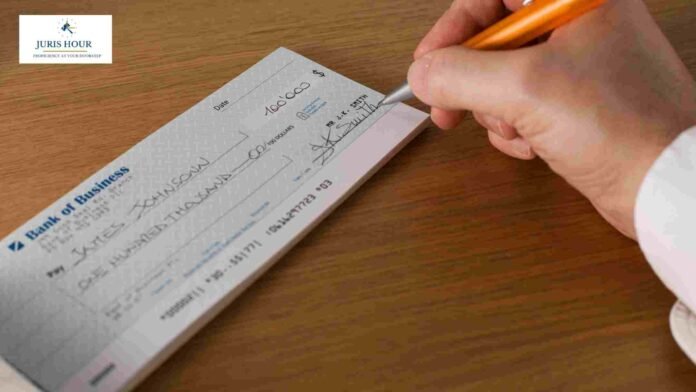
The Punjab and Haryana High Court has refused to quash criminal proceedings initiated under Section 138 of the Negotiable Instruments Act, 1881, holding that disputed questions relating to security cheques, defective goods, and alleged absence of liability cannot be adjudicated at the pre-trial stage while exercising inherent powers under Section 482 of the Code of Criminal Procedure.
The bench of Justice Manisha Batra, while dismissing a petition filed by Aarti Trehan and another, reiterated that once issuance and signatures on cheques are admitted, statutory presumptions under Sections 118 and 139 of the NI Act come into operation, and the defence that cheques were issued merely as “security” must be tested during trial.
The case arose out of a criminal complaint filed by M/s Super Oils, a partnership firm engaged in the supply of industrial oils and lubricants. The complainant alleged that Aarti Trehan, proprietor of the accused firm, regularly purchased goods on credit and was liable to make prompt payments with interest at 18% per annum.
According to the complaint, after reconciliation of accounts, a sum of Rs. 2,11,073 was outstanding as on November 1, 2022. To discharge this liability, the accused issued two cheques amounting to Rs. 2,09,991, which were subsequently dishonoured with the remark “Payment stopped by drawer.” Despite service of a statutory legal notice, payment was not made, leading to the filing of a complaint under Section 138 NI Act.
The Judicial Magistrate First Class, Ludhiana, after recording preliminary evidence, summoned the accused vide order dated 18 March 2023.
Challenging the summoning order and the complaint, the petitioners contended that the cheques were issued only as security, not towards discharge of any legally enforceable debt. The last consignment of goods supplied by the complainant was defective and substandard, and the matter was pending reconciliation. The complainant misused the security cheques as a counterblast to a civil suit already filed by the petitioners. Payments aggregating to Rs. 7 lakhs had already been made, leaving no subsisting liability. There was a mismatch between the alleged liability and the cheque amount, casting doubt on the complainant’s version.
On these grounds, it was argued that continuation of criminal proceedings amounted to an abuse of the process of law.
Rejecting the submissions, the High Court held that the scope of interference under Section 482 CrPC is extremely limited and does not permit appreciation of evidence or examination of probable defences at the summoning stage.
The Court observed that once the accused admits issuance and signatures on the cheques, a presumption of legally enforceable debt arises, and the burden shifts to the accused to rebut the same during trial.
Addressing the argument that the cheques were issued as security, the Court categorically held that “a security cheque is an integral part of a commercial transaction and can legally be utilised towards discharge of liability.”
The Court clarified that the defence of “security cheque” does not, by itself, nullify proceedings under Section 138 NI Act and must be substantiated through evidence at trial.
The High Court further noted that the Magistrate had passed the summoning order after due consideration of preliminary evidence. The order reflected a possible and plausible view, warranting no interference. Disputed factual issues such as defective goods, reconciliation of accounts, and quantum of liability cannot be adjudicated under Section 482 CrPC.
The Court cautioned that quashing proceedings at a nascent stage would prematurely terminate the criminal process and deprive the complainant of the opportunity to prove its case.
The High Court dismissed the petition and upheld the summoning order. However, it clarified that the observations made in the judgment would not prejudice the merits of the case during trial.
Case Details
Case Title: Aarti Trehan and another Versus M/s Super Oils
Case No.: CRM-M No.32093 of 2023
Date: 30.01.2026
Counsel For Petitioner: Manuj Nagrath, Advocate
Counsel For Respondent: Ankur Ghai, Advocate
Read More: Mechanical GST Portal Notices Waste Judicial Time, Lead to Avoidable Litigation: Madras High Court

