
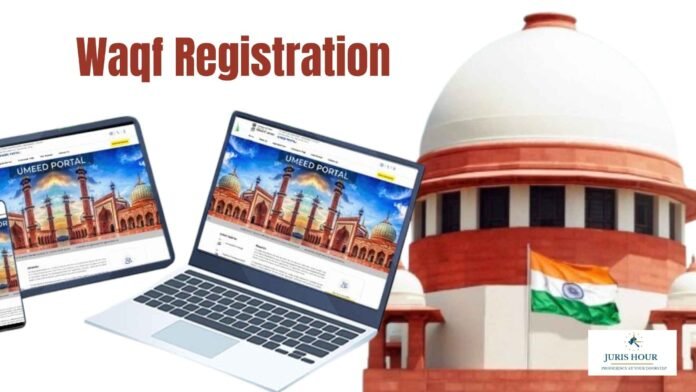
“Approach Tribunal. Let them decide case-to-case” — Supreme Court declines to intervene
The Supreme Court on Monday refused to extend the deadline for registration of waqf properties on the Union government’s newly introduced UMEED Portal, observing that the Waqf Act, 1995 itself provides a specific statutory remedy, and parties must utilise that mechanism instead of seeking blanket directions from the Court.
A Bench of the Supreme Court firmly declined to entertain pleas seeking an across-the-board extension of the registration deadline, remarking that “the statute provides for the remedy—avail it. Why should we interfere?” The Court clarified that it cannot act as a substitute for legislative intent nor issue directions that would effectively override the statutory framework.
No Judicial Extension of Timeline
Senior officials and representatives from several waqf institutions had sought an extension of the deadline prescribed for uploading and registering waqf properties on the UMEED portal, citing logistical and administrative challenges across States. However, the Supreme Court refused to intervene, stressing its limited role in matters where the Act already lays down the procedure.
The Court categorically stated:
“We cannot rewrite the Waqf Act. When the law provides a remedy, those affected must pursue it before the appropriate authority.”
“Approach the Tribunal”: SG Tushar Mehta’s Submission Accepted
During the hearing, Solicitor General Tushar Mehta opposed the plea for blanket extension and argued that each muttawali (waqf manager) who faced difficulty or dispute should approach the Waqf Tribunal individually.
The SG submitted:
“Let each mutawwali go to the Tribunal. The Act provides a remedy. This Court need not extend the deadline wholesale.”
The Bench agreed with this position, observing that the Waqf Tribunal—established under the Act to adjudicate waqf-related disputes—is the competent forum to examine individual grievances, factual disputes, and special circumstances.
Tribunals to Examine Case-Specific Hardship
The Court emphasised that instead of granting general relief, the more appropriate route is for muttawalis or institutions facing genuine difficulty to file applications before the Tribunal, which is empowered to consider:
- Delay caused due to administrative or technical difficulties
- Disputes regarding property ownership or classification
- Issues arising from incomplete or inaccurate historical records
- State-specific challenges in digitisation of waqf inventories
The Supreme Court reiterated that Tribunals are better equipped to conduct factual assessments, which the Court cannot do in a writ jurisdiction.
Background: Mandatory Digitisation Through UMEED Portal
The UMEED portal is part of a digitisation and transparency initiative aimed at:
- Creating a unified national database of waqf properties
- Preventing encroachment and misuse
- Ensuring centralised audit and monitoring
- Standardising documentation across States
The Central Government has maintained that deadlines are crucial for the success of the digitisation drive, which has already been delayed in several regions.

