
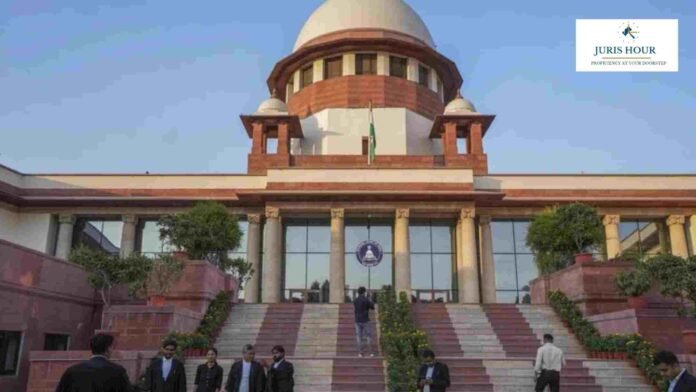
The Supreme Court of India on Thursday imposed a sweeping nationwide ban on a new NCERT Class 8 Social Science textbook over a controversial chapter titled “The Role of the Judiciary in Our Society,” which included a section on “corruption in the judiciary.”
Taking suo motu cognizance of the matter, a three-judge bench comprising Chief Justice of India Surya Kant, Justice Joymalya Bagchi, and Justice Vipul M. Pancholi issued show-cause notices to the Secretary of School Education (Ministry of Education) and NCERT Director Dr. Dinesh Prasad Saklani, asking why contempt of court proceedings should not be initiated against them.
“Heads Must Roll”: SC Slams NCERT
The bench described the inclusion of such content in a foundational school textbook as a “deep-rooted and well-orchestrated conspiracy” to malign the dignity of the judicial institution. CJI Surya Kant expressed severe displeasure, stating, “Heads must roll. I will not allow anyone on earth to taint the integrity of the institution and defame it.”
The Court observed that the chapter portrayed the judiciary as a corrupt institution without mentioning its transformative role in upholding constitutional morality and legal aid. The bench was particularly irked by the NCERT Director’s initial response to the Supreme Court’s inquiry, which reportedly defended the content. The CJI termed this response “contemptuous and reckless.”
Background
The controversy erupted on February 24 after media reports highlighted that the new Class 8 syllabus listed “corruption at various levels of the judiciary” as a major challenge facing the country. Senior advocates Kapil Sibal and Dr. Abhishek Manu Singhvi flagged the issue in court, leading to the suo motu intervention.
The Court clarified that while it does not intend to stifle legitimate criticism of public institutions, the “selective and lopsided” portrayal in school books appeared to be a calculated move to undermine institutional authority.
The matter is scheduled for further hearing on March 11, 2026, by which time the authorities must file a compliance report regarding the seizure of the books.
Key Directives Issued by the Court:
A complete prohibition on the publication, re-printing, and digital dissemination of the textbook titled Exploring Society: India and Beyond, First Edition (Part II).
The NCERT, in coordination with Union and State education departments, must ensure all physical and digital copies in circulation—whether in schools, retail outlets, or storage—are seized and removed from public access immediately.
No instructions or lessons are to be imparted to students based on the offending book.
The NCERT Director has been ordered to furnish the names, qualifications, and credentials of every member of the committee involved in drafting and approving the chapter, along with the minutes of the meetings where it was finalized.
Apology Deemed Insufficient
During the proceedings, Solicitor General Tushar Mehta, appearing for the Union Government, tendered an unconditional apology and informed the Court that the NCERT had withdrawn the textbook. He admitted that the content was “inappropriate” and mentioned another problematic section titled “Justice Delayed is Justice Denied,” which contained inaccurate backlog figures.
However, the CJI noted that the official press release issued by the NCERT lacked a “single word of apology” and instead appeared to justify the content. “They have fired a gunshot, and the judiciary is bleeding today,” the CJI remarked, emphasizing that exposing “impressionable young minds” to such a biased narrative could cause irreversible damage to the public’s faith in the judicial system.
Read More: Reversal Of CENVAT Credit Along With Interest Amounts To Non-Availment Of Credit: CESTAT

