
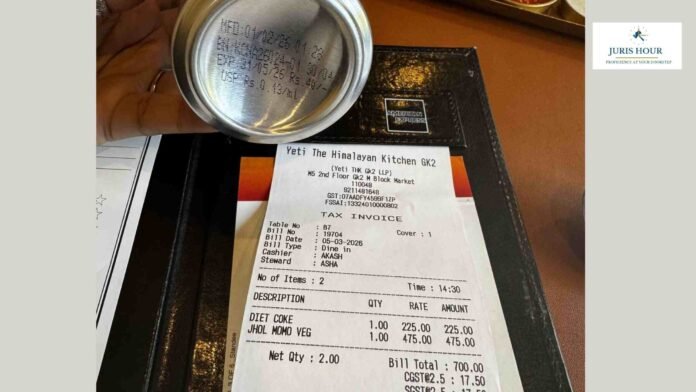
Instances of restaurants and hospitality establishments charging prices significantly higher than the printed Maximum Retail Price (MRP) on packaged products have once again brought consumer protection issues into focus.
In a recent scenario that reflects a broader concern, a customer was billed several times more than the printed MRP for a sealed packaged beverage served at a restaurant. The product carried a clearly printed MRP on its packaging, yet the amount charged in the bill was substantially higher. Such situations have sparked discussions on whether businesses are complying with consumer pricing regulations when selling packaged commodities.
Under Indian law, the MRP printed on packaged goods represents the maximum price that can legally be charged to a consumer. The framework, primarily governed by the Consumer Protection Act, 2019 and the Legal Metrology (Packaged Commodities) Rules, aims to prevent arbitrary pricing and protect consumers from overcharging.
Legal experts note that charging more than the printed MRP for a sealed packaged commodity may raise questions about unfair trade practices. Consumers who believe they have been overcharged have the option of raising complaints before the District Consumer Disputes Redressal Commission or approaching the relevant consumer authorities.
The issue becomes particularly relevant in restaurants, cinemas, hotels, and similar establishments where packaged beverages and food items are often sold alongside prepared meals. While businesses may price freshly prepared items as they choose, packaged products carrying a printed MRP are generally expected to adhere to the maximum price indicated on the packaging.
Consumer rights advocates emphasize that such cases highlight the importance of transparency in pricing and the need for consumers to remain aware of their legal rights. They also stress that businesses must ensure compliance with pricing regulations to maintain trust and fairness in commercial transactions.
The broader debate continues to centre on balancing hospitality service models with consumer protection laws, while ensuring that the legal safeguards surrounding MRP are properly implemented in everyday transactions.

