
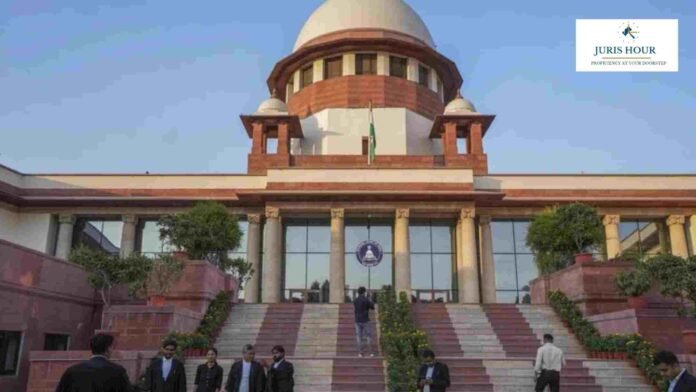
The Supreme Court has set aside a High Court order directing a de novo trial in a nearly two-decade-old criminal case and held that defects in framing or signing of charges—such as an unsigned charge—constitute curable irregularities and do not invalidate a trial unless they result in a failure of justice.
The bench of Justice Ahsanuddin Amanullah and Justice R. Mahadevan emphasized that the purpose of framing charges is to ensure that the accused clearly understands the allegations and can defend themselves effectively. It noted that the accused had actively participated in the trial for over a decade. They had extensively cross-examined prosecution witnesses. No objection regarding the alleged defect in charges was raised for years.
The case arose from a 2007 incident in Aligarh involving allegations of unlawful assembly, attempt to murder, and murder under the IPC. After investigation, charges were framed in 2009 and the trial proceeded for over 14 years, during which multiple prosecution witnesses were examined and cross-examined.
However, during the final stages, it was discovered that the formal charge framed earlier had remained unsigned due to a procedural lapse. The trial court rectified this in September 2024 by framing charges afresh but allowed the trial to continue from the existing stage, relying on previously recorded evidence.
The accused challenged this before the High Court, which ordered a fresh trial from the beginning. This order was subsequently challenged before the Supreme Court.
The central question before the Court was whether defects in framing or signing charges amount to a fatal illegality requiring a retrial, or merely a procedural irregularity that can be cured without restarting proceedings.
The Court held that these factors clearly demonstrated that the accused were fully aware of the case against them and suffered no prejudice.
Relying on established principles under Sections 215 and 464 of the CrPC, the Court reiterated that mere errors or omissions in charges do not vitiate a trial. A retrial is justified only if there is a “failure of justice.”
The Court strongly disapproved the High Court’s direction for a fresh trial, observing that such orders should be issued only in exceptional circumstances. The trial had reached an advanced stage. Key prosecution witnesses had already died. Restarting the trial would severely prejudice the prosecution.
The Court warned that allowing retrials on technical grounds would defeat the purpose of criminal justice and encourage delays.
Allowing the appeal, the Supreme Court set aside the High Court’s order directing a de novo trial, restored the trial court’s order permitting continuation from the existing stage and directed expeditious completion of the trial.
Case Details
Case Title: Sandeep Yadav Versus Satish & Others
Citation: JURISHOUR-512-SC-2026
Case No.: Criminal Appeal No.1617 Of 2026
Date: 25/03/2026
Read More: GST Applies to Medical Associations: Membership Services and Subscriptions Held Taxable: AAR

