
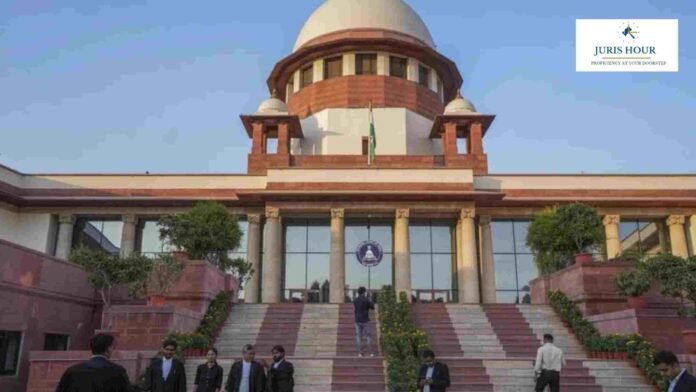
The Supreme Court has held that disputes cannot be referred to arbitration where the very existence of the arbitration agreement is seriously disputed on allegations of forgery and fabrication.
The Bench of Justice Pamidighantam Sri Narasimha and Justice Alok Aradhe has observed that arbitration, being consent-based, cannot be imposed when the foundational document containing the arbitration clause is under grave doubt.
The dispute traces its origins to a partnership firm constituted in 2005 by Barnali Mukherjee and two others. Rajia Begum later claimed entry into the firm on the basis of an alleged Deed of Admission and Retirement dated April 17, 2007, asserting that the original partners had retired and she had acquired a 50.33% stake in the firm.
Barnali Mukherjee categorically denied the execution of this deed, alleging that the document was forged and fabricated, and further asserted that Rajia Begum had never been inducted as a partner. According to the appellant, the business of the firm was later absorbed into a private limited company, rendering the claims even more untenable.
The controversy intensified when the disputed admission deed surfaced for the first time in 2016—nearly nine years after its purported execution—when Rajia Begum issued a legal notice asserting partnership rights.
The matter witnessed contradictory outcomes before the Calcutta High Court. While one Bench declined to appoint an arbitrator under Section 11, holding that the existence of the arbitration agreement itself was doubtful, another Bench, exercising supervisory jurisdiction under Article 227, directed reference of the civil suit to arbitration under Section 8 of the Act.
This incongruity led both parties to approach the Supreme Court.
The core issue before the Supreme Court was whether disputes can be referred to arbitration or an arbitrator can be appointed when the arbitration agreement itself is alleged to be forged, raising serious allegations of fraud that go to the root of consent.
The Court revisited established jurisprudence on arbitrability in cases involving fraud, reiterating that mere allegations of fraud are not enough to oust arbitration, but where fraud is alleged against the arbitration agreement itself, the dispute falls into the realm of non-arbitrability.
Applying this principle to the facts, the Court noted several circumstances casting serious doubt on the authenticity of the alleged admission deed the alleged retiring partner continued to act as a partner years after the supposed retirement. The disputed document remained absent from all contemporaneous records for nearly a decade. Banking and financial documents consistently reflected the original partners as continuing partners. The claimant herself acted merely as a guarantor, not as a partner, in multiple financial transactions.
The Court also placed weight on an earlier High Court order under Section 9, which had refused interim relief after recording a prima facie finding that the admission deed was doubtful. That order had attained finality after the Supreme Court dismissed the challenge against it.
The Supreme Court strongly cautioned against the misuse of supervisory jurisdiction under Article 227, observing that it does not permit reappreciation of evidence or interference with concurrent findings of fact.
It held that the High Court had exceeded its jurisdiction by overturning well-reasoned orders of the Trial Court and Appellate Court, both of which had refused reference to arbitration due to serious allegations of fraud and non-production of the original document as mandated under Section 8(2) of the Act.
The Supreme Court conclusively held that disputes involving allegations that strike at the very existence of the arbitration agreement are not amenable to arbitration. Appointment of an arbitrator under Section 11 is impermissible where the arbitration agreement itself is under serious doubt. The High Court’s order referring the civil suit to arbitration was unsustainable and was set aside. The High Court’s refusal to appoint an arbitrator was upheld.
As a result, the appeal challenging the refusal to appoint an arbitrator was dismissed, while the appeal opposing reference to arbitration was allowed. No order as to costs was passed.
Case Details
Case Title: Rajia Begum Versus Barnali Mukherjee
Case No.: SLP (C) NO.6013 OF 2021)
Date: 02/02/2026

