
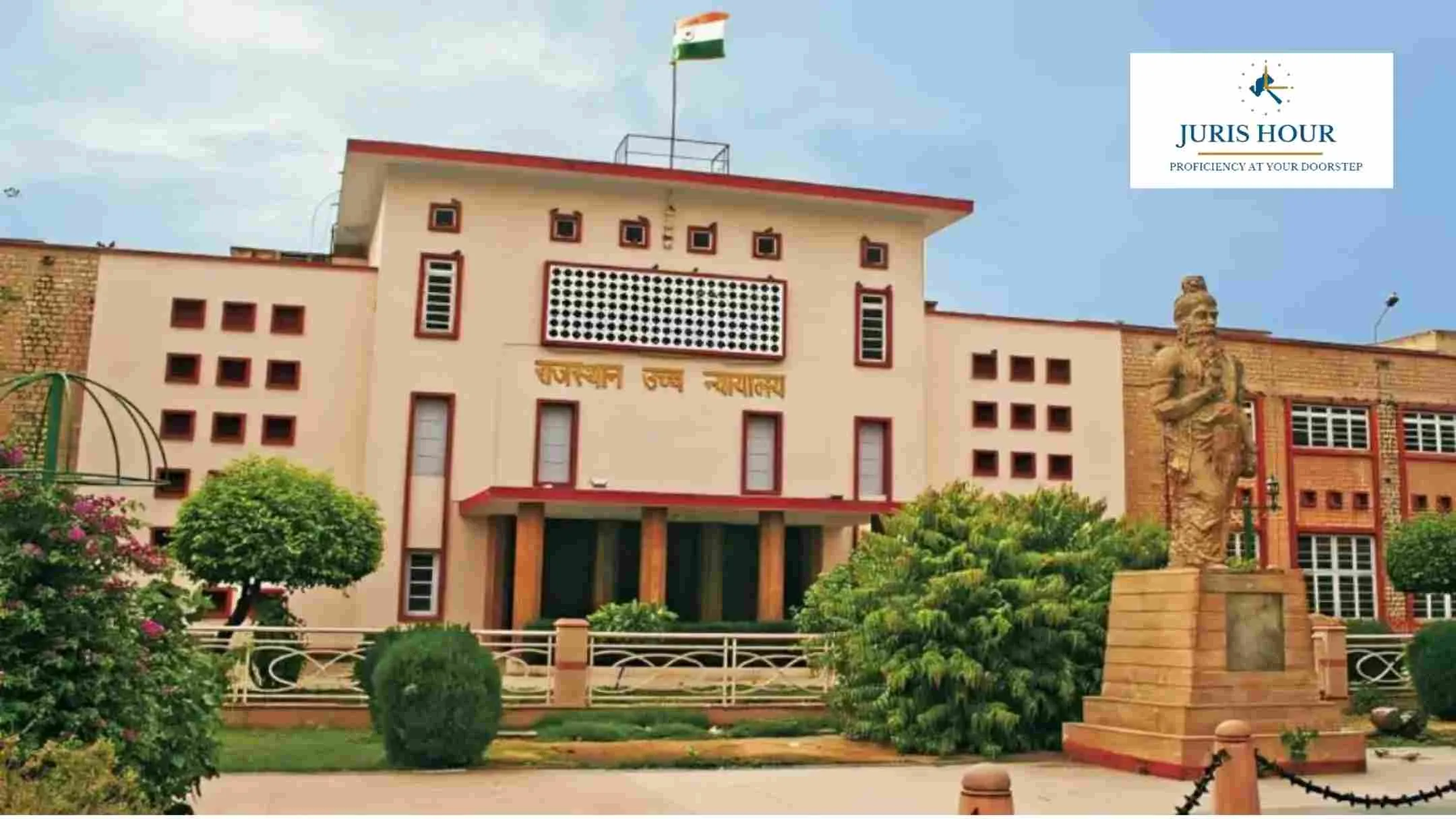
The Rajasthan High Court has dismissed a petition seeking quashing of criminal proceedings under the Drugs and Cosmetics Act, 1940, holding that allegations relating to misbranded and substandard drugs raise triable issues that cannot be adjudicated at the threshold stage.
The bench of Justice Chandra Prakash Shrimali has observed that since the drug was found at the Kota warehouse, part of the cause of action arose within Kota. Relying on judicial precedents, the Court observed that offences relating to manufacture and distribution of substandard drugs are interconnected, and jurisdiction can arise at the place where the product is found or marketed.
The petition was filed by Rakesh Goyal under Section 482 of the Code of Criminal Procedure, seeking quashing of Complaint No. 839771/2018 pending before the Chief Judicial Magistrate, Kota. The complaint alleged violations under the Drugs and Cosmetics Act following the detection of discrepancies in a drug sample during inspection.
The petitioner argued that the issue arose due to a bona fide printing or packaging error, without any criminal intent. It was further contended that the drug was never released into the market and remained under the control of authorities, thereby causing no harm to the public. Additionally, objections were raised regarding lack of territorial jurisdiction and absence of specific averments to invoke vicarious liability.
Buy Now: E-Compilation of Supreme Court Judgements – March 2026
The prosecution opposed the plea, submitting that an inspection conducted on 23 April 2015 at a government drug warehouse in Kota led to seizure and sampling of the drug. The Government Analyst’s report declared the drug as “not of standard quality,” indicating that it did not conform to prescribed standards.
It was further argued that the petitioner had admitted to labeling and packaging errors in replies to show cause notices, thereby establishing misbranding. The prosecution emphasized that such issues involve disputed questions of fact that must be examined during trial.
The Court noted that the Government Analyst’s report clearly indicated that the drug did not match its label claim, bringing it within the ambit of “misbranded” and “not of standard quality” drugs under the Act. The petitioner’s explanation of inadvertent error was found insufficient at this stage, as it required evidentiary examination.
On the issue of vicarious liability, the Court examined the partnership deed and found that the petitioner was actively involved in the day-to-day affairs of the firm. It held that liability under Section 34 of the Act extends to persons who are in charge of and responsible for the conduct of business.
The Court relied on settled principles laid down by the Supreme Court of India that mere designation is not sufficient, but active role and responsibility can attract liability. In the present case, the petitioner’s involvement was evident from the partnership terms and his responses to regulatory notices.
Emphasizing the limited scope of inherent powers under Section 482 Cr.P.C., the Court reiterated that such powers must be exercised sparingly. Where the complaint discloses a prima facie offence, proceedings should not be quashed prematurely.
The Court held that questions such as whether the error was bona fide, whether the drug was distributed, and the extent of the petitioner’s role are matters of evidence that must be decided during trial.
Finding that the material on record disclosed a prima facie case, the High Court dismissed the petition and allowed the trial to proceed. It clarified that its observations were limited to the disposal of the quashing petition and would not affect the merits of the case before the trial court.
Case Details
Case Title: Rakesh Goyal Versus State Of Rajasthan
Citation: JURISHOUR-955-HC-2026(RAJ)
Case No.: S.B. Criminal Miscellaneous (Petition) No. 2123/2023
Date: 25/04/2026
Counsel For Petitioner: Sanjay Kumar Jain
Counsel For Respondent: Vijay Singh Yadav, PP

