
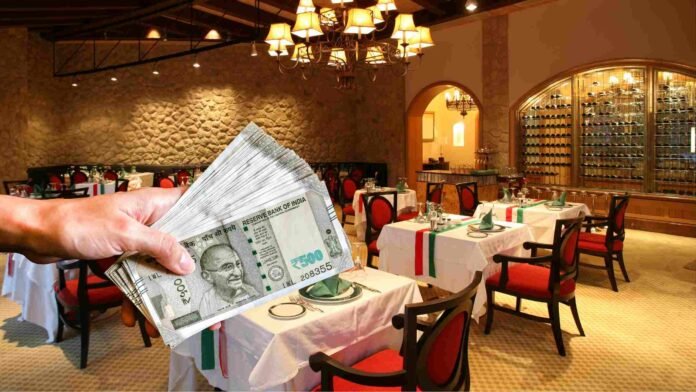
The Central Consumer Protection Authority (CCPA) has taken suo motu action against 27 restaurants across India for mandatorily levying service charges on customers.
The Authority has declared the practice an “unfair trade practice” under Section 2(47) of the Consumer Protection Act, 2019, reinforcing that service charges cannot be imposed by default.
The action comes in the backdrop of the Delhi High Court’s judgment in National Restaurant Association of India v. Union of India, 2025, decided on March 28, 2025. The High Court upheld the validity of the CCPA’s 2022 guidelines regulating service charges in hotels and restaurants and confirmed the Authority’s power to enforce compliance under the Consumer Protection Act, 2019.
Delhi High Court Upholds CCPA’s Stand
In its ruling, the Delhi High Court rejected the challenge mounted by the restaurant industry body and held that the CCPA was well within its statutory powers to issue guidelines to curb unfair trade practices. The Court observed that mandatorily collecting service charges from consumers amounts to an unfair trade practice and violates consumer rights under the Act.
The judgment effectively put to rest the long-standing controversy over whether restaurants could automatically add service charges to food bills.
CCPA Guidelines on Service Charges
The enforcement action is based on the CCPA Guidelines issued on July 4, 2022, aimed at preventing unfair trade practices in the hospitality sector. The key directions under the guidelines are:
- No hotel or restaurant shall add service charge automatically or by default in the food bill.
- Service charge shall not be collected under any other name.
- Consumers must be clearly informed that payment of service charge is voluntary and optional.
- No restriction on entry or denial of service can be imposed if a consumer refuses to pay service charge.
- Service charge cannot be added to the bill and subsequently subjected to GST.
These guidelines were framed to ensure transparency in billing and to prevent coercive practices that place consumers at a disadvantage.
Complaints Trigger Action
The CCPA’s latest crackdown was triggered by complaints received on the National Consumer Helpline (NCH). Consumers submitted invoices showing automatic addition of service charges, despite the clear prohibition under the guidelines.
Subsequent investigations revealed that several restaurants were adding a 10% service charge by default, thereby violating both the Consumer Protection Act and the CCPA guidelines.
Among the establishments found in violation were:
- Café Blue Bottle, Patna
- China Gate Restaurant Pvt. Ltd. (Bora Bora, Mumbai)
Penalties Imposed
On November 13, 2025, the CCPA passed an order against Café Blue Bottle, Patna, directing it to:
- Refund the full service charge amount to the consumer,
- Immediately discontinue the practice of levying service charge by default, and
- Pay a penalty of ₹30,000.
In a separate order dated December 29, 2025, the CCPA proceeded against China Gate Restaurant Pvt. Ltd., Mumbai, and directed it to:
- Refund the service charge amount collected during the hearing,
- Modify its billing software to remove the default service charge feature,
- Pay a penalty of ₹50,000, and
- Maintain an active email ID for consumer grievance redressal, as mandated under the Consumer Protection Act, 2019.
Strong Message to Hospitality Sector
By penalizing violators and mandating structural changes such as billing software modifications, the CCPA has sent a strong message to the hospitality industry that hidden or compulsory charges will not be tolerated.
The Authority’s proactive enforcement underscores that consumer consent is paramount and that service charges, if imposed, must remain purely voluntary. The development marks a significant step in strengthening consumer protection in India’s hospitality sector, particularly in ensuring transparency and fairness in restaurant billing practices.
With the Delhi High Court’s endorsement and active enforcement by the CCPA, restaurants across the country are now under clear legal obligation to comply — or face regulatory consequences.

