
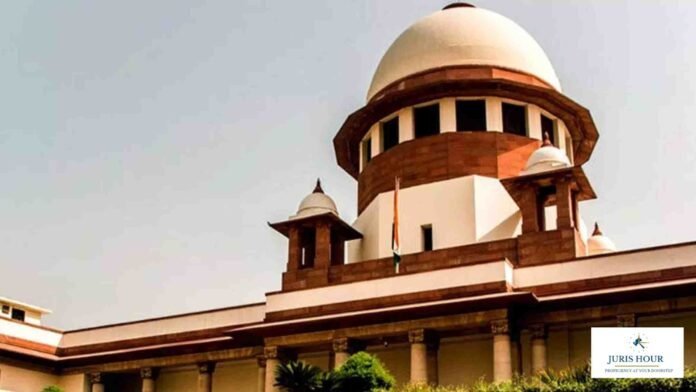
The Supreme Court has upheld the validity of a Will executed by a testator in favour of his sister and ruled that merely excluding natural heirs such as a spouse and children from inheritance cannot by itself be treated as a suspicious circumstance sufficient to invalidate a Will.
The bench of Justice Ujjal Bhuyan and Justice Vijay Bishnoi dismissed the appeal filed by the legal heirs of the deceased and affirmed the concurrent findings of the Trial Court, First Appellate Court and Karnataka High Court.
The dispute arose in relation to agricultural and ancestral properties owned by B. Sheena Nairi, a chartered accountant who possessed substantial immovable properties in Karnataka. In his last Will dated May 15, 1983, he bequeathed the disputed properties to his sister Laxmi Nairthy while cancelling a previously executed power of attorney. Following his death in November 1983, his wife and children sought mutation of the properties in their favour. Years later, Laxmi Nairthy instituted a civil suit claiming ownership on the basis of the Will and sought possession of properties as well as other consequential reliefs.
The wife and children challenged the Will as false and fabricated. They contended that the signatures on the Will did not belong to the deceased and alleged that the document had been created after his death through collusion between relatives. They also questioned why the deceased would deprive his own family members and raised objections regarding delay in producing the Will.
The Trial Court accepted the Will as genuine after examining evidence led by the plaintiff, particularly the testimony of one of the attesting witnesses, B. Jagannatha Nairi. The Court observed that the witness categorically stated that the testator signed the Will in his presence and that both had signed it in each other’s presence. Significantly, the legal heirs challenging the Will themselves did not step into the witness box and relied only upon a power of attorney holder whose testimony was found doubtful.
The First Appellate Court and later the Karnataka High Court upheld these findings. The High Court noted that the legal heirs had failed to produce evidence challenging the execution of the Will and had not seriously disputed the testimony of the attesting witness. It further held that no substantial question of law arose for consideration.
Before the Supreme Court, the appellants argued that the Will had surfaced after several years, that no explanation existed regarding exclusion of the wife and children, and that the First Appellate Court had failed to comply with procedural requirements under Order XLI Rule 31 of the Code of Civil Procedure. They also relied upon affidavits allegedly denying the attestation of the Will.
The Supreme Court examined settled principles governing proof and execution of Wills and reiterated that while a Will must satisfy statutory requirements regarding execution and attestation, the law does not require proof with mathematical precision. The Court observed that a Will inherently alters the normal course of succession and therefore exclusion of natural heirs is not by itself suspicious. It emphasized that suspicious circumstances must be “real, germane and valid” and not arise merely from speculative doubts.
The Bench specifically held that the Will itself explained that the testator had already provided sufficiently for his wife and children residing in Bombay and therefore did not consider himself to be causing any injustice to them. The Court stated that such reasoning contained in the testament itself dispelled allegations of unfair exclusion.
Addressing the delay argument, the Court held that the beneficiary had communicated the existence of the Will to authorities shortly after the death of the testator and that mutation entries themselves do not create title. The Court also reiterated that non-registration of a Will does not affect its validity.
The Court also rejected reliance on affidavits allegedly disowning signatures on the Will. It reiterated that affidavits do not automatically constitute evidence under the Evidence Act and acquire evidentiary value only in circumstances permitted by law. Since those affidavits had been filed before even the filing of the written statement and without judicial process, they could not be relied upon.
Dismissing the appeal, the Supreme Court concluded that all courts had rightly upheld the Will and found no reason to interfere with concurrent factual findings.
Case Details
Case Title: Parvathi Nairthi (Dead) And Ors. Versus Laxmi Nairthy (Dead) Through Lrs. And Ors.
Citation: JURISHOUR-1338-SC-2026
Case No.: Civil Appeal No. 6859 Of 2014
Date: 21/05/2026

