
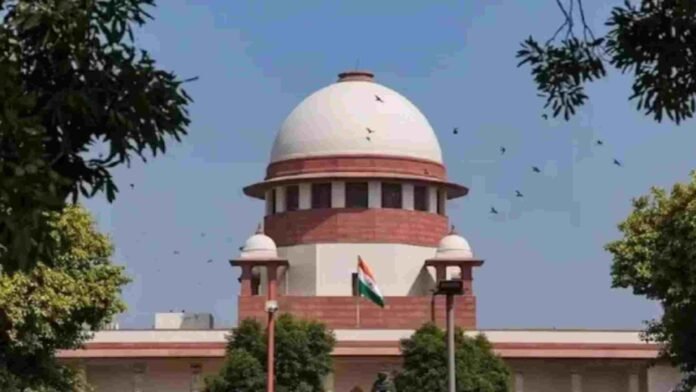
The Supreme Court of India has conclusively ruled that the death of a young actress in 2002 was caused by organophosphate poisoning and not manual strangulation, dismissing allegations of sexual assault and murder.
The bench of Justice Rajesh Bindal and Justice Manmohan upheld the conviction of Gudipalli Siddhartha Reddy under Section 306 of the Indian Penal Code (IPC) for abetment of suicide, while extensively examining serious lapses and misinterpretations in the postmortem findings that had triggered public controversy.
The bench noted that the deceased was conscious at the time of hospital admission, ruling out death by strangulation. Therapeutic marks were wrongly construed as signs of violence. The autopsy surgeon failed to consult hospital treatment records before forming conclusions. Premature public statements contributed to unnecessary sensationalism.
The case arose from the death of Ms. Pratyusha, a young actress, who was admitted to CARE Hospital, Banjara Hills, Hyderabad, on the evening of February 23, 2002, after consuming poison along with the accused, Gudipalli Siddhartha Reddy, with whom she had been in a long-standing relationship. While the accused survived, the actress succumbed the following day.
An FIR was initially registered under Section 174 CrPC at Panjagutta Police Station. However, the case took a sensational turn when the autopsy surgeon, Dr. B. Muni Swamy, opined that the cause of death was “pressure over the neck, asphyxia due to manual strangulation” and publicly claimed in a television interview that the deceased had been gang-raped.
These statements sparked public outrage and led to public interest litigations before the High Court of Andhra Pradesh, which subsequently transferred the investigation to the Central Bureau of Investigation (CBI).
The Andhra Pradesh Forensic Science Laboratory (AP FSL) report dated February 27, 2002, detected organophosphate insecticide in the internal organs of the deceased and in the stomach wash of both the deceased and the accused. No semen or spermatozoa were detected on vaginal swabs or clothing.
In view of conflicting medical opinions, the State Government constituted a three-member Expert Committee, which categorically concluded that:
- The cause of death was organophosphate poisoning.
- There was no evidence of manual strangulation.
- There was no evidence of sexual assault.
The Committee noted that the injuries described in the postmortem report were consistent with therapeutic procedures administered during emergency treatment.
Further, a committee of doctors at the All India Institute of Medical Sciences (AIIMS), New Delhi, independently reviewed the medical records and photographs. Its report reaffirmed that:
- The cause of death was organophosphorus poisoning.
- The alleged strangulation injuries were misinterpretations of medical intervention marks.
- There was no evidence of sexual assault.
- The autopsy surgeon had committed an “error of judgment.”
Pursuant to directions of the High Court, DNA tests were conducted by the Centre for DNA Fingerprinting and Diagnostics (CDFD). While a male DNA fraction was detected on a cotton swab, it did not match the accused or other suspects. No semen was detected in subsequent forensic analysis by the Central Forensic Science Laboratory (CFSL).
The CFSL further confirmed the presence of Monocrotophos, a highly toxic organophosphorus insecticide, in the internal organs of the deceased and in the bottle labeled “Nuvacron.”
The Supreme Court undertook an exhaustive review of the medical and forensic evidence and held that the theory of manual strangulation was unsupported by scientific material.
The Court agreed with the findings of the Expert Committee and AIIMS panel that the death was due to organophosphate poisoning and not homicidal violence.
While rejecting the murder theory under Section 302 IPC, the Court upheld the conviction under Section 306 IPC (abetment of suicide). The High Court had earlier reduced the sentence to two years’ rigorous imprisonment while enhancing the fine to ₹50,000.
The Supreme Court declined to interfere with these findings, affirming that the evidence established abetment but not homicide.
Case Details
Case Title: Gudipalli Siddhartha Reddy Versus State CBI
Citation: JURISHOUR-05-SC-2026
Case No.: Criminal Appeal No. 457 Of 2012
Date: 17/02/2026
Read More: S. 27 Evidence Without Police Custody Can’t Sustain Conviction: Supreme Court

