
HomeOther LawsCheque Bounce Complaint Valid Even Without Naming Partnership Firm as Accused: Supreme...

Cheque Bounce Complaint Valid Even Without Naming Partnership Firm as Accused: Supreme Court 

Published on

🚀 Stay Connected With JurisHour

WhatsApp X Telegram

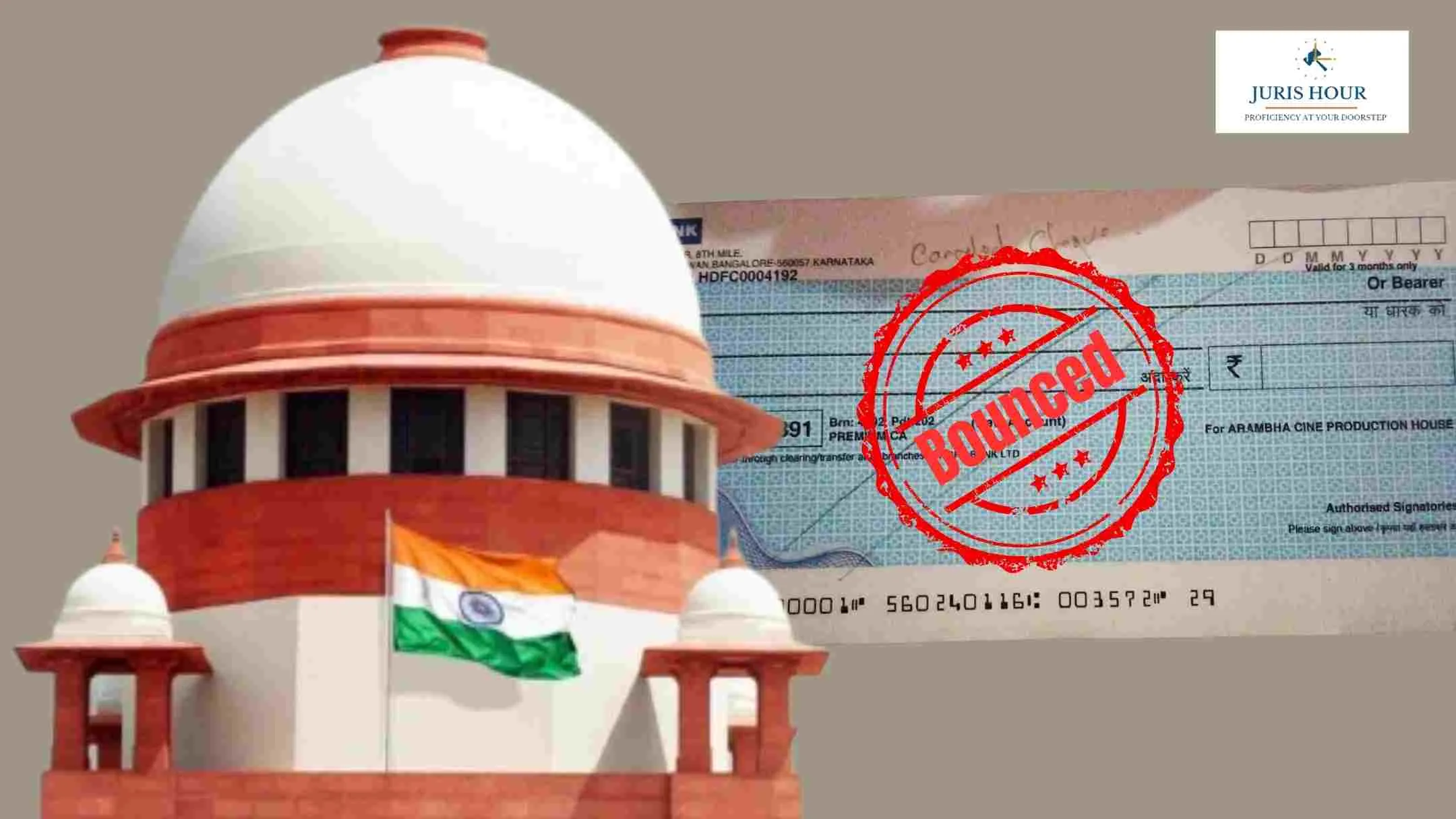
The Supreme Court has held that a complaint under Section 138 of the Negotiable Instruments Act is maintainable even if the partnership firm is neither named as an accused nor served notice, as long as the partners have been properly notified and arraigned.

The bench of Justice B.V. Nagarathna and Justice Satish Chandra Sharma overturned the High Court’s order and held that a partnership firm is not a separate legal entity distinct from its partners. Serving notice to the partners suffices, as the firm’s liability is joint and several with its partners. The complaint, although not naming the firm as an accused, is maintainable in law. The complainant is permitted to add the partnership firm as an accused if deemed necessary.

The case centered around a Rs. 21 lakh cheque issued in February 2021 by one partner of Mouriya Coirs, a partnership firm engaged in the coir business in Pollachi, Tamil Nadu. The cheque was intended to discharge a business loan extended by the complainant, Dhanasingh Prabhu, between March and August 2019.

The cheque was dishonoured upon presentation due to the firm’s bank account being frozen. Legal notice was issued to both partners but not to the partnership firm. The complainant then filed a case under Section 138 of the Negotiable Instruments Act, 1881, before the Judicial Magistrate, Pollachi.

On 26 February 2024, the Madras High Court quashed the complaint, stating that since the firm was not made a party to the case and no statutory notice was served on it, the complaint was defective and not maintainable.

The court directed that the original complaint be restored on the file of the Judicial Magistrate No. II, Pollachi, for trial as per law.

Case Details

Case Title: Dhanasingh Prabhu Versus Chandrasekar & Another

Case No.: Special Leave Petition (Criminal) No.5706 of 2024

Date:  JULY 14, 2025

Read More: Taxpayers Raise Concerns Over ITR-3 Filing: No Option to Select ‘Not Applicable’ for Opt-Out Query

Mariya Paliwala
Mariya Paliwalahttps://www.jurishour.in/
Mariya is the Senior Editor at Juris Hour. She has 7+ years of experience on covering tax litigation stories from the Supreme Court, High Courts and various tribunals including CESTAT, ITAT, NCLAT, NCLT, etc. Mariya graduated from MLSU Law College, Udaipur (Raj.) with B.A.LL.B. and also holds an LL.M. She started her career as a freelance tax reporter in the leading online legal news companies.

Latest articles

Multi-Heading Use of Medical Laser Imagers Attracts Residuary Customs Classification Under CTH 9033 00 00: Supreme Court 

The Supreme Court has dismissed an appeal concerning the customs classification of imported laser...

Bank’s Suspense Account Interest Cannot Be Ignored: Supreme Court Restores Rs. 54.90 Lakh Loan Liability

The Supreme Court has set aside an Orissa High Court order that had directed...

Time-Barred Operational Debt Cannot Revive Through IBC: Supreme Court Quashes S. 9 Insolvency Proceedings

The Supreme Court has held that an operational creditor cannot use proceedings under Section...

UNICEF’s IGST Refund Claims Within Time, CESTAT Rules Limitation Starts From 2019 Customs Circular

The Customs, Excise & Service Tax Appellate Tribunal (CESTAT), Principal Bench, New Delhi, has...

More like this

Multi-Heading Use of Medical Laser Imagers Attracts Residuary Customs Classification Under CTH 9033 00 00: Supreme Court 

The Supreme Court has dismissed an appeal concerning the customs classification of imported laser...

Bank’s Suspense Account Interest Cannot Be Ignored: Supreme Court Restores Rs. 54.90 Lakh Loan Liability

The Supreme Court has set aside an Orissa High Court order that had directed...

Time-Barred Operational Debt Cannot Revive Through IBC: Supreme Court Quashes S. 9 Insolvency Proceedings

The Supreme Court has held that an operational creditor cannot use proceedings under Section...