
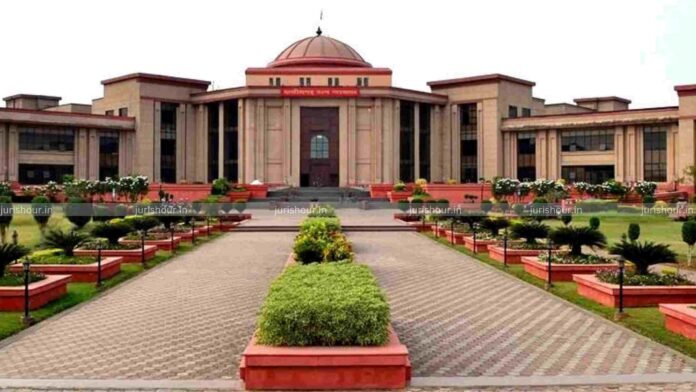
The High Court of Chhattisgarh has rejected the regular bail application of Narayan Sahu, an accused in the alleged illegal coal levy extortion racket being investigated by the Anti-Corruption Bureau (ACB) and Economic Offences Wing (EOW), observing that economic offences affecting public administration and the economy must be viewed seriously while considering bail.
The bench of Justice Narendra Kumar Vyas passed the order while hearing the first bail application filed under Section 483 of the Bharatiya Nagarik Suraksha Sanhita, 2023.
The applicant was arrested on February 24, 2026 in connection with Crime No. 03/2024 registered by ACB/EOW, Raipur, for offences under Sections 420, 120-B and 384 of the IPC along with Sections 7, 7A and 12 of the Prevention of Corruption Act, 1988.
According to the prosecution, the FIR originated from information supplied by the Directorate of Enforcement under Section 66(2) of the Prevention of Money Laundering Act, 2002 during investigation of a money laundering case. The ED allegedly uncovered a large-scale extortion network connected with coal transportation in Chhattisgarh.
The prosecution alleged that a syndicate comprising private persons, bureaucrats and politically connected individuals manipulated the coal transportation permit system by converting an online transport permit mechanism into a manual system through a government order issued on July 15, 2020. This allegedly enabled illegal collection of ₹25 per tonne of coal transported within the State.
The ED investigation reportedly found that approximately ₹540 crore in illegal levy was collected between July 2020 and June 2022 in coal-rich districts such as Raigarh, Korba and Surajpur.
As per the prosecution case, Narayan Sahu was allegedly a trusted driver and active associate of co-accused Suryakant Tiwari and was involved in collecting illegal cash from coal traders and transporters. During Income Tax searches conducted on June 30, 2022 at premises linked to Suryakant Tiwari, handwritten diaries relating to the illegal levy collections were allegedly seized. Entries bearing the name “Narayan” were claimed to refer to the applicant.
The prosecution further alleged that the applicant collected illegal cash on instructions of Suryakant Tiwari and delivered funds to several individuals connected with the alleged conspiracy. Investigation purportedly revealed that out of the proceeds of crime, approximately ₹7.5 crore was delivered through the applicant to various persons linked to the syndicate.
The defence argued that the applicant was neither named in the FIR nor in any of the five charge sheets filed by the investigating agency, and no substantive evidence directly connected him with the alleged offences. It was contended that the prosecution case relied primarily on statements of co-accused persons and inadmissible material. The defence also argued that no recovery had been made from the applicant and there was no allegation of demand or acceptance of bribe attributable to him.
The applicant also sought parity with other co-accused persons including senior bureaucrats and alleged syndicate members who had been granted bail by the Supreme Court.
Opposing the plea, the State argued that the applicant had remained absconding for nearly two years after registration of the FIR and had surrendered only after rejection of his anticipatory bail plea by both the High Court and the Supreme Court. The prosecution maintained that the applicant’s custodial interrogation remained necessary and that release on bail could adversely affect the ongoing investigation.
The High Court noted that indefinite arrest warrants had been issued against the applicant on May 6, 2025 after the trial court found that he was avoiding arrest. The Court observed that he surrendered only on February 24, 2026 after exhausting legal remedies before higher courts. According to the Court, such conduct indicated an attempt to evade proceedings and delay the trial.
While considering the merits of the allegations, the Court referred to statements recorded under Section 164 CrPC indicating that the applicant allegedly handled and delivered illegal cash collections. Though the Court acknowledged that such statements are a weak piece of evidence, it held that they could not be ignored at the stage of considering bail when prima facie involvement was reflected from the case diary and material collected during investigation.
The Court relied on the Supreme Court’s ruling in P. Chidambaram v. Directorate of Enforcement to reiterate that economic offences constitute serious offences requiring a different approach in bail matters.
Referring to the Supreme Court judgment in Ramesh Bhavan Rathod v. Vishanbhai Hirabhai Makwana, the High Court observed that factors such as prima facie involvement, gravity of accusation, possibility of absconding and likelihood of influencing witnesses must be considered while deciding bail applications.
Rejecting the parity argument, the Court distinguished the applicant’s case from co-accused who had already spent nearly two years in custody before obtaining bail from the Supreme Court. The Court held that considering the material available on record, it was not a fit case for grant of regular bail.
Accordingly, the High Court dismissed the bail application.
Case Details
Case Title: Narayan Sahu Versus State of Chhattisgarh
Case No.: MCRC No. 3120 of 2026
Date: 07.05.2026
Counsel For Applicant: Mr. Gagan Tiwari and Mr. Shashank Mishra, Advocates.
Counsel For Respondent: Dr. Sourbh Kumar Pande, Dy. Advocate General
Read More: Karnataka HC Upholds Banks’ CENVAT Credit on DICGC Insurance Premium

