
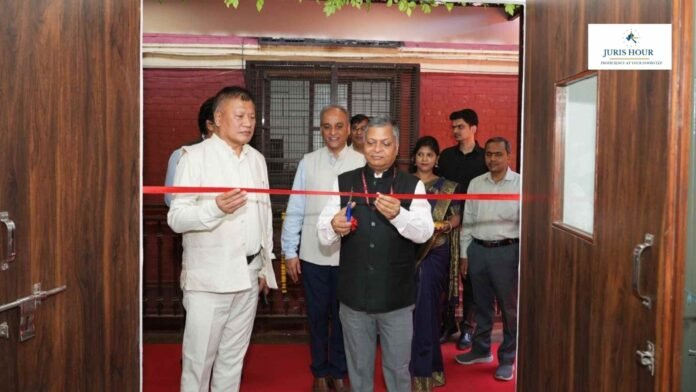
The Central Board of Indirect Taxes and Customs (CBIC) has strengthened its forensic and analytical capabilities with the inauguration of an upgraded Narcotic Drugs and Psychotropic Substances (NDPS) Testing Laboratory and a new chemical store at the Central Revenues Control Laboratory (CRCL) in New Delhi.
The upgraded facilities were inaugurated by Yogendra Garg, Special Secretary to the Government of India and Member (Customs), CBIC. The initiative is aimed at accelerating the testing of suspected illicit drugs and psychotropic substances while improving the reliability of analytical findings.
The inauguration took place in the presence of Valte Vungzamuan, Principal Chief Commissioner, Customs Preventive, Delhi Zone, and Chairman of the Oversight Committee of CRCL. Senior officials, including the Principal Commissioner of ICD Patparganj, the Director of CRCL and the Officer on Special Duty in the Customs Policy Wing of CBIC, also attended the event.
Buy Now: Customs Duty E-Magazine – August 2026
State-of-the-Art Facilities to Strengthen Drug Testing
According to CBIC, the upgraded NDPS laboratory is equipped with state-of-the-art analytical facilities designed to expedite the examination of samples suspected to contain narcotic drugs or psychotropic substances.
Scientific examination by specialised laboratories plays an important role in cases involving seizures made by Customs and other enforcement authorities. Laboratory reports help establish the identity and composition of seized substances and support further proceedings under the Narcotic Drugs and Psychotropic Substances Act, 1985, and other applicable laws.
The modernisation of the CRCL facility is expected to improve the speed, precision and consistency of sample testing. Faster examination can also assist investigating agencies in completing their inquiries and taking further legal action without avoidable delays arising from pending laboratory reports.
The establishment of a new chemical store will complement the upgraded testing infrastructure by facilitating the systematic and secure storage of chemicals and reference materials required for scientific analysis. Proper storage is essential for preserving the quality of laboratory chemicals and maintaining the integrity and reliability of testing procedures.
Member (Customs) Reviews CRCL Operations
During the visit, Garg also reviewed the overall functioning of CRCL and assessed the progress of its ongoing projects. He provided strategic direction and guidance to officials on institutional development, capacity-building initiatives and the enhancement of analytical capabilities.
The review covered efforts to strengthen laboratory infrastructure and improve CRCL’s ability to respond to the evolving requirements of Customs administration and enforcement agencies. The emphasis on capacity building assumes significance as laboratories are increasingly required to examine complex substances and provide dependable scientific findings within shorter timelines.
The Member (Customs) underscored the importance of modern facilities, trained personnel and reliable analytical processes in supporting enforcement against illicit trafficking in narcotic drugs and psychotropic substances.
CRCL’s Role in Customs Enforcement
CRCL is the principal chemical laboratory functioning under CBIC and provides scientific and technical support to Customs formations and other government agencies. It undertakes the analysis of a wide range of goods and substances for purposes connected with classification, assessment, enforcement and investigation.
In NDPS-related matters, laboratory testing is particularly crucial because the nature and chemical composition of a seized substance must be scientifically established. Accurate identification may determine the statutory provisions applicable to a case and form an important part of the evidentiary record during prosecution.
By upgrading the NDPS testing facility, CBIC seeks to reinforce the scientific foundation of its anti-smuggling operations. Enhanced analytical capabilities can help enforcement authorities deal more effectively with illicit consignments and emerging forms of synthetic and psychotropic substances.
The upgraded laboratory and new chemical store form part of CBIC’s broader efforts to modernise its technical infrastructure, enhance institutional capacity and ensure that enforcement action is supported by timely and reliable scientific evidence.
The initiative is expected to contribute to more efficient disposal of samples, reduce testing delays and strengthen coordination between Customs formations, investigators and CRCL. It also reflects the government’s continuing focus on using modern scientific infrastructure to support action against narcotics trafficking and other forms of illicit trade.

