
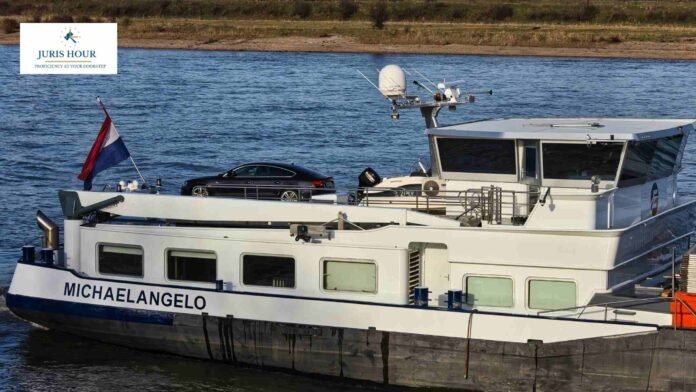
The Ministry of Ports, Shipping and Waterways has notified the Inland Vessels (Safe Navigation, Communication & Signals) (First Amendment) Rules, 2026, introducing key changes related to navigation equipment requirements, restricted visibility operations, signalling standards and tonnage calculation for inland vessels.
The amendments modify the Inland Vessels (Safe Navigation, Communication and Signals) Rules, 2022 and have been issued under the Inland Vessels Act, 2021. The new rules came into force on March 5, 2026, upon publication in the Official Gazette.
Table of Contents
Draft Rules Finalised After Public Consultation
The draft amendment rules were earlier published on January 29, 2025, inviting objections and suggestions from stakeholders for a period of thirty days. According to the notification, no objections or suggestions were received, following which the Central Government finalised the amendments.
The changes are aimed at improving safety, communication systems and navigation standards for vessels operating on India’s inland waterways.
Clarification on Gross Tonnage Calculation
A key amendment introduces a clarification regarding the calculation of gross tonnage of inland vessels.
Under the revised rules vessels 24 metres and above will have their gross tonnage calculated according to the International Convention on Tonnage Measurement of Ships, 1969. Vessels below 24 metres will have their tonnage determined as per the Merchant Shipping (Tonnage Measurement of Ships) Rules, 1987.
The clarification aims to ensure uniform measurement standards and align domestic practice with internationally accepted conventions.
New Chapter on Navigation in Restricted Visibility
The amendment introduces a new chapter titled “Conduct of Inland Vessels in Restricted Visibility.”
This chapter provides regulatory clarity on how vessels should operate in conditions such as fog, heavy rain or other situations where visibility is limited, thereby strengthening navigational safety norms.
Changes to Lights and Shapes for Signalling
The rules relating to lights and shapes used by vessels for signalling have also been revised.
The amendment specifies that when vessels display two all-round red lights, they must be placed approximately one metre above one another. Where two balls or similar shapes are used as signals, they must also be positioned about one metre apart vertically.
Additionally, Rule 18 has been renamed “General requirements of lights and shapes,” aligning the provisions with the requirements laid down in Rule 23.
Operational Limit Revised
The amendment also revises Rule 26, where the earlier figure “20” has been replaced with “fifty.” This change modifies the operational threshold prescribed under the rule.
Mandatory Radio and Navigation Equipment
One of the most significant changes is the replacement of Rule 33, which now specifies updated requirements for radio and navigation equipment to be carried on inland vessels.
Equipment Required for Vessels in Zone 1 and Zone 2
Vessels operating in these zones must carry:
- Magnetic compass
- Very High Frequency (VHF) radio
- Class B Automatic Identification System with display
- GPS navigator
- Binoculars
- Aldis lamp or searchlight
- Rudder angle indicator
Equipment Required for Vessels in Zone 3
Vessels operating in Zone 3 must carry:
- VHF or Ultra High Frequency (UHF) radio
- Class B Automatic Identification System with display
- Magnetic compass
- Binoculars
- Aldis lamp or searchlight
Notification Details
Notification No. F. No. IWT-11011/91/2021-IWT(6)
Date: 05/03/2026
Read More: CBDT Expands Reporting Framework to Cover Crypto Assets and Digital Currency Accounts

