
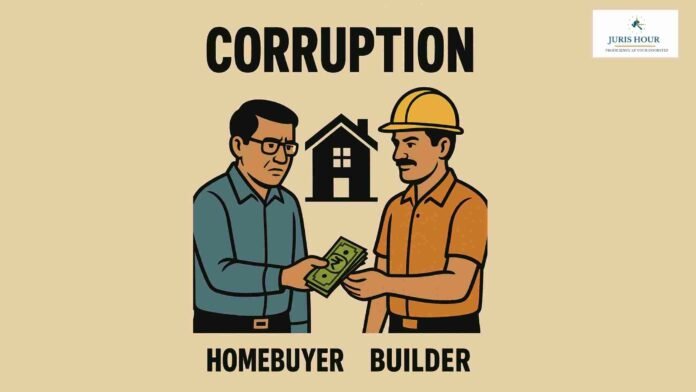
More than 65 percent of Indian homebuyers have admitted to paying a part of their property transaction in cash, according to a new survey by LocalCircles. The findings highlight how black money continues to play a significant role in India’s real estate sector—nearly a decade after the government’s demonetisation drive that sought to curb cash transactions.
Black Money and Bribes Still Pervasive
The survey, based on over 39,000 responses from people across 310 districts, reveals that cash payments and bribery remain deeply entrenched in property transactions. Around 66 percent of respondents acknowledged paying at least some amount in cash, while 44 percent admitted to offering bribes to expedite property-related approvals.
LocalCircles noted that despite the push for digital payments and the introduction of measures like linking Aadhaar with property records, the practice of cash dealings persists. These unaccounted payments are often routed to builders, brokers, and officials to either understate transaction values or speed up registration and approval processes.
Extent of Cash Payments
According to the survey, 26 percent of buyers said they paid over half of the property value in cash. Another 19 percent paid between 30 and 50 percent, while 14 percent admitted to paying up to 30 percent of the total value in cash. Only a small fraction—7 percent—said their cash component was below 10 percent.
Regulatory Bottlenecks and Low Circle Rates Blamed
The “root cause,” the survey suggests, lies in low circle rates and bureaucratic bottlenecks. Circle rates—officially notified property valuation benchmarks used for stamp duty—often lag behind actual market values, prompting under-the-table cash settlements to bridge the gap.
LocalCircles said, “While digital reforms and stricter tax monitoring have reduced cash use in metros, smaller towns and semi-urban markets remain largely untouched.”
Further, local-level corruption continues to thrive. Respondents reported paying off clerks, typists, deed writers, and local land survey officials to smoothen transactions. Sellers too often resort to informal payments to navigate the tehsil and municipal systems.
Geographic Spread of the Problem
The data indicates that 44 percent of respondents were from Tier-II cities, 26 percent from Tier-I, and 30 percent from smaller towns and rural areas, reflecting how corruption and cash dealings cut across geographies.
Policy Implications
Experts argue that while digitisation initiatives—like online property registration, e-stamping, and transparent land records—have made inroads, the gap between actual and official property prices fuels the black economy.
A property law analyst commenting on the findings said, “Unless circle rates are rationalised and real estate transparency is enforced, the cash economy in property dealings will persist. The system currently incentivises both buyers and sellers to transact off-record.”
Conclusion
Despite policy reforms and demonetisation’s stated objectives, India’s real estate sector remains heavily impacted by black money and corruption. The LocalCircles survey underscores that without structural changes in valuation norms and enforcement at the grassroots, cash will continue to dominate property transactions—undermining the very foundation of financial transparency.
Read More: Govt. Panel Working on Overhaul of SEZ Policy Amid Export Hit from US Tariffs

