
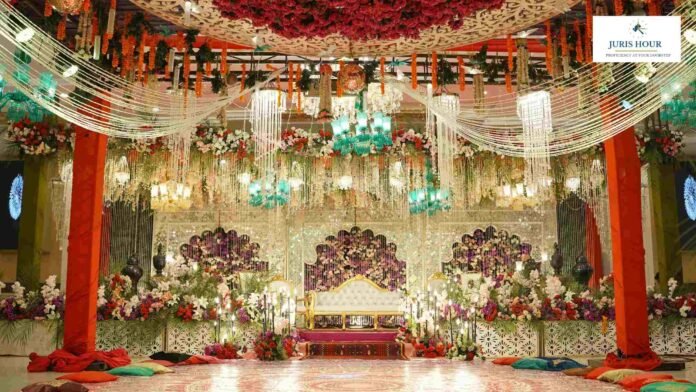
Planning a big Indian wedding often begins with locking in the venue and caterer. Most families book the banquet hall and catering separately, without realising that this routine decision can significantly increase their GST burden.
When billed independently, both services generally attract 18% GST. On a high-value wedding budget, this can translate into a massive tax outgo.
However, GST law contains a lesser-known concept called “composite supply” that can completely change the calculation. When two or more services are naturally bundled and supplied together in the ordinary course of business — with one being the principal supply — the entire package may be taxed at the rate applicable to that principal supply. In wedding arrangements, if the banquet hall and catering are bundled under a single contract and a single invoice, the transaction may qualify as a composite supply.
In eligible cases, such bundled supply can attract GST at 5% (without input tax credit) instead of 18%. On a large wedding budget, the difference between these two rates can mean savings running into lakhs. The shift in invoicing structure alone can drastically reduce the tax payable — entirely within the framework of the law.
But there is an important limitation that many overlook. The lower rate benefit does not apply across the board. Under GST provisions, hotels categorised as “specified premises” — meaning properties where any room tariff exceeds ₹7,500 per night — are required to charge 18% GST on event-related services, regardless of bundling.
Luxury destinations such as ITC Mementos, where villa tariffs range from ₹35,000 to ₹1 lakh per night, fall within this category. Since their declared room rates exceed ₹7,500, they are treated as specified premises and must levy 18% GST on banquet and catering services, even if supplied together as a composite package. In such venues, the 5% route is simply not available.
This makes the declared room tariff a decisive financial factor. If a boutique resort or hotel maintains room rates below ₹7,500 per night, and if banquet and catering are properly structured under a single agreement and invoice, the lower 5% GST rate may legally apply, subject to conditions and without input tax credit.
For families planning grand celebrations, venue selection is no longer just about aesthetics, location, or luxury. It can directly impact the overall tax liability. Before signing contracts, it is crucial to verify the hotel’s tariff classification, understand whether it qualifies as specified premises, and seek professional GST advice to structure the arrangement correctly.
In high-budget weddings, the real savings may not lie in cutting décor or trimming the guest list — but in understanding how GST classification works behind the scenes.
Buy More: E-Compilation on Service Tax | February 2026 Edition

