
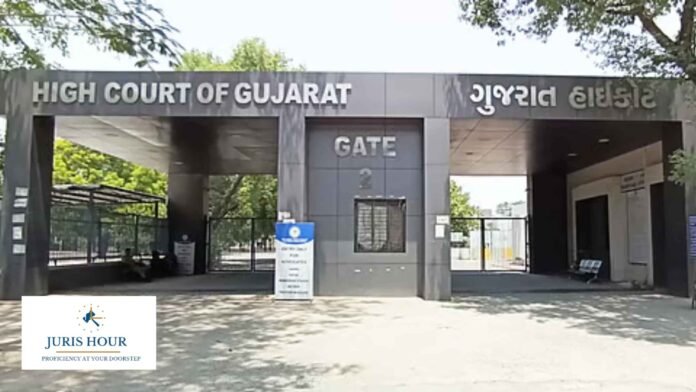
The Gujarat High Court has held that the principle of unjust enrichment does not apply to customs duty refunds arising directly from the finalisation of provisional assessments before July 13, 2006, when Section 18 of the Customs Act, 1962, was amended.
The Bench of Justice Bhargav D. Karia and Justice Nirzar S. Desai has observed that if an independent refund claim is filed after the final decision under Rule 9-B(5) reagitating the issues already decided under Rule 9-B – assuming that such a refund claim lies – and is allowed, it would obviously be governed by Section 11-B. It follows logically that position would be the same in the converse situation. Nature and character of refund claims under the Central Excises and Salt Act and the Customs Act.
Buy Now: 80+ Judgements Indirect Tax – September 2026 E-Magazine
The dispute concerned the applicability of unjust enrichment to a refund arising from the finalisation of a provisional customs assessment under Section 18 of the Customs Act.
The principle of unjust enrichment generally prevents a claimant from receiving a refund of a tax or duty burden already passed on to another person. The issue before the High Court was whether that restriction applied to refunds arising under the version of Section 18 that existed before its amendment took effect on July 13, 2006.
The department challenged the CESTAT’s order dated September 20, 2011, passed in Appeal No. C/770/06. Its appeal was filed under Section 130 of the Customs Act and admitted on June 19, 2012.
The substantial question of law was whether unjust enrichment applied to a refund arising from the finalisation of a provisional assessment pending before the amendment to Section 18.
The High Court noted that the first appellate authority had decided the matter in favour of the assessee after considering a Chartered Accountant’s certificate produced by the company.
The CESTAT had also relied on the Supreme Court’s decision in Allied Photographics India Limited and the Gujarat High Court’s earlier judgment in Commissioner of Customs v. Hindalco Industries Limited.
In Hindalco Industries, the High Court had held that the unjust enrichment provisions contained in Section 27 of the Customs Act could not be read into Section 18 as it stood before July 13, 2006.
Applying those decisions, the tribunal rejected the Revenue’s appeal. It recorded that, in the present case, both the finalisation of the provisional assessment and the letters claiming the refund amounts preceded July 13, 2006. It therefore found no infirmity in the Commissioner (Appeals)’ order allowing relief.
At the hearing before the High Court, counsel for both parties submitted that the issue was already settled by the Supreme Court’s decision in Hindustan Zinc Limited.
That decision addressed refunds of amounts deposited towards provisional customs duty for clearance of imported goods, following the conclusion of assessment proceedings.
The Supreme Court had reaffirmed the reasoning in Allied Photographics, which recognised that the doctrine of unjust enrichment did not apply to the provisional assessment refunds under consideration, even after the assessment proceedings were finalised.
The Gujarat High Court reproduced the relevant portions of the Supreme Court’s ruling and applied that binding interpretation to the Revenue’s appeal.
The judgment also discussed the Supreme Court’s treatment of Sahakari Khand Udyog Mandal Ltd. v. Commissioner of Central Excise & Customs.
In that case, the Supreme Court had stated that a refund claimant must establish payment of the amount claimed and show that its burden had not been passed on to consumers.
However, in Hindustan Zinc Limited, the Supreme Court observed that Sahakari Khand had overlooked the earlier ruling in Allied Photographics. It also noted that the specific observations in paragraph 104 of the nine-judge Bench judgment in Mafatlal Industries Ltd. v. Union of India appeared to have escaped consideration.
The Supreme Court consequently held that Sahakari Khand had to be confined to the facts of that case.
The passage from Mafatlal Industries reproduced in the judgment explained an important distinction between refunds resulting directly from the adjustment of provisional duty upon final assessment and refunds arising from separate proceedings.
In the context of Rule 9-B of the Central Excise Rules, the Supreme Court had explained that recoveries or refunds consequent upon such adjustment were not governed by Sections 11-A or 11-B.
However, a refund arising from a successful appeal or other challenge to the final assessment, or from an independent refund claim reopening issues already decided, could be governed by Section 11-B.
This distinction formed part of the reasoning relied upon in Hindustan Zinc Limited. The present ruling therefore concerns the particular category of refunds arising directly from finalisation of provisional assessments under the pre-amendment legal framework.
Following the Supreme Court’s interpretation, the Gujarat High Court answered the substantial question of law in favour of the company and dismissed the Revenue’s appeal.
Membership Required to Access Case Details & Order Copy
To view the complete Case Details and Download Order Copy, you must have an active membership. Please subscribe to continue.
Read More: Money Laundering Case Can’t Continue Once Underlying FIR Is Quashed: Bombay High Court

