
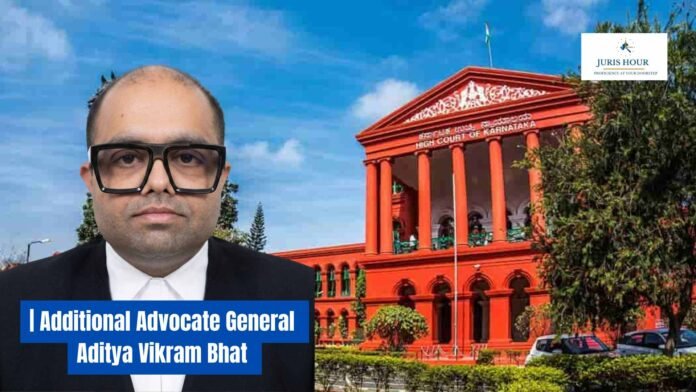
The Karnataka High Court has delivered a significant ruling on the scope and limitation governing suo motu revision proceedings under Section 64 of the Karnataka Value Added Tax Act, 2003 (KVAT Act). While holding that revisional proceedings are validly initiated when the revisional authority calls for records within four years of the order sought to be revised, the Court also ruled that such proceedings cannot remain pending indefinitely and must ordinarily culminate in a final order within five years from the date of the order proposed to be revised.
The Bench of Justice S.G. Pandit and Justice K.V. Aravind while deciding a batch of six sales tax appeals involving common questions of law relating to the exercise of revisional jurisdiction under Section 64 of the KVAT Act.
Buy Now: INCOME TAX E-COMPILATION – JUNE 2026
The appeals arose from orders passed by the Additional Commissioner of Commercial Taxes exercising suo motu revisional powers under Section 64 of the KVAT Act. The assessees challenged these revision orders principally on the ground that they were barred by limitation.
The lead matter concerned reassessment proceedings for the tax period April 2010 to March 2011. After the original reassessment order and a subsequent rectification order were passed, the First Appellate Authority granted relief to the assessee. Thereafter, the Suo Motu Revision (SMR) Authority called for the records, issued notice under Section 64, and eventually reversed the appellate order. The assessees contended that the revisional exercise was beyond the statutory limitation prescribed under Section 64(3)(c) of the KVAT Act.
The central issue before the High Court was whether the four-year limitation prescribed under Section 64 requires the entire revisional process—including issuance of notice and passing of the final order—to be completed within four years, or whether initiation of proceedings within four years is sufficient.
The assessees argued that allowing authorities to pass revisional orders long after four years would expose taxpayers to indefinite uncertainty and prejudice their ability to defend themselves, particularly since statutory record retention requirements extend only for five years.
The Division Bench reaffirmed earlier Karnataka High Court decisions holding that the statutory requirement is satisfied if the revisional authority calls for the records or otherwise initiates proceedings within four years from the date of the order proposed to be revised.
Accordingly, the Court rejected the contention that the final revisional order itself must necessarily be passed within the four-year period.
While accepting that initiation within four years is sufficient, the Court simultaneously rejected the Revenue’s argument that there is thereafter no limitation whatsoever for passing the revisional order.
The Bench observed that such an interpretation would permit arbitrary exercise of revisional power, keep taxpayers under prolonged uncertainty, and defeat the scheme of the KVAT Act.
According to the Court, statutory powers cannot remain open-ended merely because the legislation does not expressly prescribe a separate period for concluding proceedings. Every statutory authority must exercise its powers within a reasonable period.
The Court harmoniously interpreted Sections 32 and 64 of the KVAT Act.
Section 32 requires dealers to preserve books of account for five years or until assessments attain finality. Reading this provision together with the revisional framework under Section 64, the Court concluded that revision proceedings should ordinarily be completed within five years from the date of the order sought to be revised.
Accordingly, where records are called for within four years, the revisional authority should pass the final order within one additional year, thereby ensuring that the entire exercise concludes within five years.
The Bench relied upon the Supreme Court’s decision in State of Punjab v. Bhatinda District Cooperative Milk Producers Union Ltd., which held that where no limitation is expressly prescribed, statutory powers must nevertheless be exercised within a reasonable period.
The Court also referred to the Delhi High Court’s decision in CIT v. NHK Japan Broadcasting Corporation, which similarly emphasized that absence of an express limitation does not permit authorities to initiate or conclude proceedings after unreasonable delays.
In the lead appeal, the Court also examined the assessee’s challenge regarding denial of Input Tax Credit (ITC).
The revisional authority had concluded that the assessee failed to establish the genuineness of purchases from a supplier alleged to be non-existent and had not produced adequate documentary evidence such as original tax invoices, delivery documents, transportation details and other supporting material.
The High Court noted that the Supreme Court in State of Karnataka v. Ecom Gill Coffee Trading (P) Ltd. has authoritatively held that the burden under Section 70 of the KVAT Act lies squarely on the purchasing dealer. Mere production of invoices or proof of payment through banking channels is insufficient; the dealer must establish the genuineness of the transaction and actual movement of goods through cogent evidence.
Membership Required to Access Case Details & Order Copy
To view the complete Case Details and Download Order Copy, you must have an active membership. Please subscribe to continue.

