
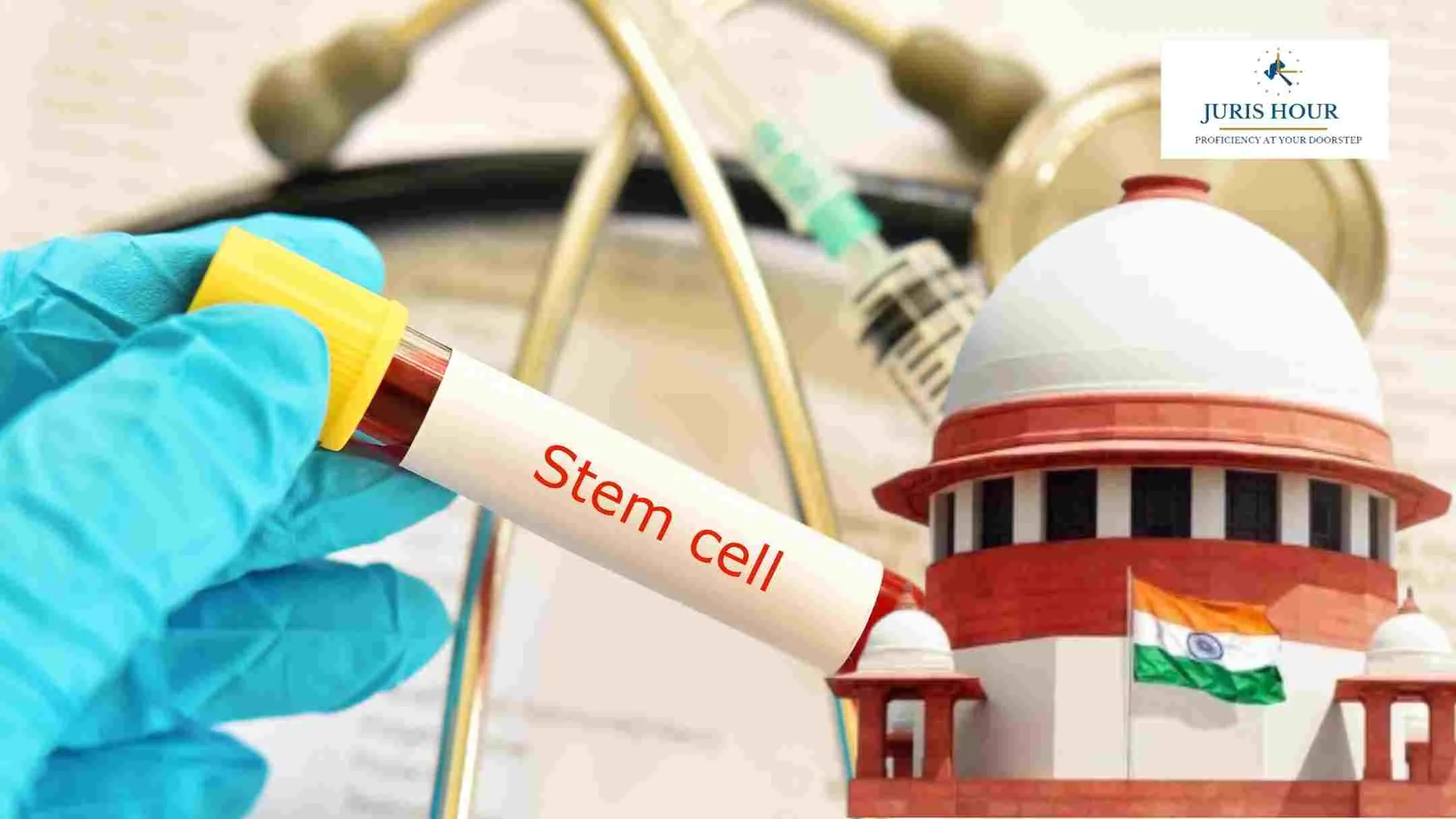
The Supreme Court has held that the collection, processing, and storage of umbilical cord blood stem cells fall within the ambit of “Healthcare Services” and are therefore exempt from service tax.
A bench comprising Justices J.B. Pardiwala and R. Mahadevan ruled that stem cell banking services are preventive and curative in nature and form an integral part of healthcare delivery. The court also quashed the tax department’s demand notice, calling it time-barred, and ordered a refund of Rs. 40 lakh deposited during the investigation.
The bench while Relying on a 2013 clarification by the Ministry of Health, the court held that stem cell banking activities qualify as healthcare services under Notification No. 25/2012-ST and thus enjoy tax exemption. The insertion of a specific exemption for cord blood banks in February 2014 was deemed “clarificatory” and applicable to pending disputes for prior periods.
The bench highlighted that “penal provisions are meant to deter deliberate contravention of statutory provisions and are not intended to penalize bona fide taxpayers”, observing that the imposition of penalties and interest appeared arbitrary, unjust, and unsustainable in law. Moreover, during the course of the investigation, the appellant had deposited a sum of Rs. 40,00,000/- on 30.03.2014, which was ordered to be refunded within four weeks from the receipt of the judgment.
Background: Stem Cell Banking and Tax Disputes
Stem cell banking involves the collection and preservation of stem cells extracted from the umbilical cord blood at the time of a baby’s birth. These stem cells have proven potential to treat a range of life-threatening diseases, including blood cancers, immune disorders, and certain genetic conditions. By preserving stem cells at birth, families can access these life-saving therapies when required.
The industry in India, though relatively nascent, has been growing steadily over the last decade. Stem cell banks are regulated under the Drugs and Cosmetics Act and the 2011 Third Amendment Rules, which lay down stringent standards for collection, processing, testing, and storage.
However, the tax treatment of these services has been contentious. In June 2012, the government notified a list of “Healthcare Services” exempt from service tax, but did not explicitly mention stem cell banking. In February 2014, a new entry was added to specifically exempt services by cord blood banks. This led to a spate of disputes over whether the exemption applied retrospectively to earlier periods.
The Ministry of Health, in a 2013 memorandum, had clarified that stem cell banking was indeed part of healthcare services, but the tax department continued to raise demands for past periods, arguing that the exemption was only prospective.
The court quashed the order and allowed the appeals. The court directed that the deposit of Rs. 40,00,000/- made by the appellant shall be refunded to them within a period of four weeks from the date of receipt of this judgment.
Case Details
Case Title: M/S. Stemcyte India Therapeutics Pvt. Ltd. Versus Commissioner Of Central Excise And Service Tax, Ahmedabad – III
Case No.: Civil Appeal Nos. 3816-3817 Of 2025
Date: July 14, 2025

