
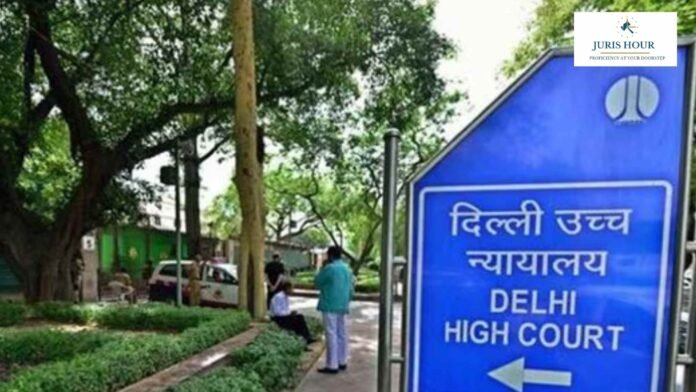
The Delhi High Court has declined to grant immediate relief to an exporter seeking relaxation of the prescribed Average Export Obligation (AOE) under two Export Promotion Capital Goods (EPCG) authorisations, holding that such a waiver essentially depends upon a policy decision and cannot ordinarily be directed in exercise of writ jurisdiction where no vested or enforceable legal right is established.
The Bench of Justice Anil Khetarpal and Justice Shail Jain permitted the petitioner to make appropriate representations concerning interest waiver and Input Tax Credit (ITC) or consequential refund relating to the cenvatable component of customs duty already deposited.
Buy Now: 70+ Judgements Indirect Tax – July 2026 | E-Magazine
The company attributed the shortfall primarily to the COVID-19 pandemic, which caused a substantial decline in demand and exports of vehicles falling under Customs Tariff Headings 8701 to 8705. The petitioner contended that this decline consequently affected the interlinked export of auto components under Heading 8708.
As a result of the shortfall in the prescribed AOE, the petitioner deposited customs duty of ₹1,57,84,365 against one authorisation and ₹99,56,038 against the other, taking the aggregate amount to ₹2,57,40,403.
The principal relief sought before the High Court was relaxation or waiver of approximately 40–50% of the Average Export Obligation, together with consequential reduction and refund of the customs duty already deposited.
Before approaching the High Court, the petitioner had approached the Policy Relaxation Committee (PRC) of the DGFT, seeking relaxation of the AOE to the extent claimed. The petitioner informed the Court that the request had been rejected and that the reasons for the rejection were furnished only on August 12, 2026, a day before the hearing.
The respondents, however, pointed out that the petitioner had an alternative and efficacious departmental remedy—namely, a review before the DGFT against the PRC decision.
The central legal issue before the Court was whether its extraordinary writ jurisdiction under Article 226 of the Constitution could be invoked to compel a relaxation of the export obligation and consequently reduce or waive the customs duty and interest arising from non-fulfilment of the prescribed obligation.
The Bench observed that writ jurisdiction is ordinarily exercised where a petitioner establishes an enforceable legal right corresponding to a public duty on the part of the respondent authority. It cannot ordinarily be used to compel the grant of a discretionary or ex gratia concession when there is no demonstrable legal entitlement.
Applying this principle, the Court held that the requested waiver of AOE, together with the consequential reduction or waiver of customs duty and interest, did not disclose any vested or enforceable right in favour of the petitioner.
The Court specifically noted that the relief was essentially dependent upon a policy decision. Since there was no existing policy extending the requested relaxation, the High Court held that it could not use its writ jurisdiction to formulate a new policy or enlarge the scope of an existing policy.
Another important factor influencing the Court’s decision was the availability of an alternative departmental remedy.
The Bench noted that the petitioner could seek review before the DGFT, where the competent authority could reconsider the relevant factual and policy considerations surrounding the PRC’s decision. In view of this remedy, the High Court declined to examine the merits of the PRC’s decision at this stage.
The Court consequently granted the petitioner liberty to file a review before the DGFT within 15 days from August 13, 2026. Importantly, the Court directed that the review application should not be rejected merely on the ground of limitation and should be considered by the competent authority in accordance with law.
The Court treated the petitioner’s alternative claim relating to ITC separately.
The petitioner had sought ITC in respect of the cenvatable component of the customs duty already deposited, or alternatively a consequential refund. The Court observed that this issue required examination of both the applicable statutory framework and the petitioner’s factual entitlement.
The Bench considered it appropriate for the competent departmental authority to examine the claim in the first instance. The respondents had also stated that the petitioner could make an appropriate application for this purpose, which would be considered in accordance with law.
The Court further granted liberty to the petitioner to make an appropriate representation seeking waiver of interest, along with its ITC claim or consequential refund relating to the cenvatable portion of the customs duty already deposited.
The Delhi High Court clarified that it had not expressed any opinion on the merits of the claims raised by the petitioner.
The Delhi High Court ultimately disposed of the writ petition without granting the requested 40–50% AOE relaxation or directing a reduction/refund of customs duty. The petitioner was instead permitted to pursue the DGFT review mechanism and separately approach the competent authority regarding interest waiver and ITC or consequential refund.
Membership Required to Access Case Details & Order Copy
To view the complete Case Details and Download Order Copy, you must have an active membership. Please subscribe to continue.

