
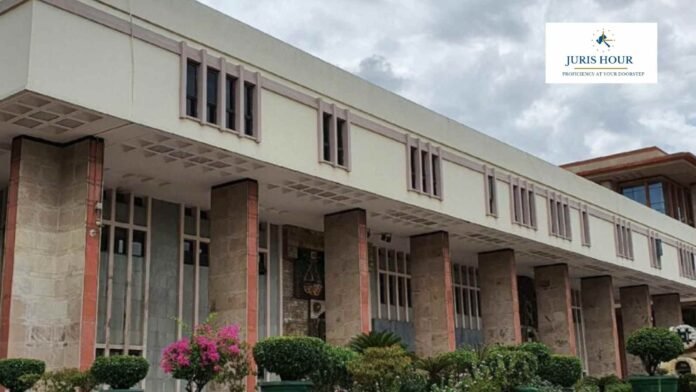
The Delhi High Court has observed that summoning an advocate under Section 108 of the Customs Act, 1962 should ordinarily be resorted to only in rare and exceptional circumstances, while disposing of a writ petition challenging a summons issued by the Directorate of Revenue Intelligence (DRI).
Although the impugned summons had already been withdrawn during the pendency of the proceedings, the bench of Justice Anil Kshetrapal and Justice Amit Mahajan reminded investigative authorities to exercise restraint and caution before compelling lawyers to appear in connection with legal advice rendered to clients.
The petition was filed by an advocate who had challenged a summons issued by the DRI under Section 108 of the Customs Act.
Buy Now: June 2026 Ultimate Legal & Taxation Combo
The advocate contended that the summons violated the protections available to advocates under the Bharatiya Sakshya Adhiniyam, 2023 and the Constitution by compelling disclosure of privileged professional communications.
The advocate sought multiple reliefs before the High Court, including quashing of the summons, restraining the DRI from taking any coercive steps pursuant to the summons, and directing the revenue authorities to frame appropriate guidelines governing the issuance of summons to advocates. The plea also requested safeguards to ensure that legal professionals are not compelled to disclose privileged communications or legal opinions except in exceptional situations, consistent with the law laid down by the Supreme Court.
According to the petition, the summons required the advocate to appear before the DRI despite acting only in a professional capacity by rendering legal advice. The petitioner argued that indiscriminate issuance of such summons could undermine the independence of the legal profession and compromise the confidentiality that forms the foundation of the lawyer-client relationship.
At the outset of the hearing, counsel appearing for the DRI informed the Court that the impugned summons dated 20 July 2026 had already been withdrawn. Consequently, it was argued that the writ petition had become infructuous and no further adjudication on the validity of the summons was necessary.
Accepting this submission, the High Court noted that the immediate cause of action no longer survived because the summons itself had ceased to operate.
The Bench made an important observation regarding investigative powers under Section 108 of the Customs Act. The Court stated that where an advocate has merely rendered a legal opinion, the issuance of summons should ordinarily be confined to rare and exceptional circumstances.
The Bench further observed that although no additional directions were required because the summons had been withdrawn, authorities are expected to exercise due care and caution while issuing summons to advocates in such matters.
The Delhi High Court disposed of the writ petition along with the pending applications without granting any further substantive relief. However, its observations underscore the importance of balancing investigative powers under the Customs Act with the protections afforded to advocates and the confidentiality of professional legal communications.
Membership Required to Access Case Details & Order Copy
To view the complete Case Details and Download Order Copy, you must have an active membership. Please subscribe to continue.
Read More: JURISHOUR | TAX LAW DAILY BULLETIN : 25 JULY, 2026

