
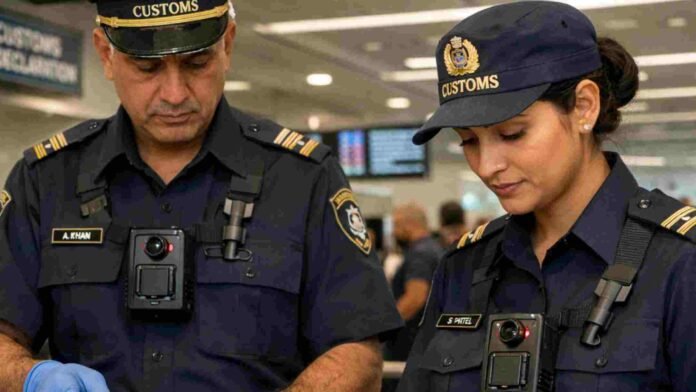
The Central Board of Indirect Taxes and Customs (CBIC) has made it mandatory for customs officers deployed at Red Channels of all international airports to wear body-worn cameras (BWCs) during interactions with passengers.
The directive, issued internally to customs field formations last month, requires officers to record all interactions with passengers within airport premises, particularly at Red Channels where travelers declare dutiable or restricted goods brought into the country.
Mandatory Recording of Passenger Interactions
According to the instructions, customs officers must clearly inform passengers that their interactions are being recorded. The recordings will be securely stored for a period of 90 days, with provisions for extended retention where the footage is required for investigation, vigilance, or judicial proceedings.
The move is being seen as a major step towards institutionalising evidence-based enforcement and reducing subjective disputes during passenger examinations and baggage checks.
Enhancing Transparency and Ease of Doing Business
CBIC officials said the initiative is aligned with international best practices followed by customs and border control agencies in several developed jurisdictions. The measure is expected to improve transparency in customs operations while simultaneously protecting the interests of both passengers and officers.
“This initiative aims to further strengthen transparency, accountability, and public confidence in customs administration at international airports,” the instruction noted.
Protection Against Frivolous Allegations
Senior officials emphasised that body camera footage will also serve as objective evidence in cases involving allegations of harassment, misconduct, or abuse of authority by customs officers.
“In many instances, officers have faced complaints even when they were merely discharging their statutory duties. The recordings will act as upfront evidence in case of an offence or even a likely offence, and will protect officers against frivolous or motivated complaints,” a senior official said.
Balancing Enforcement and Passenger Rights
The Red Channel is meant for passengers who are carrying goods that are either dutiable or restricted and require declaration under customs law. Interactions at these points often involve scrutiny, valuation, and examination, making them particularly sensitive from both enforcement and passenger rights perspectives.
The introduction of BWCs is expected to bring greater clarity and accountability to such interactions, reduce confrontation, and ensure that procedures are followed strictly in accordance with law.
Part of Broader Governance Reforms
The move comes amid increased scrutiny of public-facing enforcement agencies and growing emphasis on the use of technology to improve governance outcomes. CBIC has, in recent years, pushed several reforms aimed at digitisation, faceless assessments, and procedural transparency across customs and GST administrations.
With body-worn cameras now mandated at airport Red Channels, the customs administration takes another step towards modern, technology-driven enforcement that balances revenue protection with citizen-centric governance.
Read More: CESTAT Remands Service Tax Demand on Mining Royalty, Cites Pre-2016 Negative List Protection

