
The Customs, Excise & Service Tax Appellate Tribunal (CESTAT), Mumbai Regional Bench, has held that carbon dioxide (CO₂) emerging as a by-product during the fermentation process in beer manufacturing is not liable to Central Excise duty when the final product, beer, is a non-excisable alcoholic liquor for human consumption.
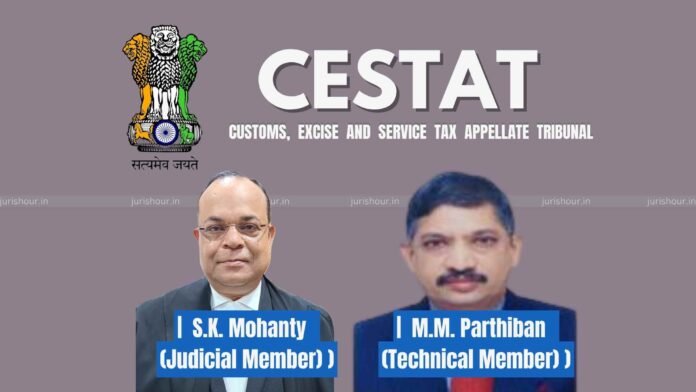
The bench of S.K. Mohanty (Judicial Member) and M.M. Parthiban (Technical Member) set aside the impugned order that had upheld a Central Excise duty demand of ₹19,20,726, along with interest and penalties, against the company for the period from March 2010 to January 2015.
The appellant/assessee is engaged, inter alia, in the manufacture of beer. During the fermentation stage of beer production, carbon dioxide is generated as a natural by-product. The company used the CO₂ generated during the manufacturing process for further manufacture of beer within its factory.
Buy Now: 70+ Judgements Indirect Tax – July 2026 | E-Magazine
The CO₂ was classifiable under Central Excise Tariff Item 2811 2190. During a visit to the factory, departmental officers examined the manufacturing process, storage and use of the gas. The Department also found that assessee purchased CO₂ from the open market and stored the purchased CO₂ together with the CO₂ generated during the beer manufacturing process.
The Department took the view that CO₂ generated and captively consumed in the factory could qualify for exemption under Notification No. 67/95-C.E. dated March 16, 1995 only where the final product was chargeable to Central Excise duty.
Since beer, being an alcoholic beverage for human consumption, was outside the Central Excise levy, the Department concluded that the exemption was unavailable and that the CO₂ generated by assessee was liable to duty.
Accordingly, a Show Cause Notice dated March 16, 2015 was issued demanding ₹19,20,726 in Central Excise duty for March 2010 to January 2015, together with interest. The Department also invoked the extended period of limitation and proposed penalties under Section 11AC of the Central Excise Act, 1944 and Rule 25 of the Central Excise Rules, 2002.
The Additional Commissioner confirmed the proposals in the Show Cause Notice through an Order-in-Original dated February 16, 2016.assessee’s appeal before the Commissioner (Appeals) was also dismissed through the impugned Order-in-Appeal dated June 5, 2018. The company thereafter approached the CESTAT.
The Commissioner (Appeals) had concluded that the CO₂ generated by assessee was a marketable commodity and therefore liable to Central Excise duty.
According to the findings reproduced in the Tribunal’s order, the CO₂ generated during fermentation was collected and subjected to processes including removal of foam and soluble gases, compression, moisture removal and chilling before being stored in a tank. The Commissioner (Appeals) considered these processes sufficient to make the CO₂ capable of storage and sale.
The Commissioner also relied upon the fact that the CO₂ generated by the company had a purity level of approximately 94%, while CO₂ purchased from the open market reportedly had purity between 99% and 100%. The Department further noted that the internally generated and externally purchased CO₂ were stored together.
On this reasoning, the Commissioner (Appeals) held that the CO₂ generated and processed within the factory constituted excisable goods and was liable to Central Excise duty.
The Commissioner also held that assessee had not disclosed the manufacture, storage and use of CO₂ and consequently upheld invocation of the extended limitation period as well as the penalties.
The assessee argued that the issue was already settled by judicial precedents, particularly the Kerala High Court’s judgment in Sabmiller India Limited v. Union of India and decisions of coordinate Benches of the Tribunal.
The company maintained that the CO₂ emerging during beer fermentation was neither manufactured as an independent product nor marketable in the relevant sense. It was a by-product arising naturally during fermentation and was used captively in the further production of beer.
Carlsberg also argued that the absence of facilities for appropriate separation, purification and packing supported its contention that the gas was not marketable. It emphasized that the burden of establishing marketability lay upon the Department, which, according to the appellant, had failed to discharge that burden.
The company further submitted that there was no suppression of facts, misstatement or intention to evade duty. It claimed that it had acted under a bona fide belief, particularly in view of the judicial decisions existing on the issue.
An additional factor relied upon by assessee was that, for a subsequent period from February 2015 to June 2017, proceedings in its own case had been dropped by the Commissioner (Appeals), based upon the relevant judicial precedents.
The Tribunal identified two principal questions: Whether CO₂ generated and stored by assessee for further use in the manufacture of beer was liable to Central Excise duty; and Whether the order upholding the duty demand and other consequences was legally sustainable.
The Tribunal examined the actual brewing process and noted that carbon dioxide is generated naturally during fermentation.
The process involves malt or barley malt, adjunct materials such as rice, maize and sugar, hops and yeast. During fermentation, yeast converts the wort into alcohol and carbon dioxide, resulting in green beer. The Tribunal described CO₂ as a critical by-product arising during the brewing process.
It also noted that modern breweries increasingly capture CO₂ rather than venting it, both for environmental and operational reasons and because the gas can be used within the brewing process.
The Tribunal therefore focused on whether the emergence and subsequent captive use of CO₂ could legally be treated as the manufacture or production of an independently excisable product.
A central aspect of the Tribunal’s reasoning was the character of the final product—beer.
The Tribunal observed that the CO₂ arose as a by-product during the manufacture of beer, which itself was not an excisable product under the Central Excise framework applicable to the dispute.
It held that the statutory requirements under Sections 2(d) and 2(f) of the Central Excise Act were not satisfied so as to categorize the CO₂ in the particular circumstances as excisable goods manufactured by the appellant for captive consumption or sale.
The Tribunal specifically concluded that the CO₂ was not manufactured by assessee as an independent product either for captive consumption or for sale in the market.
The Tribunal found the issue to be squarely covered by the Kerala High Court’s decision in Sabmiller India Limited v. Union of India.
The High Court had examined the scope of Central Excise levy and explained that the charging provision under Section 3 of the Central Excise Act applies to excisable goods produced or manufactured in India.
The High Court reasoned that the manufacturing process must be considered in relation to the excisable goods resulting from it. Since beer, being alcoholic liquor for human consumption, fell outside the Central Excise levy, the manufacturing process leading to beer could not simply be brought within the Central Excise framework for purposes of taxing a by-product arising during that process.
The Kerala High Court’s reasoning concerning captive consumption was particularly important.
The Court explained that captive consumption is relevant where a dutiable intermediate product is manufactured and used within the same factory to produce an excisable final product. Notification No. 67/95-C.E. was intended to avoid the need to pay duty at the intermediate stage where duty would ultimately be payable on the final product.
The notification’s proviso contemplated situations where the final product was exempt or attracted a nil rate of duty. However, the Court found it significant that the final product in the case before it was non-excisable, rather than merely exempt or chargeable at a nil rate.
According to the reasoning adopted by the CESTAT, this distinction indicated that levy of Central Excise duty at the captive-consumption stage was not intended where the final product itself was non-excisable.
The Kerala High Court had also specifically considered CO₂ arising during fermentation.
It held that carbon dioxide generated during fermentation was a by-product of the manufacturing process leading to alcoholic liquor for human consumption. Although CO₂ may independently appear in the Central Excise Tariff, its emergence in a process that did not attract Central Excise duty could not, by itself, result in a levy.
The Court viewed the subsequent use of the CO₂ as an efficient manufacturing practice, particularly because the gas would otherwise have to be released as waste.
The Court therefore concluded that Central Excise duty was not attracted where a by-product emerged during the manufacture of a non-excisable final product and was captively used to efficiently manufacture that non-excisable product.
The Tribunal also relied upon the earlier decision in Mohan Breweries & Distilleries Limited v. Commissioner of Central Excise, Madras.
In that case, the Tribunal had held that CO₂ arising during beer fermentation was not liable to Central Excise duty because it was not marketable in the relevant circumstances.
The Tribunal noted that the CO₂ emerged as a technological consequence of fermentation rather than because the manufacturer intended to manufacture CO₂ as an independent product.
An important factual consideration in that case was the requirement of a separate plant to extract and make the CO₂ marketable. The Tribunal had observed that the Revenue had failed to produce evidence establishing that the gas, in the condition in which it emerged, was marketable and capable of removal for marketing purposes.
The earlier Tribunal decision had also referred to the principle that the burden of proving marketability rests upon the Revenue.
Theassessee ruling reinforces the importance of marketability in determining whether a product or by-product can attract Central Excise duty.
The Tribunal noted that in the earlier cases cited before it, courts and tribunals had distinguished between situations where CO₂ was independently produced, processed and actually marketed and situations where it merely emerged as a by-product during beer fermentation and was used within the manufacturing process.
In the present case, the Tribunal found the factual matrix sufficiently similar to the precedents relied upon by assessee.
It consequently held that it could not take a contrary view when the issue had already been addressed by the Kerala High Court and coordinate Benches of the Tribunal.
Since the underlying Central Excise demand itself was found unsustainable, the Tribunal also rejected the consequences arising from invocation of the extended period of limitation.
The Tribunal specifically held that the adjudged excise duty demand on CO₂ generated as a by-product during beer manufacture, as well as the penalty imposed by invoking the extended period of limitation, did not withstand judicial scrutiny.
The issue of limitation was also significant because the Department had alleged that assessee had failed to disclose the manufacture, storage and use of CO₂. However, the appellant had relied upon its bona fide belief and existing judicial pronouncements supporting its position.
Ultimately, the Mumbai Bench held that the Order-in-Appeal dated June 5, 2018 was not legally sustainable.
The Tribunal accordingly set aside the impugned Order-in-Appeal; rejected the Central Excise duty demand on CO₂ generated as a by-product during beer manufacture; set aside the associated penalty; and allowed assessee India Private Limited’s appeal.
Membership Required to Access Case Details & Order Copy
To view the complete Case Details and Download Order Copy, you must have an active membership. Please subscribe to continue.
Read More: Godrej Industries’ Low-Ethoxylated Alcohol Ethoxylates Classifiable Under Heading 3824: CESTAT

