
The Mumbai Bench of the Customs, Excise and Service Tax Appellate Tribunal (CESTAT) has held that CENVAT credit of service tax paid on commission charged by dealers for sales promotion activities is admissible, as such activities are specifically covered within the definition of “input service” under Rule 2(l) of the CENVAT Credit Rules, 2004.
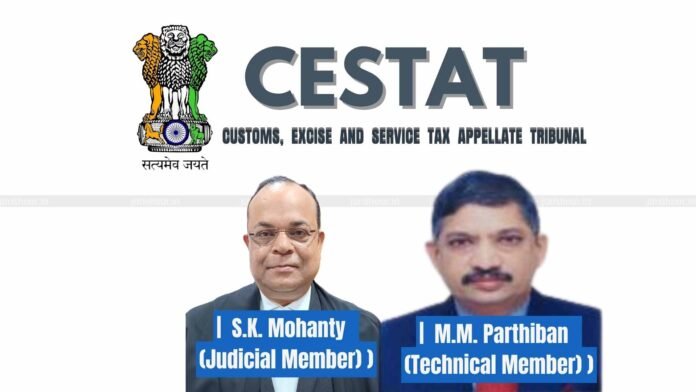
The bench of Justice S.K. Mohanty (Member-Judicial) and M.M. Parthiban (Member-Technical) has observed that the phrase “sales promotion” has been expressly included in the inclusive portion of Rule 2(l), making such services eligible as input services for the purpose of availing CENVAT credit.
The appellant/assessee is a manufacturer of internal combustion (IC) engines and their parts falling under Chapter 84 of the Central Excise Tariff Act, carries out its business through an extensive network of authorized dealers across India. Apart from selling products, these dealers undertake activities such as procuring orders, installation and commissioning of equipment, and providing after-sales services on behalf of the company.
Buy Now: Customs Duty Judgements E-Compilation – June 2026
During the relevant period, the dealers raised invoices on Cummins India for services classified under Business Auxiliary Services and Erection, Commissioning and Installation Services, charging service tax on the consideration received. Based on these invoices, the company availed CENVAT credit of the service tax paid.
However, the Department disputed the availment of credit, contending that the services received from the dealers did not qualify as “input services” under Rule 2(l) of the CENVAT Credit Rules, 2004. A show cause notice was issued, and the adjudicating authority confirmed the demand for reversal of credit. The Commissioner (Appeals) subsequently upheld the adjudication order, prompting the company to approach the Tribunal.
The appellant argued that the agreements executed with the dealers clearly established that the dealers had been engaged to undertake sales promotion activities for the products manufactured by the company.
It was submitted that “sales promotion” is expressly included in the inclusive part of the definition of “input service” under Rule 2(l) of the CENVAT Credit Rules. Consequently, the service tax paid on dealer commission for such activities qualified for CENVAT credit.
The appellant also relied upon the Tribunal’s earlier decisions, particularly Henkel Adhesives Technologies v. Commissioner of CGST and Central Excise, Belapur, as well as Essar Steel India Ltd. and NOCIL Ltd., wherein similar credits had been allowed.
The department defended the findings recorded by the Commissioner (Appeals), maintaining that the disputed services did not satisfy the statutory definition of “input service” and therefore the CENVAT credit had been rightly denied.
After examining the agreements between Cummins India and its dealers, the Tribunal observed that the dealers had been specifically appointed to promote the sale of the appellant’s manufactured goods. The invoices issued by the dealers also described the services under the taxable category of Business Auxiliary Services, reflecting the nature of the work performed.
The Tribunal further noted that the Department had invoked Rule 14 of the CENVAT Credit Rules read with Section 11A of the Central Excise Act, 1944 to deny the credit. However, since the commission paid to the dealers was directly attributable to sales promotion of the appellant’s manufactured goods, the activity squarely fell within the ambit of “sales promotion” contemplated under Rule 2(l). Accordingly, the denial of credit was held to be legally unsustainable.
The Bench placed significant reliance on its earlier ruling in Henkel Adhesives Technologies, where it had held that services rendered by sales promotion agents qualify as input services because sales promotion forms part of the inclusive definition under Rule 2(l).
The Tribunal also clarified that the Gujarat High Court’s decision in Cadila Healthcare Ltd., relied upon in certain cases, dealt with an entirely different factual situation and did not concern sales promotion services. Therefore, the said judgment had no application to the present dispute.
Setting aside the order of the Commissioner (Appeals), the Mumbai Bench held that service tax paid on dealer commission for sales promotion activities is eligible for CENVAT credit, as such services qualify as “input services” under Rule 2(l) of the CENVAT Credit Rules, 2004.
The Tribunal consequently allowed the appeal filed by Cummins India Ltd. and quashed the confirmed demand.
Membership Required to Access Case Details & Order Copy
To view the complete Case Details and Download Order Copy, you must have an active membership. Please subscribe to continue.

