
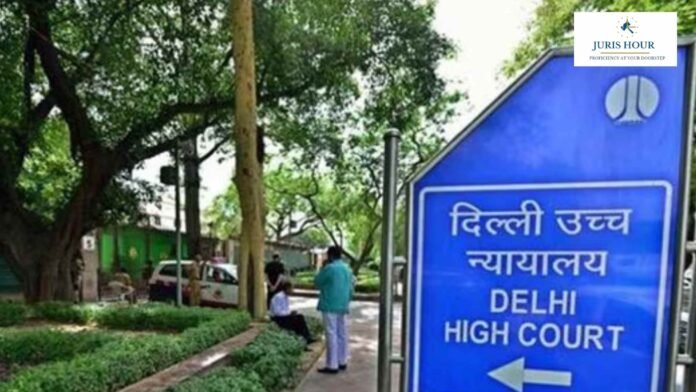
The Delhi High Court has set aside a penalty of ₹4.50 lakh imposed under Section 78 of the Finance Act, 1994, after finding that the assessee had a bona fide and reasonable belief that its services to government hospitals and educational institutions were not liable to service tax.
The Bench of Justice Anil Kshetrapal and Justice Manmeet Pritam Singh Arora observed that the Service Tax Department itself had, at the relevant time, expressed the view that the services rendered by the assessee were non-commercial and not exigible to service tax.
The Court held that such interpretational uncertainty, coupled with the absence of fraud, suppression, wilful misstatement or an intention to evade tax, constituted a “reasonable cause” within the meaning of Section 80 of the Finance Act, 1994.
Buy Now: Service Tax E-Magazine – August 2026
The appellant was engaged in providing services relating to the planning, designing, construction, management and supervision of projects for various government hospitals, medical colleges and educational institutions.
It was registered with the Service Tax Department under several taxable service categories, including architectural services, erection, commissioning and installation services, scientific and technical consultancy, management consultancy and construction services.
The company maintained that the institutions to which it provided services had been established for educational, charitable and healthcare purposes and were not operating for profit. On that basis, it believed that services connected with the construction of such institutions were non-commercial and outside the service tax net.
The dispute originated from a Central Excise Revenue Audit memo dated January 18, 2006, in which the audit authorities took the position that the services rendered by the appellant were taxable.
Significantly, the jurisdictional Service Tax Department initially disagreed with the audit objection.
In a communication dated September 11, 2006, the Assistant Commissioner of Service Tax informed the audit authorities that the appellant was engaged in providing construction-related services to medical and educational institutions. Relying upon CBEC Circular No. 80/10/2004-ST dated September 17, 2004, the officer stated that construction undertaken for institutions established solely for educational, religious, charitable, health, sanitation or philanthropic purposes and not for profit was non-commercial and, therefore, not taxable.
The Deputy Commissioner of Service Tax reiterated this position in another communication dated November 20, 2007. The officer stated that an amount of approximately ₹1.07 crore paid by Guru Ghasidas University to the appellant during 2004-05 was towards the construction and supervision of a medical college, dental college, nursing college, hostels and staff quarters. The Department accordingly requested that the audit objection be dropped.
The appellant’s records were subsequently audited by the Service Tax Commissionerate for the period 2005-06 to 2009-10. Following the audit, a show-cause notice dated October 22, 2010 was issued, proposing recovery of service tax by invoking the extended period of limitation, along with interest, denial of CENVAT credit and imposition of penalties.
The Commissioner of Service Tax (Adjudication), through an order dated March 31, 2014, confirmed a service tax demand of ₹65,75,890 along with interest by invoking the extended five-year limitation period. A CENVAT credit demand of ₹12,360 was also confirmed, and penalties aggregating to ₹65,93,250 were imposed.
The penalty included ₹65,75,890 under Section 78 of the Finance Act, ₹5,000 under Section 77 and ₹12,360 under Rule 15 of the CENVAT Credit Rules read with Section 78.
The adjudicating authority treated the appellant’s services as management or business consultancy services, including an amount attributable to architectural services.
CESTAT sustained the service tax demand only for the normal limitation period from July 1, 2009 to March 30, 2010.
The Tribunal set aside the demand relating to the extended period from April 1, 2005 to June 30, 2009, after finding that there was no suppression of facts by the appellant with the intention of evading service tax. It held that the essential condition for invoking the extended limitation period under the proviso to Section 73(1) of the Finance Act had not been satisfied.
Since the Tribunal’s initial order did not specifically address the penalty of ₹65,75,890 imposed under Section 78, the appellant filed an application seeking rectification of the mistake. CESTAT subsequently reduced the penalty to ₹4.50 lakh through an order dated June 30, 2023.
Before the High Court, the company confined its challenge to this reduced penalty. It did not press its challenge to the service tax demand sustained for the normal limitation period. Consequently, the tax demand for the period from July 1, 2009 to March 30, 2010, along with interest, attained finality.
The CENVAT credit demand of ₹12,360, the corresponding penalty and the penalty of ₹5,000 under Section 77 had also attained finality, as those components were not pressed before CESTAT.
The appellant argued that the failure to pay service tax resulted from a bona fide understanding concerning the classification and taxability of income earned from services provided to government hospitals and educational institutions.
It submitted that the Service Tax Department had itself initially and consistently taken the position that the services were not taxable. The appellant also contended that all relevant agreements, invoices, accounts and records had been disclosed to the authorities during the audit and investigation.
It was argued that there was no fraud, collusion, wilful misstatement, suppression of facts or intention to evade service tax—the statutory ingredients necessary for imposing a penalty under Section 78.
The company alternatively sought protection under Section 80 of the Finance Act, which provided that no penalty would be imposable for specified failures if the assessee proved that there was a reasonable cause for the default.
The department opposed the appeal, contending that the services rendered by the appellant were essentially architectural, engineering, designing and consultancy services rather than construction services.
According to the Department, the agreements, invoices and accounts demonstrated that the appellant’s role was restricted to preparing designs, drawings and estimates, obtaining approvals, conducting site visits and supervising projects. The appellant did not incur expenditure on construction material or receive consideration for undertaking the actual construction activity.
The Revenue consequently argued that the services were classifiable as “Architect’s Services” and, where applicable, as “Management or Business Consultancy Services.”
It further submitted that the appellant could not rely upon internal correspondence between the Department and the audit authorities because the classification of a service had to be determined from its actual nature. The Revenue alleged that the appellant had failed to correctly assess and discharge its service tax liability and had suppressed the value of taxable services.
The High Court found that the communications issued by the Assistant Commissioner and Deputy Commissioner in 2006 and 2007 supported the appellant’s contention that the Department itself had considered the services provided to government institutions as not liable to service tax.
The Bench observed that this contemporaneous departmental position lent credibility to the appellant’s claim that it had a reasonable and bona fide cause for not depositing service tax.
The Court also placed considerable importance on CESTAT’s finding that the appellant had not wilfully suppressed facts with an intention to evade service tax. That finding had been recorded while setting aside the demand for the extended limitation period.
Since the Revenue had not challenged CESTAT’s finding regarding the absence of wilful suppression, the finding had attained finality. According to the High Court, it had a material bearing on both the allegations made in the show-cause notice and the appellant’s request for waiver of the penalty under Section 80.
The High Court referred to its earlier decision in Bharat Hotels Ltd. v. Commissioner of Central Excise (Adjudication), in which it was held that an assessee’s bona fide belief regarding the non-taxability of services, in the absence of any deliberate intention to evade tax, could constitute a reasonable cause under Section 80.
The Bench also relied upon M/s Bajaj Travels Ltd. v. Commissioner of Service Tax, where the Court had held that authorities must examine whether an assessee had established a bona fide and reasonable cause for failing to pay or deposit service tax. Where the default was not deliberate, penalties otherwise imposable under Sections 76 and 78 could be waived by invoking Section 80.
Applying these principles, the High Court held that the appellant’s failure to pay service tax could not be regarded as a deliberate or contumacious default.
The Court observed that the appellant had acted on a bona fide and reasonable understanding that the services rendered by it were not exigible to service tax. The fact that the Department itself held a similar view at the relevant time reinforced the appellant’s case.
“Such interpretational uncertainty, coupled with the absence of any material suggesting suppression, fraud, wilful misstatement, or an intention to evade tax, constitutes a reasonable cause within the meaning of Section 80,” the Court observed.
The Bench concluded that the default arose from a bona fide understanding of the applicable legal position and not from a deliberate attempt to avoid statutory liability. It accordingly allowed the appeal and set aside the penalty of ₹4.50 lakh.
Membership Required to Access Case Details & Order Copy
To view the complete Case Details and Download Order Copy, you must have an active membership. Please subscribe to continue.

