
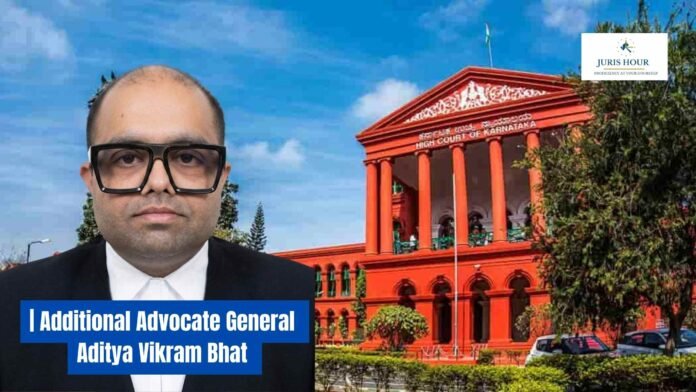
The Karnataka High Court has ruled that an assessee cannot claim the benefit of a lower rate of Value Added Tax (VAT) during reassessment proceedings if such a claim was not made in the original return or through a revised return filed under the Karnataka Value Added Tax (KVAT) Act.
The Division Bench of Justice S.G. Pandit and Justice Rajesh Rai K observed that it was undisputed that the assessee had filed its original return declaring VAT at 12.5% and had not filed any revised return under Section 35(4) of the KVAT Act.
The bench held that the tax department and appellate forums cannot grant relief beyond what has been claimed in the return, reaffirming the statutory importance of filing revised returns for correcting tax declarations.
Buy Now: Service Tax Judgement E-Compilation : June 2026
The dispute arose from a Sales Tax Revision Petition filed by petitioner/assessee a registered dealer engaged in the construction of residential flats under the KVAT Act. For the assessment year 2005–06, the assessee filed its VAT return declaring tax at the rate of 12.5% on the value of iron and steel incorporated in works contracts, amounting to approximately ₹21.91 crore.
The return was initially assessed under Section 38 of the KVAT Act. Subsequently, the case was selected for reassessment under Section 39(1), during which the assessee requested that VAT on iron and steel used in the works contract be reduced from 12.5% to 4%. However, the reassessment authority rejected this request and completed the reassessment by continuing to levy VAT at 12.5%.
The assessee challenged the reassessment order before the Joint Commissioner of Commercial Taxes (Appeals), who partly allowed the appeal but declined to reduce the VAT rate on iron and steel.
A further appeal before the Karnataka Appellate Tribunal also resulted in partial relief. However, the Tribunal upheld the levy of VAT at 12.5% on iron and steel used in the execution of the works contract for the relevant assessment year. Aggrieved by this finding, the assessee approached the Karnataka High Court through a Sales Tax Revision Petition.
Before the High Court, the assessee argued that iron and steel constitute “declared goods” under Section 14 of the Central Sales Tax (CST) Act, 1956. Consequently, Sections 14 and 15 of the CST Act, read with Article 286 of the Constitution, limited the State’s power to levy tax on such goods to 4%.
The petitioner further contended that collecting VAT at 12.5% violated Article 265 of the Constitution, which mandates that no tax can be levied or collected except by authority of law. Reliance was placed on the Supreme Court’s decisions in Gannon Dunkerley & Co. and Builders Association of India, wherein the apex court had recognised that restrictions under Section 15 of the CST Act also apply to the transfer of property in goods involved in works contracts.
The State opposed the revision petition, arguing that the assessee itself had voluntarily declared VAT at 12.5% while filing its original return and had never filed a revised return under Section 35(4) of the KVAT Act to rectify the declaration.
The Government further submitted that the request for a lower tax rate was raised only during reassessment proceedings, nearly three years after the original return had been filed. Therefore, the reassessment authority could not entertain a fresh claim that had not been made through the statutory mechanism of filing a revised return.
The State also argued that the relevant amendment making works contracts involving declared goods subject to the concessional CST rate came into effect from 1 April 2006, whereas the dispute related to the assessment year 2005–06, when the applicable residuary VAT rate remained 12.5%. Additionally, it invoked the doctrine of unjust enrichment, contending that the assessee may already have passed on the tax burden to purchasers.
The Court noted that the request for reducing the tax rate was made only during reassessment proceedings, almost three years after filing the original return.
Relying on its earlier decision in Nandi Constructions v. State of Karnataka, the Court reiterated that tax authorities cannot grant any benefit beyond what has been claimed in the original or revised return. The Bench also referred to the earlier Division Bench judgment in Infinite Builders and Developers, which had similarly held that appellate authorities cannot grant relief that was never claimed through the prescribed statutory return.
According to the Court, permitting fresh claims during reassessment or appellate proceedings would effectively confer unrestricted powers upon tax authorities to grant benefits outside the statutory framework, contrary to the scheme of the KVAT Act.
The High Court also found no illegality in the Tribunal’s direction remanding certain factual issues to the First Appellate Authority for verification of the books of accounts and other records. It held that the remand was appropriate and required no interference.
The Karnataka High Court dismissed the Sales Tax Revision Petition. While it kept open the larger legal questions regarding the applicability of the concessional VAT rate on declared goods used in works contracts, it answered the key issue against the assessee by holding that an assessee who has not filed a revised return cannot seek a lower rate of VAT during reassessment proceedings merely because the original declaration was allegedly inconsistent with law.
Membership Required to Access Case Details & Order Copy
To view the complete Case Details and Download Order Copy, you must have an active membership. Please subscribe to continue.

