
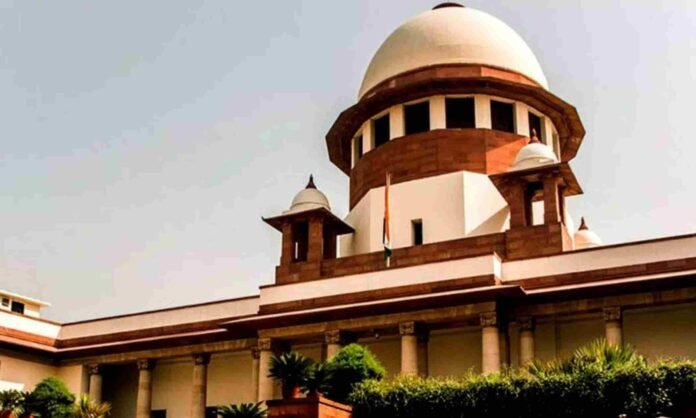
The Supreme Court has upheld the right of genuine purchasing dealers to claim Input Tax Credit (ITC) even if the selling dealer fails to deposit the tax collected with the government. The judgment came in the case Commissioner, Trade and Tax, Delhi vs. M/s Shanti Kiran India (P) Ltd., wherein the Court dismissed appeals filed by the Delhi Trade & Tax Department.
The core issue before the Court was whether purchasing dealers should be denied ITC when the seller — despite being a registered dealer at the time of sale — did not later deposit the tax amount into the government treasury.
The purchaser companies, including M/s Shanti Kiran India (P) Ltd., had bought goods from certain dealers who were duly registered under the Delhi Value Added Tax (DVAT) Act on the dates of the transactions. These sellers had issued proper tax invoices and collected VAT from the purchasers. However, subsequently, those selling dealers defaulted in depositing the tax and their registrations were cancelled.
The tax department sought to recover the same tax amount from the purchasing dealers by denying them ITC benefit, arguing that the tax had not actually reached the government exchequer.
The Delhi High Court had earlier ruled in favor of the purchasing dealers, observing that they were bona fide buyers who acted in good faith and made payments to registered sellers backed by valid invoices. The High Court held that ITC cannot be denied to a purchasing dealer who has genuinely transacted with a registered seller, unless there is evidence of collusion or fraud.
This position was reinforced in the landmark decision in On Quest Merchandising India Pvt. Ltd. vs. Govt. of NCT of Delhi (2017), where the Court had interpreted Section 9(2)(g) of the DVAT Act to protect innocent purchasing dealers.
The Supreme Court bench comprising Justice Manoj Misra and Justice Nongmeikapam Kotiswar Singh upheld the High Court’s reasoning, noting that the selling dealers were registered at the time of transaction. The purchasing dealers produced genuine invoices. There was no evidence of fraud or collusion. The government should recover dues from the defaulting seller, not the innocent purchaser.
The Court categorically held that the remedy lies against the defaulting seller, and not in depriving the purchasing dealer of ITC benefit which they rightfully availed in good faith.
The Supreme Court’s ruling is widely seen as a reinforcement of fairness in tax administration. By prioritizing genuine commercial conduct and discouraging arbitrary denial of ITC, the judgment strengthens business confidence and helps maintain stability in the tax credit chain.
Case Details
Case Title: The Commissioner Trade And Tax Delhi Versus M/S Shanti Kiran India (P) Ltd.
Case No.: Civil Appeal No(S).2042-2047/2015
Date: 09/09/2025
Read More: India Expands ECTS-Based Transhipment Routes for Nepal-Bound Cargo: CBIC

