
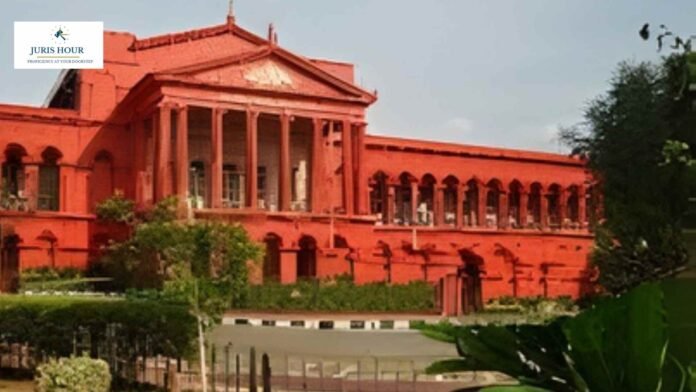
The Karnataka High Court has set aside a GST adjudication order after observing that the same officer cannot act as auditor and adjudicator.
The bench of Justice S Sunil Dutt Yadav remitted the matter back to the tax authorities and directed them to first determine whether the officer who conducted the audit could validly adjudicate the proceedings arising out of that audit.
The petitioner/assessee challenged both a show cause notice dated September 30, 2025 and the subsequent Order-in-Original passed by the GST authorities. The principal contention raised by the taxpayer was that proceedings had been initiated by both the audit and enforcement wings, and that the adjudication order had ultimately been passed by the same officer who conducted the audit proceedings.
According to the petitioner, such a course of action violated the principles of natural justice because an officer who had already formed an opinion and recorded findings during the audit stage could not be expected to independently adjudicate the matter thereafter. The taxpayer argued that the adjudicating authority would inevitably be influenced by the conclusions already reached during the audit process.
The taxpayer further relied on Circular No. 31/05/2018-GST dated February 9, 2018 and Circular No. 169/01/2022-GST dated March 12, 2022, contending that the procedure adopted was inconsistent with the framework contemplated for GST assessments and adjudication.
The State, however, opposed the petition and argued that the taxpayer had not raised such objections before the authority concerned. The Government also contended that the circulars relied upon by the petitioner related to Central GST authorities and, in the absence of a corresponding notification applicable to State GST authorities, those instructions were not binding on the State authorities.
Justice S. Sunil Dutt Yadav noted that the issue concerning the jurisdiction and propriety of the adjudicating authority frequently arises in GST proceedings and therefore deserved proper adjudication. The Court held that the taxpayer should be permitted to raise its jurisdictional objection before the concerned authority.
The Court observed that once such an objection is raised, it would be open to the adjudicating authority to seek appropriate administrative directions from the Joint Commissioner of Commercial Taxes, who is responsible for assigning cases.
Importantly, the Court directed that the authority must first record a finding on the jurisdictional issue and only thereafter proceed to examine the case on merits. All contentions of the taxpayer regarding jurisdiction were expressly kept open for adjudication.
Allowing the petition in part, the High Court set aside the Order-in-Original and remanded the matter for fresh consideration in accordance with its observations. The Court further directed that no steps should be taken on the merits of the dispute until a finding on the jurisdictional objection is first recorded.
Membership Required to Access Case Details & Order Copy
To view the complete Case Details and Download Order Copy, you must have an active membership. Please subscribe to continue.
Read More: WhatsApp Chats Alone Can’t Justify Tax Additions: ITAT

