
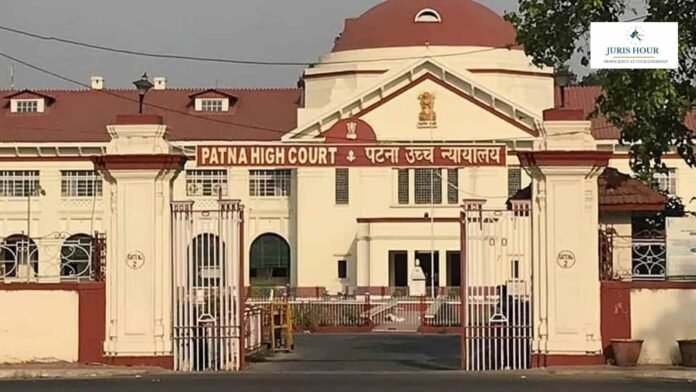
The Patna High Court has sought responses from the Centre and the Bihar Government on a Public Interest Litigation seeking establishment and availability of the Goods and Services Tax Appellate Tribunal (GSTAT), Bihar State Bench, at a convenient and centrally located place in Patna.
A Division Bench comprising the Acting Chief Justice and Justice Rajesh Kumar Verma heard the concerns over accessibility to the appellate forum for advocates, tax practitioners, chartered accountants, accountants, taxpayers and other stakeholders involved in GST litigation.
The Bihar Commercial Taxes Bar Association approached the High Court through a Public Interest Litigation seeking directions to the authorities to ensure establishment and availability of the GST Appellate Tribunal, Bihar State Bench, in Patna and, specifically, in the close vicinity of the High Court and other major GST and tax administration offices.
Buy Now: 130 GST Judgments – E-Magazine July 2026
The petition identifies several important tax offices in Patna, including Kar Bhawan, the Central Revenue Building, the CGST Commissionerate office, various State GST Circle offices and other GST administrative establishments. According to the petition, locating the GSTAT in proximity to these offices would make the appellate mechanism more accessible to professionals and taxpayers.
The petitioner also sought directions for the Tribunal to be established in any available building premises situated within a reasonable and comfortable reach of advocates, tax practitioners, chartered accountants, accountants and other stakeholders engaged in taxation consultancy and practice.
A significant aspect of the PIL is the assertion that the GSTAT Bihar Bench is not merely an administrative establishment but a crucial quasi-judicial institution contemplated under Section 112 of the Central Goods and Services Tax Act, 2017.
The petition states that the Tribunal would adjudicate GST disputes arising from orders, decisions and proceedings initiated or concluded by GST authorities at different levels. Given its role in deciding GST disputes, the petitioner argued that the Tribunal would naturally have substantial footfall of professionals and litigants from different parts of the State.
The plea therefore emphasises that the authorities have an obligation to ensure easy accessibility to the institution and prevent unnecessary physical and financial hardship for those required to approach it.
During the hearing, the Bihar Advocate General submitted before the High Court that he would obtain the necessary instructions regarding the grievance raised by the petitioner.
More importantly, the Advocate General agreed to explore the possibility of locating the GST Appellate Tribunal at a more convenient and centrally situated place within Patna, rather than shifting it to a remote area.
The High Court took note of this submission and directed the Advocate General to take up the issue with the concerned authorities of both the State Government and the Central Government.
The counsel appearing for the Union of India was also directed to obtain instructions from the competent authorities so that the issue could be examined and an appropriate decision taken at the earliest.
The High Court has not, at this stage, finally directed the authorities to establish the GSTAT Bench at any particular location. Instead, the Court has initiated the process of obtaining responses from the concerned governments after the Advocate General indicated that the issue would be examined.
The Bench directed the learned Advocate General and the Additional Solicitor General to file their respective counter affidavits within six weeks. The matter has been listed next on September 15, 2026.
The proceedings place the question of physical accessibility of a specialised tax appellate forum at the centre of the dispute. The petitioner’s case is that the location of the GSTAT should be considered not merely from the standpoint of availability of premises but also in terms of the practical difficulties faced by taxpayers and professionals who would regularly have to appear before the Tribunal.
The petitioner has specifically sought a location that is within reasonable reach of the principal tax offices and the High Court, arguing that such an arrangement would facilitate access to justice and reduce physical and financial hardship.
The plea also underscores the expected importance of the GSTAT as an appellate forum for GST disputes across Bihar. Since the Tribunal is intended to hear disputes arising from GST adjudication proceedings, its accessibility is likely to have a direct bearing on taxpayers and professionals required to pursue statutory appeals.
Importantly, the August 3 order does not record a final judicial determination directing the authorities to locate the GSTAT at a particular premises. The immediate development is that both the State and Central authorities have been asked to examine the grievance and respond to the Court.
The Advocate General’s submission that a centrally situated location would be explored has prompted the Court to seek further instructions and formal responses from the governments.
The next hearing on September 15, 2026, is therefore expected to provide greater clarity on the proposed location of the Bihar GSTAT Bench and whether the authorities intend to reconsider any plan to place the Tribunal in a remote area.
Membership Required to Access Case Details & Order Copy
To view the complete Case Details and Download Order Copy, you must have an active membership. Please subscribe to continue.

