
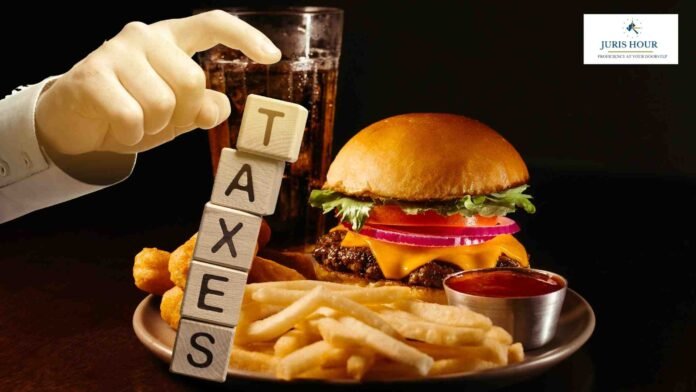
The Union Government has clarified that there is no separate Goods and Services Tax (GST) rate specifically applicable to ultra-processed foods (UPFs) or foods high in fat, sugar or salt (HFSS), and that it has not conducted any formal assessment on the health or economic benefits of imposing higher taxes on such products.
The clarification was given by Minister of State for Finance Pankaj Chaudhary in a written reply to Unstarred Question No. 2702 in the Lok Sabha on March 9, 2026, raised by MP G. Kumar Naik. The question sought details about the GST slab applicable to ultra-processed foods and whether the government had evaluated the impact of imposing higher taxes on unhealthy food items.
In response, the minister stated that GST rates and exemptions are determined based on the recommendations of the GST Council, which comprises representatives of both the Union and state governments. He explained that the GST rate structure follows the Harmonised System of Nomenclature (HSN)—an internationally accepted system for classifying traded products.
According to the government, food products are classified under Chapters 1 to 21 of the HSN, and GST rates are applied according to the classification of individual items within these chapters. The minister emphasized that the GST framework does not currently provide any distinct tax category or rate specifically for ultra-processed foods or products high in fat, sugar or salt.
Addressing the second part of the question, the government stated that no formal assessment has been conducted regarding the potential health or economic benefits of imposing higher GST rates on unhealthy food products. As a result, there are no official findings or policy evaluations available on whether increased taxation on such foods could influence public health outcomes or consumer behavior.
The response comes amid growing public health discussions globally about the role of taxation in discouraging consumption of highly processed or nutritionally poor foods. Several countries have implemented “sin taxes” or health taxes on sugary beverages and junk food to address rising rates of obesity, diabetes and other lifestyle diseases.
However, the Union Government’s reply indicates that India’s current GST structure continues to classify food items primarily on the basis of product categories under the HSN system rather than nutritional profiles such as fat, sugar or salt content.

