
HomeGSTNew 30-Day E-Invoice Rule to Take Effect from April 1, 2025 –...

New 30-Day E-Invoice Rule to Take Effect from April 1, 2025 – What Businesses Need to Know

Published on

🚀 Stay Connected With JurisHour

WhatsApp X Telegram

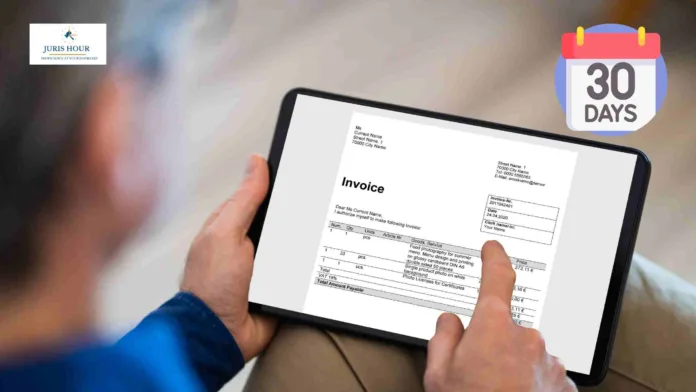
The Goods and Services Tax Network (GSTN) has introduced a significant compliance change for businesses under the Goods and Services Tax (GST) framework. Starting April 1, 2025, all businesses with an Annual Aggregate Turnover (AATO) of Rs. 10 crore and above must report their e-invoices within 30 days of invoice generation on the Invoice Registration Portal (IRP).

Key Updates on GST E-Invoicing Rule 2025

Previously, this 30-day reporting mandate applied only to businesses with an AATO of Rs. 100 crore or more. With the threshold now lowered, thousands of mid-sized enterprises must comply with this new GST e-invoice rule.

Important Highlights:

  • Mandatory E-Invoice Reporting: Businesses with an AATO of Rs. 10 crore and above must upload their invoices, credit notes, and debit notes to the IRP within 30 days.
  • Automated Compliance Checks: The IRP system will automatically reject invoices that exceed the 30-day submission window.
  • Impact on Input Tax Credit (ITC): Unreported invoices beyond 30 days become invalid for ITC claims, affecting suppliers and buyers.
  • Applicable Turnover Limit: The rule applies to businesses meeting the AATO threshold in any preceding financial year.

Why This GST E-Invoice Compliance Matters

Failure to comply with this new e-invoicing rule could lead to invoice rejections, loss of ITC eligibility for buyers, and regulatory scrutiny. To ensure smooth GST compliance, businesses must update their internal processes, accounting software, and ERP systems.

How to Stay Compliant with the New E-Invoice Rule?

  • Automate alerts for timely invoice reporting.
  • Enable real-time syncing with IRP systems.
  • Train staff on the updated GST e-invoicing guidelines.

Businesses must act now to avoid compliance issues and maintain seamless tax operations. Stay informed and ensure smooth adherence to the GST e-invoice rule effective April 1, 2025.

Read More: Safeguard Measures To Protect Domestic Industry Can’t Be Whittled Down by ‘Transition Provisions’: Delhi High Court

Mariya Paliwala
Mariya Paliwalahttps://www.jurishour.in/
Mariya is the Senior Editor at Juris Hour. She has 7+ years of experience on covering tax litigation stories from the Supreme Court, High Courts and various tribunals including CESTAT, ITAT, NCLAT, NCLT, etc. Mariya graduated from MLSU Law College, Udaipur (Raj.) with B.A.LL.B. and also holds an LL.M. She started her career as a freelance tax reporter in the leading online legal news companies.

Latest articles

JURISHOUR | TAX LAW DAILY BULLETIN : APRIL 11, 2026

Here’s the Tax Law Daily Bulletin for April 11, 2026.GSTPRE-DEPOSIT FIELD NOW MADE EDITABLE...

Income Tax Dept. Introduces Form 121, Replaces Forms 15G and 15H

The Income Tax Department has introduced a new unified declaration form—Form No. 121—aimed at...

CESTAT As The Appellate Authority For Central Sales Tax Disputes: A Paradigm Shift under Finance Act, 2023

The article titled “CESTAT As The Appellate Authority For Central Sales Tax Disputes: A...

GST Payable Only on Margin in Second-Hand Car Sales, Subject to Strict Conditions and No ITC Claim: AAR

The Karnataka Authority for Advance Ruling (AAR) has held that while the “margin scheme”...

More like this

JURISHOUR | TAX LAW DAILY BULLETIN : APRIL 11, 2026

Here’s the Tax Law Daily Bulletin for April 11, 2026.GSTPRE-DEPOSIT FIELD NOW MADE EDITABLE...

Income Tax Dept. Introduces Form 121, Replaces Forms 15G and 15H

The Income Tax Department has introduced a new unified declaration form—Form No. 121—aimed at...

CESTAT As The Appellate Authority For Central Sales Tax Disputes: A Paradigm Shift under Finance Act, 2023

The article titled “CESTAT As The Appellate Authority For Central Sales Tax Disputes: A...