
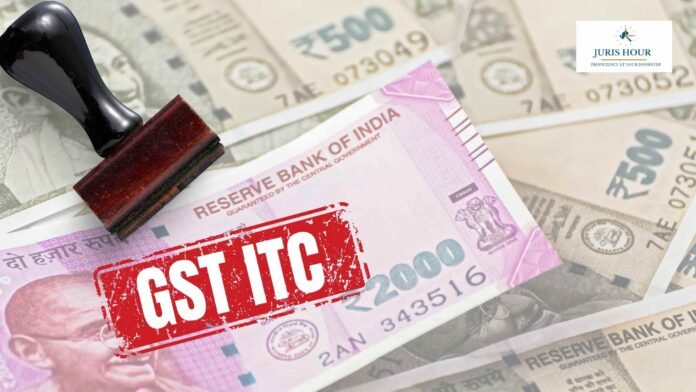
The Goods and Services Tax Appellate Tribunal (GSTAT), Kolkata Bench, has restored a demand of Rs. 43.44 lakh against a taxpayer for allegedly availing input tax credit on invoices issued by 13 non-existent suppliers and held that merely producing tax invoices and evidence of payment through banking channels was insufficient when the taxpayer failed to establish the actual physical movement and receipt of goods.
The bench of S.G. Chattopadhyay (Judicial Member) and Bijoy Kumar Kar (Technical Member) concluded that the facts disclosed in the show-cause notice were sufficient to invoke Section 74 of the Central Goods and Services Tax Act, 2017, which applies to tax or input tax credit disputes involving fraud, wilful misstatement or suppression of facts with an intention to evade tax.
Buy Now: Service Tax E-Magazine – August 2026
The dispute originated from a show-cause-cum-demand notice dated January 8, 2024, covering the financial years from 2017-18 to 2023-24. The notice raised three separate demands against the taxpayer.
The first allegation concerned excess availment and utilisation of ITC amounting to ₹20.92 lakh due to differences between the credit claimed in GSTR-3B and the credit reflected in GSTR-2A.
The second and principal allegation related to ITC of ₹43.44 lakh allegedly claimed on the strength of invoices issued by 13 suppliers whose GST registrations were subsequently cancelled retrospectively. The Revenue alleged that these suppliers were non-existent and had obtained GST registration by providing fictitious addresses.
The third demand related to an alleged short payment of ₹6.45 lakh under the reverse charge mechanism. The department claimed that the taxpayer had suppressed taxable inward supplies valued at approximately ₹35.88 lakh.
Following adjudication, the original authority disallowed ITC of ₹17.22 lakh on account of the GSTR-2A and GSTR-3B mismatch. It also confirmed the entire ₹43.44 lakh disputed ITC under Section 74, along with interest and an equivalent penalty. A further demand of ₹5.30 lakh was confirmed under the reverse charge mechanism.
The taxpayer disputed the allegation that the transactions with the 13 suppliers were fictitious. It maintained that the GST registrations of the suppliers were active on the GST portal when the transactions were undertaken.
According to the taxpayer, the supplies were actually received and the consideration, including the GST component, was paid through cheques and online bank transfers. It argued that the retrospective cancellation of the suppliers’ registrations could not automatically invalidate transactions completed when the registrations appeared active on the official portal.
The taxpayer further contended that the show-cause notice did not disclose the reasons for retrospective cancellation or furnish supporting material such as inspection reports, statements, panchnamas or investigation documents concerning the suppliers.
It was also argued that Section 74 could not be invoked without evidence of collusion or connivance between the taxpayer and the suppliers. The taxpayer questioned the validity of issuing a single consolidated notice for multiple financial years and claimed that clubbing the periods affected its ability to seek relief under the amnesty provisions of Section 128A.
The first appellate authority partly accepted the taxpayer’s case. After comparing the GSTR-2A, GSTR-3B and DRC-03 records, it reduced the ITC mismatch demand to ₹1,93,812, along with the applicable interest and penalty under Section 73.
In relation to the invoices issued by the 13 retrospectively cancelled suppliers, the appellate authority sustained the substantive demand of ₹43.44 lakh. It, however, held that the department had failed to establish active connivance, fraud, wilful misstatement or suppression of facts on the taxpayer’s part.
The appellate authority consequently held that the demand should be enforced under Section 73 rather than Section 74 of the CGST Act.
The reverse charge demand was also substantially reduced. On examining the taxpayer’s records, the appellate authority found that several amounts represented local conveyance expenses incurred for labourers and employees, railway travel expenses, professional fees paid to chartered accountants and freight on which tax had already been charged under the forward charge mechanism.
It accordingly restricted the reverse charge liability to ₹10,236 each under CGST and SGST, totalling ₹20,472, along with the applicable interest and penalty under Section 73.
The Revenue carried the matter before the GSTAT and principally challenged the first appellate authority’s decision to treat the ₹43.44 lakh ITC demand as a Section 73 case.
It submitted that the taxpayer had availed and utilised substantial ITC on invoices generated in the names of non-existent suppliers without establishing the actual receipt of goods. According to the department, the alleged transactions were deliberately structured to obtain inadmissible credit and, therefore, Section 74 had been correctly invoked.
The Revenue also argued that the first appellate authority had exceeded its jurisdiction by independently recalculating and modifying the demands. It contended that if Section 74 was found inapplicable, the matter should have been sent back to the proper officer for determination under Section 73.
The taxpayer opposed the Revenue’s appeal and reiterated that retrospective cancellation of suppliers’ registrations did not prove its knowledge or complicity. It also maintained that the burden of proving eligibility for ITC could not, by itself, be converted into a presumption of fraudulent intention.
The GSTAT first rejected the Revenue’s jurisdictional objection to the first appellate authority’s recalculation of the demands.
Referring to Section 75(8) of the CGST Act, the Tribunal observed that an appellate authority, appellate tribunal or court is empowered to modify the amount of tax determined by the proper officer. When the tax amount is modified, the corresponding interest and penalty also stand modified accordingly.
The Tribunal, therefore, upheld the reduction of the GSTR-2A and GSTR-3B mismatch demand to ₹1,93,812. It noted that the first appellate authority had meticulously examined the returns and DRC-03 payments before computing the remaining liability.
The GSTAT also upheld the reduction of the reverse charge demand from ₹5.30 lakh to ₹20,472.
The Bench noted that the expenses were disclosed in the taxpayer’s annual financial statements. No deliberate act of concealing material information with an intention to evade tax had been established in relation to these expenses.
Relying on the Supreme Court’s decision in Pushpam Pharmaceuticals Company v. Collector of Central Excise, Bombay, the Tribunal observed that “suppression of facts” in taxation matters must involve the deliberate withholding of correct information to escape tax or duty.
Since no such deliberate conduct was proved concerning the reverse charge liability, the Tribunal agreed that Section 74 could not be invoked for that component. The modified liability was therefore sustained under Section 73.
The Tribunal, however, reached a different conclusion regarding the ₹43.44 lakh ITC claimed through the 13 suppliers.
It noted that Section 155 of the CGST Act places the burden of proving eligibility for ITC upon the person claiming the credit. Although the taxpayer had produced invoices and certain banking records, it did not place on record documents establishing the actual physical movement and delivery of goods.
The Bench relied on the Supreme Court’s ruling in State of Karnataka v. Ecom Gill Coffee Trading Private Limited, which held that the mere production of invoices or proof of payment through cheques does not discharge the purchaser’s burden of proving a genuine transaction.
The purchasing dealer is required to substantiate the actual transaction through supporting evidence such as details of the selling dealer, vehicle particulars, freight payments, delivery acknowledgements, tax invoices and payment records.
Applying that principle, the GSTAT found that no material had been produced to establish physical movement of the goods from the alleged suppliers to the taxpayer. The absence of such evidence strengthened the Revenue’s allegation that the suppliers were fictitious and the credit had been claimed without actual receipt of goods.
The Tribunal also examined whether the show-cause notice contained adequate foundational facts to justify invoking Section 74.
It referred to the Supreme Court’s ruling in Tata Steel Limited v. Union of India, in which the Court held that merely using expressions such as fraud, wilful misrepresentation or suppression would not permit the Revenue to invoke the extended limitation period. The foundational facts leading to such an inference must be evident from the notice itself.
The GSTAT found that the notice did not merely reproduce the statutory language. It recorded that an investigation concerning one of the suppliers had revealed its non-existence and the passing of inadmissible ITC. It also stated that scrutiny of the remaining suppliers showed that they were non-existent from the date of registration, had furnished fictitious addresses and had never conducted genuine business.
The Tribunal further noted that the taxpayer had earlier reversed ITC of ₹60,378 relating to one of the questioned suppliers, along with interest and penalty, through Form DRC-03.
On the basis of the allegations contained in the notice and the taxpayer’s failure to prove receipt of goods, the GSTAT inferred that the taxpayer was aware that the suppliers were non-existent and that the goods covered by the invoices had not actually been delivered.
It held that the taxpayer’s declaration of such credit in GSTR-3B amounted to wilful misstatement and reflected deliberate conduct intended to obtain inadmissible ITC. The Bench consequently found no illegality in the department invoking Section 74 for the ₹43.44 lakh demand.
The GSTAT also rejected the taxpayer’s argument that a consolidated show-cause notice could not cover more than one financial year.
Relying on the Delhi High Court’s decision in Ambika Traders v. Additional Commissioner, Adjudication, DGGSTI, CGST, Delhi North, the Tribunal observed that Sections 73 and 74 use the expressions “for any period” and “for such periods.” This language contemplates that a notice may cover a period extending beyond a single financial year.
The Bench observed that fraudulent availment or utilisation of ITC may involve interconnected transactions spread across different financial years. Examining a series of transactions may be necessary to uncover a consistent pattern of fictitious purchases or credit claims.
Accordingly, the GSTAT held that issuing a consolidated show-cause notice for multiple financial years under Section 74 was not impermissible.
The GSTAT ultimately set aside the first appellate authority’s finding that the disputed ₹43.44 lakh ITC demand was recoverable under Section 73.
It restored the adjudicating authority’s order confirming the ₹43.44 lakh demand under Section 74, together with the applicable interest and penalty. Under the original adjudication order, an equivalent penalty of ₹43.44 lakh had been imposed in relation to this component.
The Tribunal upheld the first appellate authority’s reduction of the ITC mismatch liability to ₹1,93,812 and the reverse charge liability to ₹20,472, along with the applicable interest and penalty under Section 73.
The Bench also preserved the taxpayer’s right to apply for waiver of interest, penalty or both under Section 128A for eligible demands confirmed under Section 73. It directed that if such an application is filed, the competent Revenue authority must dispose of it within three months from the date of filing.
Membership Required to Access Case Details & Order Copy
To view the complete Case Details and Download Order Copy, you must have an active membership. Please subscribe to continue.

