
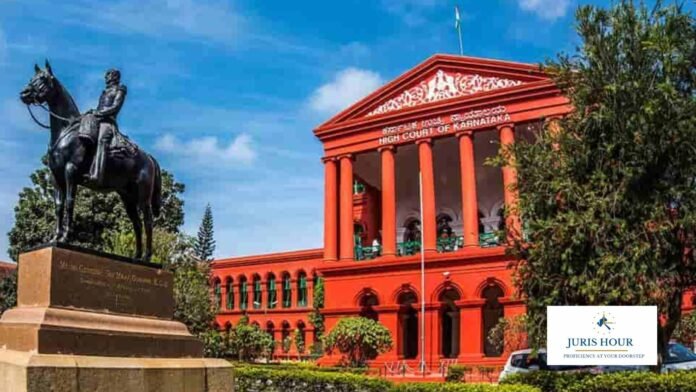
The Karnataka High Court has restrained the GST authorities from precipitating recovery proceedings initiated under Section 79 of the Central Goods and Services Tax Act, 2017, after the petitioner challenged the legality of the action on the ground that the audit proceedings had already been concluded and the show cause notice did not contain any allegation of fraud.
The bench of Justice B. M. Shyam Prasad directed that no coercive action shall be taken until the next date of hearing, granting interim protection to the petitioner. The matter has been listed for further hearing on July 1, 2026.
The petitioner/assessee challenged the initiation of recovery proceedings under Section 79 of the Karnataka Goods and Services Tax Act/CGST Act, contending that such proceedings were legally unsustainable in view of earlier audit proceedings conducted by the Central GST authorities.
According to the petitioner, the CGST authorities had audited the company’s Input Tax Credit (ITC) claims for the financial years 2020-21 to 2023-24. During the audit, objections regarding alleged wrongful availment of ITC were raised. However, after the petitioner accepted the audit observations and discharged the tax liability along with applicable interest, the authorities concluded that no further action was required.
The petitioner further argued that when it subsequently received a Show Cause Notice in Form GST DRC-01 under Section 74(1), it specifically relied upon the audit report dated 17 December 2025 in its reply.
Despite this, while adjudicating the proceedings, the authority considered the audit report only with respect to FY 2019-20 and dropped the proceedings for the later years merely because the CGST authorities had not sought comments regarding those assessment years. According to the petitioner, this approach ignored the fact that the audit had already examined and concluded the issues relating to FY 2020-21 to FY 2023-24.
One of the principal grounds urged before the High Court was that the proceedings were barred by limitation.
The petitioner also submitted that although the notice had been issued under Section 74, which deals with cases involving fraud, wilful misstatement or suppression of facts, the show cause notice did not contain any allegation of fraud whatsoever.
It was argued that in the absence of any pleading or allegation regarding fraud, the invocation of Section 74 itself was legally untenable, thereby rendering the consequential recovery proceedings under Section 79 unsustainable.
After hearing the submissions, Justice B. M. Shyam Prasad called upon the learned Additional Government Advocate to accept notice on behalf of the State authorities and obtain instructions for disposal of the petition on the next date of hearing.
Pending consideration of the matter, the Court directed that there shall be no precipitation, effectively restraining the authorities from taking coercive recovery measures against the petitioner until further orders. The writ petition has been directed to be listed on 1 July 2026.
Although the High Court has not yet expressed any final opinion on the merits of the controversy, the grant of interim protection indicates that the Court found the issues raised by the petitioner worthy of detailed examination before permitting coercive recovery.
Membership Required to Access Case Details & Order Copy
To view the complete Case Details and Download Order Copy, you must have an active membership. Please subscribe to continue.

