
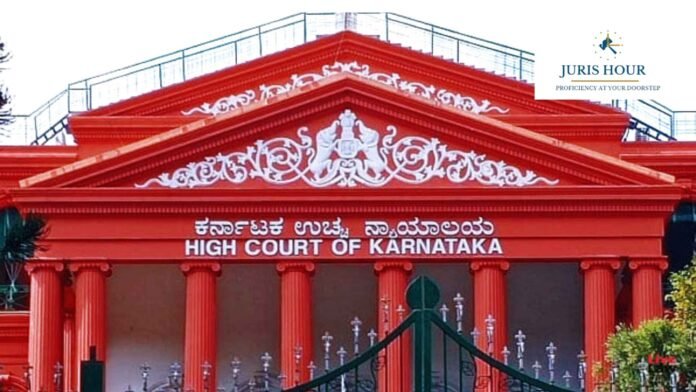
The Karnataka High Court has held that a taxpayer must be given an opportunity to reconcile transactions omitted from Form GSTR-3B but subsequently disclosed in the annual return in Form GSTR-9, along with supporting documents.
The bench of Justice B.M. Shyam Prasad observed that the adjudicating authority cannot definitively confirm a GST demand based solely on a mismatch between Form GSTR-2A and Form GSTR-3B without examining the reconciliation attempted by the taxpayer through its annual return.
The dispute concerned the GST period from July 2017 to March 2018.
Buy Now: E-Way Bill Judgements From 2020–2026 [Includes Orders of GSTAT]
The department identified a mismatch between the company’s Form GSTR-2A and Form GSTR-3B. Certain transactions reported by the suppliers and consequently auto-populated in the company’s GSTR-2A had not been declared by the company in its GSTR-3B returns.
The Court noted that the existence of the mismatch was undisputed. It was also undisputed that the company subsequently disclosed the corresponding transactions in its annual return in Form GSTR-9.
The proceedings began with an intimation in Form GST DRC-01A dated June 14, 2023. This was followed by a show-cause notice in Form GST DRC-01 dated August 22, 2023, under Section 73 of the Karnataka Goods and Services Tax Act and the Central Goods and Services Tax Act.
The taxpayer responded to the proceedings and requested that they be dropped, contending that it had not wrongfully availed input tax credit. However, the adjudicating authority rejected its objections and passed an order on September 27, 2023.
The department subsequently initiated recovery by issuing a communication to IndusInd Bank under Section 79(1)(c).
The company argued that a genuine error or omission in Form GSTR-3B could be corrected or reconciled by considering the particulars disclosed in the annual return.
The company relied on the Calcutta High Court’s decision in Pioneer Co-operative Car Parking Servicing and Construction Society Ltd. v. State of West Bengal. In that case, the Calcutta High Court had held that input tax credit should not be denied merely on technical grounds where the registered taxpayer had otherwise complied with the statutory requirements.
It was submitted that the expression “reconciliation” used in the GST framework contemplated the correction of errors that may have occurred while filing Form GSTR-3B.
Reliance was also placed on the Madras High Court’s decision in Shri Shanmuga Hardwares Electricals v. State Tax Officer.
According to the taxpayer, the adjudicating authority ought to have examined the transactions disclosed in GSTR-9 and the documents supporting its claim before confirming the demand.
The State opposed the petition and argued that Circular No. 183 dated December 27, 2022, did not apply to the company’s case.
The government contended that the circular deals only with four specified situations involving discrepancies caused by errors committed by suppliers. It does not expressly cover a case where the recipient itself omitted transactions from Form GSTR-3B despite those transactions being reflected in Form GSTR-2A.
The department further argued that the circular permits reconciliation where the registered person has disclosed the transaction in GSTR-3B but the corresponding particulars are not correctly reflected in GSTR-2A because of an error on the supplier’s part.
In the present case, however, the mismatch arose from the company’s failure to include the relevant details in GSTR-3B. The State argued that since the GST law did not provide for modifying the GSTR-3B return in such circumstances, no fault could be found with the adjudicating authority for confirming the proposed demand.
The High Court held that reconciliation is contemplated under the CGST and SGST enactments and their accompanying rules.
Referring to the Calcutta High Court ruling, Justice Shyam Prasad noted that the statutory use of the term “reconciliation” indicates that an error occurring at the time of filing GSTR-3B can be examined and rectified while considering the annual return.
The Court emphasised that the adjudicating authority must consider the effect of GSTR-9 and the particulars furnished in it. Merely stating that a claim made in the annual return was not reflected in GSTR-3B would undermine the purpose of filing an annual return under Section 44(1), read with Rule 80 of the GST Rules.
The Court acknowledged that Circular No. 183 may not expressly cover the factual situation involved in the present case. Nevertheless, the circular demonstrates that the GST authorities possess the power to permit reconciliation where the circumstances justify it.
Since the transactions omitted from GSTR-3B were reflected in GSTR-2A and later included in GSTR-9, the Court held that the company could potentially establish its entitlement to input tax credit by producing the necessary records.
The adjudicating authority was therefore required to examine the relevant details and documents before confirming the demand.
While granting relief to the taxpayer, the High Court declined to quash the DRC-01A intimation and the show-cause notice.
The Court clarified that the mismatch between GSTR-2A and GSTR-3B justified the initiation of proceedings, particularly when the omission was attributable to the taxpayer’s error.
However, the existence of a mismatch did not entitle the department to confirm the demand without examining the annual return and the reconciliation offered by the taxpayer.
The Court held that where the GST law permits reconciliation through GSTR-9, an adjudicating officer conducting proceedings under Section 73 or Section 74 must give the taxpayer an opportunity to establish the reconciliation.
The question of law was consequently answered in favour of the company.
The High Court quashed the adjudication order dated September 27, 2023, and the recovery communication sent to IndusInd Bank.
The proceedings have been remanded to the Assistant Commissioner of Commercial Taxes for examining the reconciliation attempted by the company in its relevant GSTR-9 return.
The company was directed to appear before the adjudicating authority on October 5, 2026, without waiting for a fresh notice. It has also been permitted to submit a detailed reconciliation and supporting documents to substantiate the particulars disclosed in its annual return.
Membership Required to Access Case Details & Order Copy
To view the complete Case Details and Download Order Copy, you must have an active membership. Please subscribe to continue.

