
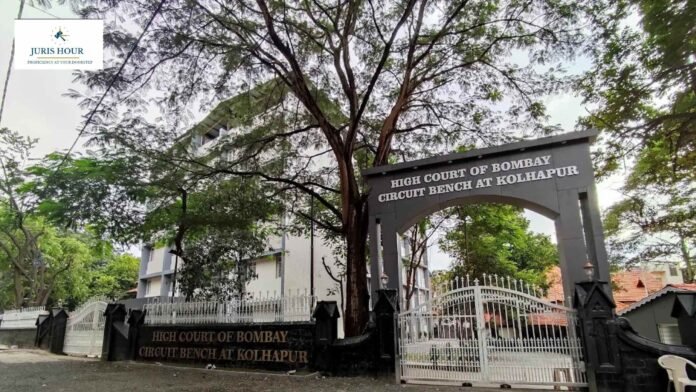
The Bombay High Court has held that goods cannot remain under prohibition after the maximum extended period prescribed under Section 67(7) of the Central Goods and Services Tax Act, 2017, has expired.
The bench of Justice Sharmila U. Deshmukh and Justice Neeraj P. Dhote directed the immediate release of goods belonging to a mining and minerals firm while clarifying that the release would not affect the legality of the GST investigation or the evidentiary material collected by the department.
The petitioner sought a declaration that the continued detention of its goods pursuant to a prohibition order dated September 26, 2024, was contrary to Section 67(7) of the CGST Act. It also sought a direction requiring the GST authorities to release the goods immediately.
Buy Now: Supreme Court Judgments E-Compilation – August 2026
In an affidavit-in-reply dated August 21, 2026, the CGST authorities informed the High Court that the prohibition order had been issued in Form GST INS-03 under Section 67(2) of the CGST Act read with Rule 139(4) of the CGST Rules, 2017.
The department acknowledged that the prohibition order remained valid only for the period prescribed under Section 67(7). It further admitted that, following the expiry of the extended period, the prohibition order automatically came to an end and no separate revocation order was required.
At the same time, the authorities argued that the expiry of the prohibition order did not make the underlying investigation arbitrary or illegal. According to the department, the cessation of the prohibition order had no bearing on either the legality of the investigation or the evidentiary material collected during it.
The High Court took note of the department’s categorical stand that the prohibition order automatically ceased to operate after the expiry of the extended period of six months.
The Bench observed that the relief sought by the petitioner was specifically directed against the continued detention of the goods after the September 26, 2024 prohibition order had ceased to remain operative.
Since the respondents themselves accepted that the prohibition order ended automatically upon expiry of the maximum extended period, the Court found that the petition deserved to be allowed.
“The above reproduced paragraph No. 6 makes it clear that upon expiry of the extended period, the prohibition order automatically comes to an end,” the Court observed.
The Bench consequently allowed the petition in terms of the prayers seeking a declaration against the continued detention and a direction for the release of the goods.
While granting relief to the petitioner, the High Court drew a clear distinction between the expiry of the prohibition order and the validity of the department’s investigation.
The Court clarified that its direction permitting the release of the goods would have no bearing on the legality of the investigation conducted by the GST department. It would also not affect the evidentiary material collected by the authorities during the investigation.
Accordingly, although the department could no longer continue to detain the goods on the basis of the expired prohibition order, the investigation and the evidence collected in connection with it would remain unaffected.
Membership Required to Access Case Details & Order Copy
To view the complete Case Details and Download Order Copy, you must have an active membership. Please subscribe to continue.

