
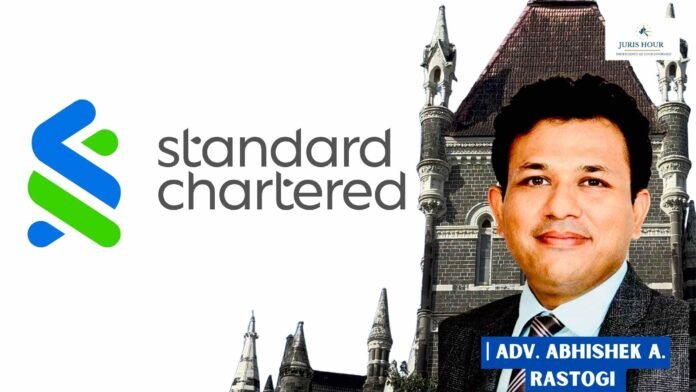
The Bombay High Court has quashed the GST order against Standard Chartered Bank passed without hearing.
A Division Bench comprising Justice Suman Shyam and Justice Advait M. Sethna has directed that the proceedings be remanded to the concerned authority for a de novo hearing, meaning that the adjudication process would have to be undertaken afresh after giving the parties an opportunity to present their case.
The central issue before the High Court concerned the absence of an opportunity of personal hearing before the adjudication order was passed.
Buy Now: E-Magazine: 1000+ Landmark GST Judgments (2017–2026)
Significantly, the Court recorded that counsel appearing for both sides were in agreement that the impugned Order-in-Original had been passed by the concerned authority without hearing the petitioner.
Mr Abhishek A. Rastogi, the Counsel for the petitioner contended that this defect by itself was sufficient to vitiate the adjudication order. It was argued that failure to provide an opportunity of hearing amounted to a violation of the fundamental principles of natural justice, particularly the rule of audi alteram partem—the principle that no person should be condemned without being heard.
The High Court recorded the petitioner’s contention that the order failed to provide an opportunity of being heard and therefore violated the principles of audi alteram partem.
Importantly, the Revenue did not dispute the procedural deficiency pointed out by the petitioner.
Counsel appearing for the respondents, on instructions, agreed that the petitioner could be heard afresh and submitted that the concerned authority would provide an opportunity of hearing and thereafter pass a fresh order in accordance with law.
In view of this consensus between the parties and the admitted absence of a hearing, the High Court proceeded to grant relief rather than examining the substantive merits of the underlying dispute.
Considering the circumstances, the Division Bench held that the ends of justice would be met by setting aside the impugned adjudication order and remanding the matter to the authority.
Accordingly, the High Court set aside the Order-in-Original dated February 16, 2026.
The High Court specifically directed the adjudicating authority to hear the parties afresh and thereafter pass a reasoned order on merits and in accordance with law.
The Bench also directed the authority to endeavour to pass the fresh reasoned order as expeditiously as possible, while recording that the petitioner should cooperate during the proceedings.
Thus, while the earlier adjudication order stands set aside, the underlying proceedings have not been terminated. The matter will return to the adjudicating authority, which will have to reconsider it after following the prescribed principles of fair hearing.
The High Court also made an important clarification regarding the scope of its order.
The Bench expressly stated that it had not expressed any opinion on the merits of the rival contentions raised by the parties. All such contentions were left open to be considered by the adjudicating authority during the fresh proceedings.
The Court’s intervention was confined to the procedural defect arising from the absence of an opportunity of hearing. The substantive tax dispute remains to be independently determined by the authority.
Membership Required to Access Case Details & Order Copy
To view the complete Case Details and Download Order Copy, you must have an active membership. Please subscribe to continue.

