
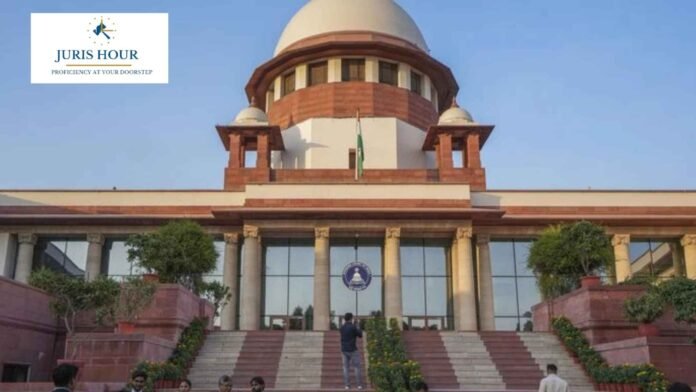
The Supreme Court has dismissed the Union of India’s review petition against its judgment requiring communication of an arrest authorisation under Section 69 of the Central Goods and Services Tax Act, 2017, before arresting the person concerned and imposed costs of ₹50,000, observing that the review petitioner had abused the process of law as well as the Court.
A Bench of Justice Dipankar Datta and Justice Sheel Nagu has reiterated, relying on Radhika Agarwal, that a person summoned under Section 70 of the CGST Act does not automatically become an accused merely because summonses have been issued.
Buy Now: 160+ GST E-Magazine September 2026
The review dismissal leaves undisturbed the earlier judgment, which addressed two distinct questions: whether courts can grant temporary protection from arrest after dismissing an anticipatory bail application as non-maintainable, and whether a GST arrest authorisation must be communicated to the person sought to be arrested.
After considering the review petition and its grounds, the Bench concluded that no case for reconsideration had been established.
The Court also recorded a finding that the review petitioner had abused the process of law and the Court. It consequently directed the Union of India to deposit ₹50,000 in the account of the Supreme Court Bar Clerks’ Association within six weeks of the order.
In the event of default, the Registry was permitted to seek further directions. Pending applications were disposed of.
The brief review order does not identify the particular portion of the August judgment challenged by the Centre or separately discuss its grounds for seeking review.
The original proceedings arose from an investigation by the Directorate General of GST Intelligence, Mumbai Zonal Unit, into M/s Alphaneon Techsolutions Pvt. Ltd. and its group entities.
The investigation concerned allegations of wrongful availment and passing on of input tax credit without actual supplies of goods or services, circular invoicing, and non-payment of GST on imported services.
According to the factual background recorded in the judgment, the assessee was present during an inspection of the registered premises and acknowledged the inspection. The department subsequently issued three summonses to him under Section 70 of the CGST Act.
Biyani sought adjournments and approached the Sessions Court in Mumbai for anticipatory bail. After that application was rejected on October 14, 2025, he moved the Bombay High Court. Pursuant to interim directions issued by the High Court, he appeared before the department and his statement was recorded.
Before the High Court, the department stated that no arrest authorisation under Section 69 had been issued because the investigation was at a preliminary stage and material facts were still being verified.
On February 13, 2026, the Bombay High Court rejected Biyani’s anticipatory bail application. It reasoned that, in the absence of an order under Section 69, there could be no apprehension of arrest warranting consideration of the application.
Nevertheless, the High Court directed that, if a Section 69 order was subsequently passed, Biyani should not be arrested for one week from the date on which that order was intimated to him.
The Union of India challenged this protective direction before the Supreme Court. Biyani did not challenge the rejection of his anticipatory bail application.
In its August 12 judgment, the Supreme Court set aside the High Court’s direction granting one week’s protection.
The Bench applied the settled principle that interim relief must aid, and remain ancillary to, the principal relief sought in a proceeding. Once a proceeding is dismissed as non-maintainable, protection of the kind available during its pendency cannot be continued or granted independently.
Drawing on State of Orissa v. Madan Gopal Rungta and Hema Mishra v. State of U.P., the Court extended that principle to applications for pre-arrest bail.
It held that where a High Court or Sessions Court dismisses an anticipatory bail application as non-maintainable, whatever the ground of non-maintainability, it cannot simultaneously grant or extend protection in the nature of interim relief.
The Supreme Court also affirmed the rejection of Biyani’s application in the circumstances before it, noting that he had merely been summoned when he sought pre-arrest bail.
The Bench separately examined whether the Commissioner’s order authorising arrest under Section 69 must be communicated to the person concerned.
Section 69 empowers the Commissioner to authorise an arrest where there are reasons to believe that the person has committed specified offences under Section 132 of the CGST Act.
The Court explained that these reasons must refer to the underlying material and evidence and demonstrate application of mind, consistent with the requirements discussed in Radhika Agarwal v. Union of India.
Biyani’s counsel argued that treating a Section 69 order as a prerequisite for seeking anticipatory bail, while permitting the department to withhold that order, would create an untenable situation. The person would be unable to seek anticipatory bail before the order was passed and might remain unaware of its existence until arrest.
The Supreme Court accepted this contention. It reasoned that communication of the authorisation would enable the person to pursue available legal remedies and would not obstruct the investigation.
The Court directed the Commissioner to communicate the Section 69 order to Biyani and expressly stated: “We reiterate, without such communication, question of arrest would not arise.”
The August judgment connected the communication requirement with the protection of personal liberty and meaningful access to anticipatory bail.
Referring to Gurbaksh Singh Sibbia v. State of Punjab and Sushila Aggarwal v. State (NCT of Delhi), the Bench emphasised the importance of a fair, just and reasonable procedure where a person’s liberty is at stake.
The Court also recognised that the Commissioner’s arrest authorisation and the recorded reasons to believe are amenable to judicial review by constitutional courts. Communication would allow the person concerned to challenge the decision on legally available grounds.
Withholding the reasons underlying an arrest decision, the Bench observed, could have serious consequences for the right to liberty.
The Court noted that Rule 8 of the CGST Rules, 2017, requires a person seeking registration to provide an email address and mobile number.
It therefore permitted communication through electronic means, in addition to modes available under the Bharatiya Nagarik Suraksha Sanhita, 2023, and other legally permissible methods.
The judgment did not restore the High Court’s one-week protection period. Instead, it required communication of the arrest authorisation so that Biyani could pursue such remedies as he might be advised.
At the same time, the investigation must proceed according to law, without misuse of statutory power.
The Court expressly clarified that its observations addressed the legal questions before it and did not constitute findings on the facts or merits of the allegations. The pending investigation was to continue uninfluenced by those observations.
Membership Required to Access Case Details & Order Copy
To view the complete Case Details and Download Order Copy, you must have an active membership. Please subscribe to continue.
Read More: Is GST Payable on a Used Car Sold at a Loss? Madras HC Stays Demand Over ‘No Positive Margin’ Plea

