
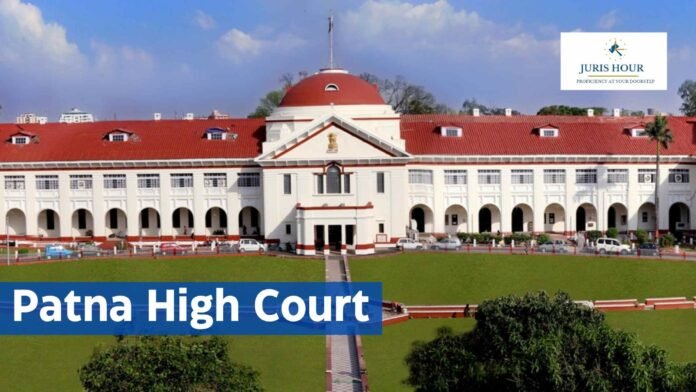
The Patna High Court has set aside an appellate order rejecting a GST appeal as time-barred, holding that where a taxpayer promptly invokes the statutory rectification mechanism against an order containing an apparent error, the limitation for challenging the original order cannot mechanically be calculated without considering the intervening rectification proceedings.
The Bench of Justice Anil Kumar Sinha and Justice Vikash Kumar directed the appellate authority to hear the taxpayer’s appeal on merits without entering into the question of delay.
The dispute arose from proceedings concerning an alleged mismatch in Input Tax Credit (ITC) amounting to ₹70,16,520 for the financial year 2019-20. The GST authorities initially issued a notice in Form ASMT-10 on March 15, 2024, to which the petitioner submitted a detailed response.
Buy Now: 130 GST Judgments – E-Magazine July 2026
Subsequently, a show cause notice in Form DRC-01 under Section 73 of the GST Act was issued on May 16, 2024. The petitioner responded through Form DRC-06 on June 7, 2024, following which the adjudicating authority passed the final order in Form DRC-07 on July 30, 2024.
The petitioner claimed that the adjudication order contained an error and therefore approached the authority under Section 161 of the GST Act seeking rectification.
The rectification application was filed on October 16, 2024, well within the period referred to by the High Court. However, the application was rejected on December 24, 2024, with the petitioner being informed through email that the order did not contain an error apparent on the record.
Following the rejection of the rectification application, the petitioner filed an appeal under Section 107 of the GST Act on January 7, 2025 against the original adjudication order dated July 30, 2024.
The appellate authority, however, rejected the appeal on March 31, 2025, treating it as barred by limitation.
Before the High Court, the petitioner argued that Section 107 prescribes a limitation period of three months, with a further 30-day period subject to statutory conditions, and contended that the appeal was filed only 13 days after the rejection of the rectification application.
The petitioner maintained that it had acted diligently by immediately approaching the authority under Section 161 rather than allowing the alleged error in the original order to remain unchallenged. According to the petitioner, once the rectification application was rejected on December 24, 2024, the appeal was filed within a very short period thereafter.
The State, on the other hand, argued that the appeal was directed against the original adjudication order dated July 30, 2024. Therefore, limitation had to be calculated from that order, making the appeal delayed by the period considered by the appellate authority.
The High Court rejected the approach adopted by the appellate authority. It noted that the petitioner had identified an apparent error in the adjudication order and had immediately invoked Section 161, filing the rectification application within 30 days.
The Bench observed that, in such circumstances, the petitioner could not reasonably have been expected to simultaneously challenge the original order within the ordinary limitation period while its statutory rectification request concerning an apparent error in that very order was pending.
The Court therefore held that the appellate authority’s calculation of limitation from the date of the original assessment/adjudication order was erroneous in the circumstances of the case.
Finding that the appellate order could not be sustained, the High Court set aside the order dated March 31, 2025.
The matter was remanded to the appellate authority with a specific direction to decide the petitioner’s appeal on merits without going into the question of delay, after providing the petitioner an opportunity of hearing.
Membership Required to Access Case Details & Order Copy
To view the complete Case Details and Download Order Copy, you must have an active membership. Please subscribe to continue.
Read More: JURISHOUR | TAX LAW DAILY BULLETIN : 10 AUGUST, 2026

