
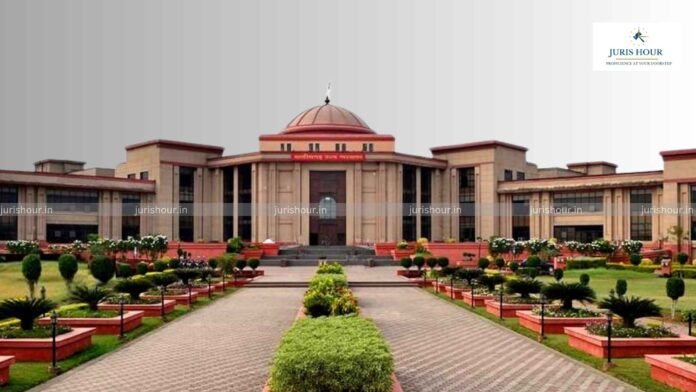
The Chhattisgarh High Court has quashed GST notices after finding that the tax authority failed to disclose sufficient foundational facts to support allegations of fraud, wilful misrepresentation or suppression of facts.
The bench of Justice Rakesh Mohan Pandey observed that merely using expressions such as “fraud”, “wilful misrepresentation” or “suppression” in a notice does not demonstrate the application of mind required to invoke the extended limitation period under the Goods and Services Tax law.
Buy Now: Customs Notifications & Circulars (January – May 2026)
The Court was considering a batch of three writ petitions challenging notices dated October 16, 2025, issued by the Assistant Commissioner, Circle-5, Division-1, State Goods and Services Tax, Raipur, under Section 74(9) of the GST Act, 2017.
The petitions were filed by a steel trader and its proprietor. According to the State tax department, the taxpayer had availed input tax credit through allegedly fake invoices without any actual supply of goods.
The petitioners contended that the notices did not contain the foundational facts necessary to arrive at an inference of fraud, wilful misrepresentation or suppression. They argued that the issue stood settled by the Supreme Court’s decision in Tata Steels Ltd. v. Union of India.
Counsel for the petitioners submitted that the Supreme Court had made it clear that the factual foundation leading the authority to allege fraud or suppression must be apparent from the notice itself. Since the impugned notices allegedly lacked such particulars, the petitioners sought their quashing.
Opposing the petitions, the State argued that the notices adequately described the allegations against the taxpayer. It submitted that the taxpayer had availed ITC by issuing fake invoices without an actual supply of goods and that the notices sufficiently disclosed the relevant foundational facts.
The State also raised the availability of an alternative statutory remedy, contending that the petitioners could challenge the proceedings by filing appeals under Section 107 of the GST Act.
After examining the notices and hearing the parties, the High Court found that the tax authority had failed to assign sufficient reasons while issuing them.
The Court relied upon the Supreme Court’s ruling in Tata Steels Ltd., in which it was held that the statutory requirements for invoking an extended limitation period cannot be satisfied through mere lip service.
The High Court noted that when an allegation of fraud, wilful misrepresentation or suppression is used to recover an allegedly excessive benefit, short-paid tax or excess refund beyond the normal limitation period, the notice must disclose the facts forming the basis of that allegation.
The mere mechanical reproduction of statutory expressions does not demonstrate an application of mind, the Court observed. Such words cannot simply be inserted into a notice to facilitate recovery beyond the normal limitation period prescribed under the statute.
The High Court quashed all the notices dated October 16, 2025, issued in the three connected matters.
The Court clarified that the respondent tax authority would remain at liberty to issue fresh notices strictly in accordance with law, if it was so advised.
Membership Required to Access Case Details & Order Copy
To view the complete Case Details and Download Order Copy, you must have an active membership. Please subscribe to continue.

