
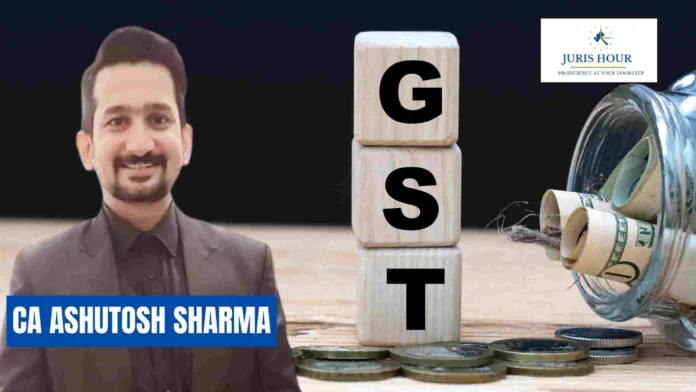
In the ever-evolving landscape of Goods and Services Tax (GST) compliance in India, a key debate has resurfaced: Should taxpayers be forced into granular, month-specific reconciliations when the law already provides a statutory mechanism for tax adjustments and liability settlements?
CA Ashutosh Sharma has highlighted the issue, pointing towards Section 49(8) of the CGST Act, 2017, which clearly establishes a hierarchy for discharging tax liabilities. According to this provision, payments made by a taxpayer are first adjusted against dues of previous periods, then against current dues, and lastly towards any other outstanding liability under the law.
The section states that payments are to be discharged in the following order:
- Self-assessed tax and other dues related to previous tax periods
- Self-assessed tax and other dues of the current tax period
- Any other amount payable under the Act or rules, including demands under Sections 73, 74, or 74A
This hierarchy ensures that earlier liabilities are automatically cleared first, thereby promoting orderly compliance.
However, in practice, tax authorities often raise demands for month-specific reconciliations, alleging mismatches even when annual returns (GSTR-9) already reflect accurate payments and adjustments across different periods. Sharma argues that such an approach creates unnecessary litigation and administrative burden.
“If a payment made in a subsequent period exceeds the pending liabilities from earlier periods, should the department insist on month-specific reconciliations? I argue no—provided Section 49(8) has been followed. Even if the specific month is not identifiable, payments should be assessed against earlier dues first,” Sharma explained.
He further noted that GSTR-9 already provides evidentiary support, being a consolidated, self-assessed declaration that links taxpayer intent with actual payments. When annual return details align with compliance, seeking additional breakdowns undermines the legislative intent of simplification.
Sharma also pointed out that in cases where GSTR-9 is not filed, the law should, by default, presume that any subsequent payments were intended to cover earlier dues in accordance with Section 49(8).
Industry experts say that a principle-based assessment, rather than insistence on strict procedural reconciliations, is crucial to reduce disputes between taxpayers and authorities. “Compliance is a two-way street. Authorities must interpret and apply Section 49(8) consistently, focusing on substance over form,” Sharma emphasized.
With GST reforms under discussion and the government aiming to ease compliance procedures, experts believe that clarity on this issue could go a long way in reducing litigation and promoting trust between businesses and tax authorities.
https://www.linkedin.com/embed/feed/update/urn:li:share:7367114421078327296?collapsed=1
Read More: ICAI Pitches Reforms to Ease GST Compliance Burden for Businesses

