
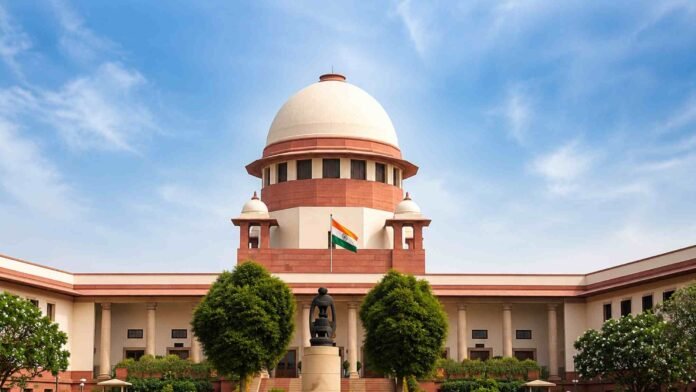
The Supreme Court has taken up an important challenge concerning Section 16(2)(c) of the Central Goods and Services Tax (CGST) Act, 2017, in a matter that could have significant implications for Input Tax Credit (ITC) disputes across the country.
As per Section 16(2)(c) of the CGST Act, 2017, a buyer can avail the input tax credit on the purchase of goods and services, but such ITC will depend upon payment of GST by his supplier on the said supply. The supplier has to settle the tax on the said supply of goods or services either in cash or through allowable ITC.
The case filed by M/s Prime Metals raises a critical issue frequently debated in GST litigation — whether a bona fide purchaser can be denied ITC because of an alleged default committed by suppliers further up the supply chain.
The matter came before a Bench comprising Justice K. V. Viswanathan and Justice Vijay Bishnoi on May 22, 2026. The Special Leave Petition arose from a Rajasthan High Court order that had relegated the petitioner to pursue an alternative statutory remedy instead of entertaining the writ petition.
BUY NOW: Input Tax Credit of the Purchasing Dealer: When It Can Be Claimed and When It Cannot
The assessee argued that the High Court should not have declined to entertain the matter because the writ petition had specifically challenged the constitutional validity of Section 16(2) of the CGST Act itself. The petitioner contended that the issue was not merely about adjudication of tax liability but also involved examination of the validity and interpretation of the statutory provision.
The controversy centres around Section 16(2)(c), which prescribes one of the conditions for availing ITC. Under this provision, a recipient is entitled to claim credit only if tax charged in respect of the supply has actually been paid to the Government by the supplier, either in cash or through utilization of admissible ITC.
The petitioner argued before the Court that a literal interpretation of this provision effectively forces taxpayers to perform an impossible task. According to the submissions, an assessee cannot monitor or control events occurring at the supplier’s end after completing a genuine transaction. The counsel contended that a purchaser may ensure payment to the immediate supplier and verify invoices and tax details, but cannot realistically investigate the conduct of suppliers further up the transaction chain.
A particularly significant aspect of the petitioner’s argument was that there was reportedly no dispute regarding the immediate supplier having paid tax. Instead, the allegation related to a supplier further removed in the supply chain, who was alleged to have defaulted or to have been a fake entity. The petitioner submitted that such alleged misconduct by a distant supplier should not prejudice a bona fide purchaser who had no control over such actions.
The issue touches upon a larger and recurring debate under GST law regarding the extent of due diligence expected from taxpayers claiming ITC. Tax authorities have frequently denied credits where irregularities are discovered in the supplier chain, while taxpayers have argued that denial in such situations imposes an unreasonable and impossible burden on genuine recipients.
The Supreme Court has not yet expressed any opinion on the merits of the controversy. The Bench directed that copies of the petition be supplied to the Additional Solicitor General and counsel appearing for the State. The matter has now been listed for further hearing on May 29, 2026.
Case Details
Case Title: M/S PRIME METALS Versus CBIC
Case No.: Special Leave to Appeal (C) No(s). 18577/2026
Date: 22-05-2026
Read More: Customs Seizes 12 Drones From Two Passengers at Trichy Airport

