
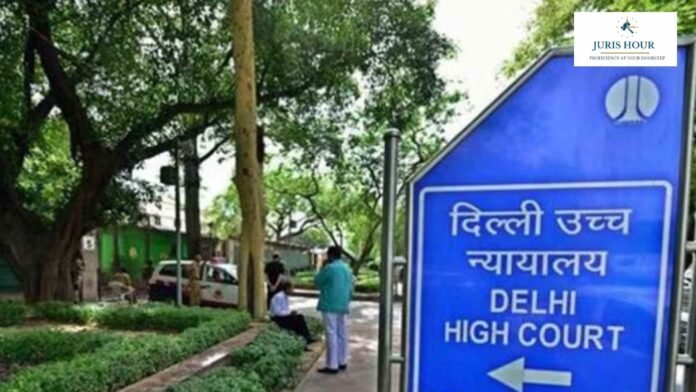
The Delhi High Court has dismissed a writ petition challenging a GST adjudication order involving a demand of more than ₹1.50 crore, holding that the taxpayer had an efficacious statutory remedy of appeal under Section 107 of the Central Goods and Services Tax Act, 2017 (CGST Act).
The bench of Justice Anil Khetarpal and Justice Shail Jain has observed that the grievances raised by the taxpayer primarily concerned the appreciation of evidence, correctness of adjudication findings and other factual and legal issues which should ordinarily be examined by the statutory appellate authority rather than in writ jurisdiction under Article 226 of the Constitution.
The dispute arose from an Order-in-Original passed under Section 74 of the CGST Act pursuant to a Show Cause Notice dated June 28, 2025.
Buy Now: 130 GST Judgments – E-Magazine July 2026
The adjudicating authority had confirmed a GST demand of ₹1,41,70,592 for the period 2018-19 to 2023-24, along with a further demand of ₹8,94,692 for 2024-25, besides applicable interest and penalty. The proceedings originated from an investigation conducted by the GST authorities.
According to the Department, a search conducted at the residential and business premises of Kapil Arora, proprietor of M/s Arora Communication, resulted in the recovery of electronic data from a laptop, along with loose papers and receipts described as kachcha parchis. Statements recorded during the investigation were also relied upon. The Department alleged that the material disclosed unaccounted transactions between Arora Communication and the petitioner.
Based on this material, the Department issued the Show Cause Notice alleging suppression of taxable transactions and proposed recovery of GST, interest and penalty.
Before the High Court, the petitioner argued that although Section 107 provided an appellate remedy, the case fell within the recognised exception permitting the High Court to exercise writ jurisdiction where there is a violation of natural justice.
The petitioner contended that the adjudicating authority had failed to properly consider its detailed reply and had not adequately addressed the specific objections raised during adjudication. It was further argued that an effective opportunity of personal hearing had not been provided and that the hearing notices had not been duly served.
The petitioner also challenged the evidentiary foundation of the GST demand. According to the taxpayer, the adjudication substantially relied upon electronic data allegedly recovered from a third party, the authenticity and admissibility of which had not been properly established.
It was also argued that the petitioner had not been given an opportunity to cross-examine persons whose statements were relied upon by the Department. In addition, the taxpayer contended that the relevant period had already been subjected to statutory audit under Section 65 of the CGST Act and that fresh proceedings based substantially on third-party material were therefore impermissible.
The Revenue opposed the petition at the threshold, relying on the availability of the statutory appeal under Section 107 of the CGST Act.
According to the Department, the petitioner had actively participated in the adjudication proceedings. Hearing notices had been issued, the authorised representative had appeared during the personal hearing, and a detailed written reply had been submitted and considered by the adjudicating authority.
The Department further maintained that the adjudication was not based exclusively on any single statement or electronic record. Instead, it was based on a cumulative appreciation of investigation records, documentary evidence, electronic data, statements recorded under the CGST Act and other corroborative material.
The Revenue argued that issues concerning the admissibility and evidentiary value of electronic material, forensic examination, cross-examination and the impact of the earlier audit were all matters going to the merits of the adjudication and could therefore be examined by the appellate authority.
The High Court began by emphasising that the impugned GST order was appealable under Section 107 of the CGST Act.
The Bench observed that the statutory appellate mechanism is a complete and efficacious remedy for grievances arising from adjudication orders. The appellate authority has wide powers to examine questions of both fact and law, re-appreciate the material on record, scrutinise the findings of the adjudicating authority and determine the legality and correctness of the order under challenge.
The Court reiterated that constitutional courts ordinarily exercise restraint when a specialised statutory framework provides a hierarchy of appellate remedies. Such restraint, the Court explained, is not because the High Court lacks jurisdiction under Article 226, but because of settled principles governing the exercise of discretionary writ jurisdiction.
At the same time, the Bench recognised that the existence of an alternative statutory remedy does not constitute an absolute bar to the exercise of writ jurisdiction.
Relying on the Supreme Court’s decision in Assistant Commissioner of State Tax and Others v. Commercial Steel Limited, the Court noted the recognised exceptions, including cases involving violation of fundamental rights, violation of principles of natural justice, excess of jurisdiction, or a challenge to the vires of a statute or delegated legislation.
However, the High Court stressed that merely asserting one of these exceptions does not automatically entitle a litigant to bypass the statutory appeal. The Court must independently examine whether the facts actually disclose circumstances warranting exercise of extraordinary jurisdiction.
The High Court rejected the petitioner’s contention that there had been a denial of natural justice.
The record showed that the adjudicating authority had fixed the matter for personal hearing on more than one occasion. The Department placed on record that hearings were scheduled for December 6, December 12 and December 19, 2025.
Importantly, the petitioner’s authorised representative, Chartered Accountant Rajeev Sachdeva, appeared at the personal hearing on December 19, 2025, and submitted a detailed written reply addressing the allegations contained in the Show Cause Notice. The petitioner’s participation in the adjudication proceedings and submission of a comprehensive reply was not disputed.
In these circumstances, the Court held that it could not be said that the petitioner had been denied an opportunity to participate in the proceedings or prevented from placing its defence before the adjudicating authority.
The Court made an important distinction between absence of opportunity and disagreement with the manner in which the defence was appreciated.
According to the Bench, the petitioner’s grievance essentially concerned how the adjudicating authority had evaluated its defence. Such a grievance, by itself, does not amount to a violation of natural justice sufficient to invoke Article 226 jurisdiction.
The Court also rejected the argument that the impugned order had ignored the petitioner’s reply.
On examining the order, the Bench found that the reply submitted by the petitioner had in fact been noticed by the adjudicating authority.
Whether every contention had been addressed in the manner desired by the taxpayer, whether the reasons recorded were adequate, and whether the conclusions ultimately reached were sustainable were questions concerning the correctness of the adjudication itself.
Such questions, the Court held, were appropriately examinable by the appellate authority under Section 107 and did not, in the circumstances of the case, justify bypassing the statutory remedy.
The Court further observed that even assuming there was some irregularity in the manner or timing of service of hearing notices, that circumstance alone would not invalidate the proceedings when the taxpayer’s authorised representative had participated in the hearing and filed a detailed reply. The petitioner had also failed to demonstrate that the alleged defect in service actually prevented it from placing material before the adjudicating authority.
One of the significant aspects of the case concerned the taxpayer’s challenge to electronic evidence allegedly recovered from a third party.
The petitioner argued that the electronic material was inadmissible in the absence of certification under Section 63 of the Bharatiya Sakshya Adhiniyam, 2023. It also questioned the forensic examination report and argued that it did not establish authorship or authenticity of the electronic records.
The High Court, however, declined to adjudicate these questions in the writ proceedings.
The Bench held that questions regarding compliance with statutory requirements governing electronic evidence, the chain of custody, forensic authentication and the evidentiary value of electronic records directly concern the merits of the adjudication.
Determining those issues would require examination of the factual record and appreciation of the evidence relied upon by the Department. Since the CGST Act provides an appellate authority empowered to re-appreciate facts and law, the High Court held that these matters should ordinarily be taken before that forum.
The petitioner had additionally argued that statements of third parties were relied upon without providing an opportunity for cross-examination.
The Department, however, maintained that the adjudication was not founded solely upon those statements but upon a broader body of documentary and electronic evidence.
The High Court held that determining whether the statements were the sole basis of the demand or merely corroborative, whether cross-examination was warranted and whether any prejudice had resulted would require examination of the merits of the adjudication.
The Bench therefore held that the appellate authority was fully competent to decide these issues on the basis of the complete record.
The taxpayer’s argument concerning the earlier Section 65 statutory audit was similarly not accepted as a ground for exercising writ jurisdiction.
The petitioner had contended that the relevant period had already been subjected to statutory audit and that subsequent proceedings allegedly based on substantially the same transactions were impermissible.
The High Court held that several factual questions would have to be examined, including whether the audit had actually covered the same transactions, whether the subsequent proceedings were based on fresh material allegedly unearthed during investigation, whether the two proceedings overlapped and whether the impugned demand resulted in duplication of liability.
Since those questions involved disputed issues of fact and law, the Court considered them more appropriate for examination by the statutory appellate authority.
Significantly, the Delhi High Court clarified that it had deliberately refrained from expressing any opinion on the merits of the rival claims.
The Court stated that its order should not be construed as an opinion on the correctness of the findings contained in the GST adjudication order or on the admissibility, authenticity or evidentiary value of the materials relied upon during adjudication. All questions of fact and law were left open to be raised before the appellate authority.
The High Court ultimately dismissed the writ petition along with the pending applications, while leaving it open to the petitioner to pursue the statutory remedy of appeal under Section 107 of the CGST Act.
The Court also granted an important procedural clarification concerning limitation. It directed that if the petitioner chooses to file an appeal under Section 107, the period during which the writ petition remained pending before the High Court shall not be reckoned for the purposes of limitation. The appellate authority was directed to consider the appeal in accordance with law, including the question of limitation, independently and uninfluenced by the observations made in the High Court proceedings.
Membership Required to Access Case Details & Order Copy
To view the complete Case Details and Download Order Copy, you must have an active membership. Please subscribe to continue.

