
A court in Meerut has rejected the bail application of Delhi-based businessman Rajeev Kumar, who has been accused of orchestrating a large-scale GST evasion scheme involving clandestine supply and undervaluation of LED televisions through multiple firms.
The court held that the allegations point to a serious economic offence and that releasing the accused at this stage could jeopardize the ongoing investigation.
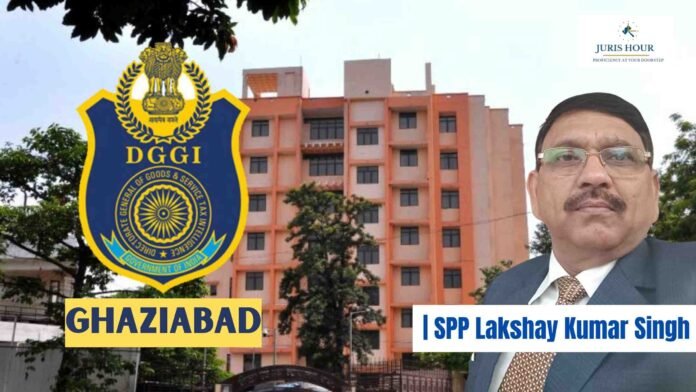
The order was passed by the Additional Sessions Judge, Court No. 01, Meerut, in connection with offences under Sections 132(1)(a) and 132(1)(i) of the CGST Act, 2017, following an investigation initiated by the Directorate General of GST Intelligence (DGGI), Ghaziabad.
According to the prosecution, DGGI officials conducted search operations on October 15, 2025, at 18 locations associated with Rajeev Kumar and his son. These locations included manufacturing facilities, suppliers, transporters, dealers, and residential premises. During the searches, investigators allegedly recovered unaccounted raw materials, finished goods, incriminating documents, electronic devices, and ₹58.5 lakh in cash.
The department alleged that Rajeev Kumar operated six firms in his own name and in the names of family members and used them to clandestinely manufacture and supply LED televisions without issuing proper invoices. Authorities claim that the scheme involved undervaluation and unbilled sales, resulting in a GST evasion estimated at ₹27.99 crore.
The accused was arrested on February 11, 2026, under Section 69 of the CGST Act on the grounds of non-cooperation with the investigation and the gravity of the alleged offence.
Defence Arguments
Counsel for the applicant argued that Rajeev Kumar is a legitimate businessman engaged in manufacturing and trading LED televisions using both imported and domestic raw materials. It was submitted that the six firms linked to him were duly registered under the GST law and operated legally.
The defence further contended that although the department alleged a total evasion of ₹27.99 crore, only ₹11.83 crore related to alleged clandestine removal of goods, which falls under Section 132(1)(a). The remaining ₹16.15 crore related to undervaluation, which, according to the defence, does not fall under the same provision.
It was also pointed out that Rajeev Kumar had already deposited ₹10 crore through Form DRC-03 during the investigation, demonstrating his willingness to cooperate and his lack of intent to evade tax. The defence also alleged that the arrest was arbitrary, claiming that the grounds of arrest were not communicated at the time of detention and that the arrest violated legal safeguards laid down by courts in arrest-related jurisprudence.
Additionally, the defence argued that the applicant had appeared before investigators when summoned, allowed forensic examination of electronic devices, and had no criminal antecedents. It was also submitted that the evidence in the case was largely documentary and already in the department’s possession, eliminating the possibility of tampering.
The CGST Department argued that Rajeev Kumar was the mastermind behind an organized network designed to evade GST through multiple firms. Investigators alleged that the accused deliberately issued invoices showing higher quantities of goods than were actually supplied, thereby concealing clandestine sales.
The department also relied on statements of transporters, distributors, and other persons connected to the supply chain, which allegedly indicated that LED televisions were being sold without invoices and payments were routed through cash transactions and hawala channels. WhatsApp chats and other digital evidence were also cited to support the prosecution’s case.
The prosecution further claimed that despite repeated summons and reminders, the accused failed to submit key business records related to the six firms under investigation, thereby obstructing the probe.
The court observed that the available material prima facie indicates that the accused acted as the de facto controller of six firms and used them to conduct clandestine removal of LED televisions and undervalued invoicing to defraud the government exchequer.
The court noted that statements of several individuals, including transporters and distributors, suggested that the business operations were controlled by Rajeev Kumar and that unbilled sales were being carried out systematically. The court also referred to evidence such as seized documents, electronic records, and cash recoveries.
It further held that the alleged activities indicate an organized racket involving multiple entities and persons.
The court also referred to several Supreme Court judgments emphasizing that economic offences involving large-scale financial loss to the government are serious crimes affecting the nation’s economic structure.
The court observed that given the gravity of the allegations and the stage of investigation, there was a reasonable apprehension that the accused, if released on bail, could influence witnesses or tamper with evidence.
Considering the seriousness of the alleged tax evasion, the nature of the evidence, and the ongoing investigation, the court concluded that it would not be appropriate to grant bail at this stage.
Accordingly, the bail application filed by Rajeev Kumar was rejected.
Case Details
Case Title: Rajeev Kumar Versus UOI
Case No.: First Bail application No. 709 of 2026
Date: 09.03.2026
Counsel For Respondent: Lakshay Kumar Singh SPP
Read More: Summary in DRC-01 Can’t Replace Proper GST SCN: Gauhati High Court

