
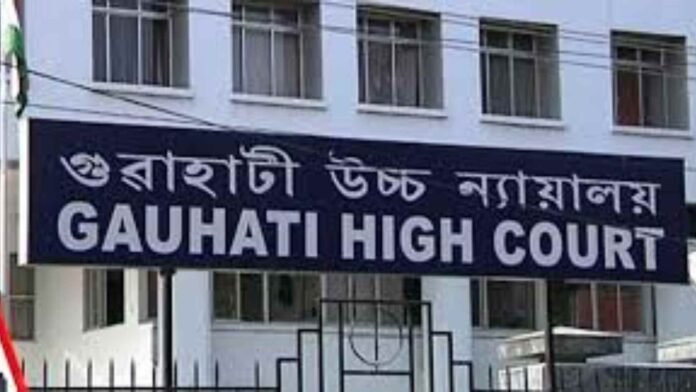
The Gauhati High Court has reaffirmed that the Goods and Services Tax (GST) authorities are legally empowered to issue a single consolidated show cause notice (SCN) and pass a consolidated adjudication order covering multiple financial years under the Central Goods and Services Tax (CGST) Act, 2017.
While declining to entertain the writ petition on the jurisdictional challenge, the bench of Justice Devashis Baruah preserved the taxpayer’s right to contest the merits of the tax demand before the appellate authority and extended interim protection until the stay application is considered.
The writ petition was filed by M/s Abala Auto Agency challenging an Order-in-Original through which the GST authorities confirmed a tax demand of ₹1.58 crore, along with applicable interest and penalty, for the financial years 2017-18 to 2019-20.
Buy Now: E-Magzine: Single SCN or Composite Assessment Order for Multiple Tax Periods
Rather than disputing the demand on factual or substantive grounds before the High Court, the petitioner primarily questioned the jurisdiction of the proper officer to issue a single consolidated show cause notice and a consolidated adjudication order spanning several financial years. According to the petitioner, separate proceedings ought to have been initiated for each assessment year.
The bench observed that the jurisdictional issue raised by the petitioner had already been conclusively settled by the Gauhati High Court in M/s Tata Projects Limited v. Union of India & Others (2026 SCC OnLine Gau 3798).
The Court reiterated the principles laid down in that judgment, holding that there is no statutory prohibition against issuing a consolidated show cause notice covering multiple financial years under Sections 73(1) or 74(1) of the CGST Act. Similarly, there is no legal bar against passing a consolidated adjudication order under Sections 73(9) or 74(9) for multiple financial years. Consequently, the proper officer acts within jurisdiction while adopting such a consolidated approach.
Since the controversy had already been authoritatively decided, the Court held that the petitioner’s jurisdictional challenge no longer survived.
Having rejected the jurisdictional objection, the High Court clarified that it had not examined the correctness or legality of the tax demand on merits.
The Court specifically observed that every contention relating to the validity of the Order-in-Original, except the jurisdictional issue already decided, remained open for consideration before the statutory appellate authority.
Recognising that the petitioner should not lose the opportunity to pursue the statutory remedy, the Court granted liberty to file an appeal under Section 107 of the CGST Act, 2017 within 30 days from the date of the judgment.
Importantly, the Court directed that if such an appeal is filed within the stipulated period, the appellate authority should entertain it without insisting on limitation, thereby ensuring that the taxpayer receives a hearing on merits.
The High Court also extended the interim protection that had been granted earlier during the pendency of the writ proceedings.
The protection will continue until the appellate authority considers the taxpayer’s stay application, provided the statutory appeal is filed within the 30-day period specified by the Court. However, the Court clarified that the appellate authority would remain free to independently decide the stay application without being influenced by the continuation of interim protection granted by the High Court.
Membership Required to Access Case Details & Order Copy
To view the complete Case Details and Download Order Copy, you must have an active membership. Please subscribe to continue.
Read More: CA Certificate Sufficient to Rebut Unjust Enrichment in Customs Refund Claims: Karnataka HC

