
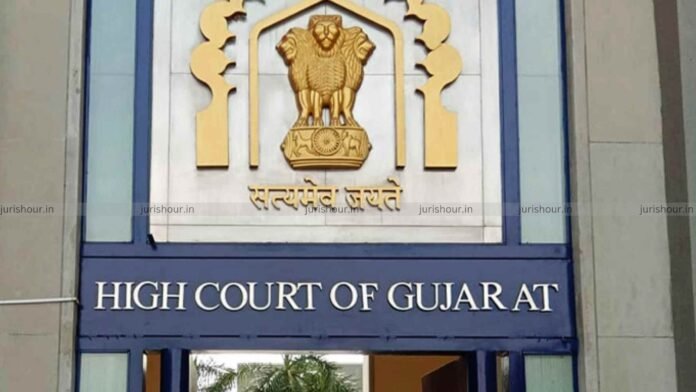
The Gujarat High Court has granted regular bail to CGST superintendent, Mukesh Kumar Manbodh Kumar in Rs. 20 lakh GST bribery case.
Reiterating the settled principle that “bail is the rule and jail is the exception,” the bench of Justice Hasmukh D. Suthar emphasized the importance of safeguarding personal liberty under Article 21 of the Constitution.
The bench passed the order while allowing a regular bail application filed under Section 483 of the Bharatiya Nagarik Suraksha Sanhita (BNSS). The applicant had been arrested in connection with an FIR registered by the Rajkot City Anti-Corruption Bureau (ACB) for offences under Sections 7(a), 12 and 13(2) of the Prevention of Corruption (Amendment) Act, 2018.
Buy Now: 130 GST Judgments – E-Magazine July 2026
The applicant was implicated in a corruption case involving an alleged demand for illegal gratification. The prosecution opposed the bail plea, arguing that the applicant had participated in making the illegal demand in conjunction with a co-accused. It also submitted that a voice spectrography test had been scheduled and expressed apprehension that the accused, if released, might avoid participating in the test, tamper with evidence or evade the trial.
Senior Advocate Mitesh Amin With Apurva N Mehta on behalf of the applicant argued that the accused had been falsely implicated and had neither demanded nor accepted any illegal gratification. It was submitted that the alleged trap had taken place at an advocate’s office and that no illegal gratification had actually been accepted by the applicant.
The defence further contended that the investigation had already concluded, the charge sheet had been filed, and nothing further remained to be recovered from the applicant. The applicant also furnished an undertaking before the Court expressing his willingness to cooperate with the investigation and appear for the scheduled voice spectrography test whenever required.
While considering the application, the High Court reiterated the settled principles governing grant of bail. The Court observed that factors such as the nature of accusations, possibility of tampering with evidence, likelihood of absconding, antecedents of the accused and the larger public interest are relevant while deciding a bail application.
The Court found several circumstances favouring the grant of bail the investigation had been completed and the charge sheet was already filed. The applicant had remained in judicial custody since 29 April 2026. No further recovery or discovery was required from the applicant. The applicant had no criminal antecedents. A written undertaking had been furnished agreeing to cooperate fully and appear for the voice spectrography test. The prosecution had failed to demonstrate any compelling reason requiring continued detention. Since the applicant was already under suspension, the apprehension of influencing the investigation was considerably reduced.
Referring to the Supreme Court judgments in Sanjay Chandra v. CBI and Gudikanti Narasimhulu v. Public Prosecutor, the High Court observed that criminal trials invariably take time to conclude and that keeping an accused in custody for an indefinite period before conviction effectively amounts to pre-trial punishment.
The Court emphasized that personal liberty guaranteed under Article 21 of the Constitution must be protected and that incarceration pending trial should not become punitive in the absence of exceptional circumstances.
The High Court directed the applicant’s release on regular bail upon furnishing a personal bond of ₹25,000 with one surety of the like amount.
The bail was made subject to several conditions, including that the applicant shall not misuse the liberty granted. He shall not tamper with evidence or obstruct the investigation. He shall surrender his passport, if any. He shall not leave the State of Gujarat without prior permission of the trial court. He shall mark his presence before the concerned police station once every month for six months. He shall furnish his Aadhaar details, email ID and residential address to the investigating officer and the trial court. He shall comply with the undertaking to appear for the voice spectrography test whenever called, failing which the trial court would be at liberty to issue a warrant and cancel the bail.
While granting bail, the High Court clarified that the observations made in the order were only for deciding the bail application. It directed that the trial court should adjudicate the matter independently and should not be influenced by any prima facie observations contained in the bail order.
Membership Required to Access Case Details & Order Copy
To view the complete Case Details and Download Order Copy, you must have an active membership. Please subscribe to continue.
Read More: JURISHOUR | TAX LAW DAILY BULLETIN : 03 AUGUST, 2026

