
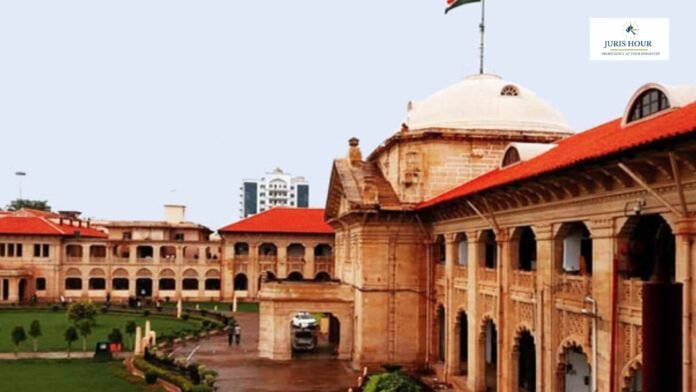
The Allahabad High Court has strongly criticised the Union Government over the continued failure to fill a substantial number of sanctioned posts in the GST Appellate Tribunal in Uttar Pradesh, observing that repeated issuance of circulars and advertisements cannot substitute for actual steps to make the statutory appellate mechanism functional.
The bench of Justice Piyush Agrawal has observed that the conduct of the concerned officers reflected a lack of requisite and effective follow-up, which could defeat the very purpose behind the Government’s decision to facilitate functioning of the GST Appellate Tribunal.
An affidavit was filed by the Joint Secretary, Department of Revenue, Ministry of Finance, Government of India. Although the Union’s Additional Solicitor General attempted to rely upon the affidavit to demonstrate that the GST Appellate Tribunals in Uttar Pradesh were fully functional, the High Court found that the contents of the affidavit did not support that assertion.
Buy Now: 80+ Income Tax Judgments | E-Magazine July 2026
Instead, the Court found that the affidavit revealed what it described as a “disturbing state of affairs” regarding the availability of officers and technical personnel required for the functioning of the Tribunals.
According to the affidavit, 86 posts at different levels for the GST Appellate Tribunal in Uttar Pradesh had been sanctioned by an order dated May 10, 2024. A further six posts were sanctioned on May 5, 2026, taking the total sanctioned strength to 92 posts.
However, only 29 posts had actually been filled, while the process for filling only six additional posts was stated to be underway. This left 63 sanctioned posts vacant.
The High Court made it clear that issuing recruitment circulars or advertisements, by itself, cannot be treated as compliance with the Government’s obligation to establish an effective statutory appellate forum.
The Court observed that what is required is “demonstrable and effective action” that ultimately results in the actual filling of vacancies. The continued existence of substantial vacancies, despite repeated administrative steps on paper, was found insufficient to demonstrate that the GST appellate mechanism was genuinely functional.
The issue assumed particular importance because the GST Appellate Tribunal is intended to provide taxpayers with a statutory forum for challenging orders passed under the GST regime. If the Tribunal lacks the officers and technical personnel necessary to operate effectively, taxpayers may be left without a meaningful appellate remedy.
The affidavit disclosed that, pursuant to a circular dated September 14, 2025, only 14 of 44 posts relating to the Benches in Uttar Pradesh could be filled, with the authorities attributing the shortfall to an inadequate number of applications.
A further circular dated August 14, 2025 was stated to have been issued. The High Court noted that the chronology itself required explanation. More significantly, the affidavit did not explain when, where and in what manner the vacancies had actually been publicised.
The Court specifically sought clarity on whether vacancy notices had been uploaded on the official websites of the Central Board of Indirect Taxes and Customs, the Department of Revenue, the State Commissioners of Commercial Tax and the Administrators of the Union Territories.
Even after another circular dated January 14, 2026, the affidavit did not explain what tangible action followed. It failed to disclose how applications were monitored, how many applications were received, what scrutiny was undertaken and why the vacancies remained unfilled.
The High Court expressed serious concern that the Government’s stated objective of facilitating an effective GST Appellate Tribunal through a hassle-free mechanism was being undermined at the implementation level.
The Bench refused to accept a formalistic approach under which successive circulars are issued without ensuring that the recruitment process actually reaches its conclusion.
According to the Court, such an approach would defeat the purpose for which the GST Appellate Tribunal was constituted and would inevitably place an additional burden on litigants by depriving them of an effective statutory appellate remedy.
The Court has directed the Joint Secretary, Department of Revenue, Ministry of Finance, Government of India, to file a fresh, comprehensive and specific affidavit before the next hearing.
The Court expressly stated that the new affidavit should not be a general or evasive response. It must provide a post-wise and Bench-wise status of all 92 sanctioned posts, identify every vacant post and specify the precise stage reached in the recruitment process.
The affidavit must further disclose the date-wise action taken for filling each vacancy and identify the authority responsible for each action.
The Court has also demanded complete details of the steps taken pursuant to the recruitment circulars dated September 14, 2025, August 14, 2025 and January 14, 2026.
The High Court has sought detailed information concerning the manner in which the vacancies were advertised and circulated.
The fresh affidavit must disclose the dates and manner in which advertisements or notices were uploaded or circulated on official websites and communicated to the relevant authorities. It must also specify the number of applications received for every post, the number scrutinised and the present status of each selection process.
The Court has additionally directed the authorities to place on record details of correspondence exchanged with the Principal Bench of the GST Appellate Tribunal and the respective Benches and authorities concerning the vacancies.
Most importantly, the Government must provide a clear, definite and time-bound schedule for filling the remaining vacancies.
Beyond asking for recruitment statistics, the Court has directed the Joint Secretary to specifically explain why such a substantial number of vacancies have remained unfilled for a prolonged period.
The affidavit must also identify the steps proposed to ensure that the recruitment exercise does not remain restricted to repeated advertisements without effective completion. The Court stressed that the affidavit must reflect actual action taken on the ground, rather than merely administrative assertions.
This direction places the focus squarely on implementation rather than procedural compliance. The High Court has effectively indicated that the authorities must demonstrate measurable progress in staffing the GST Appellate Tribunal rather than merely pointing to circulars and recruitment exercises.
The High Court has issued a clear warning regarding the next stage of the proceedings.
It has stated that if the next affidavit also fails to satisfactorily demonstrate effective and time-bound progress, the Court may require the presence of the responsible officer and consider passing appropriate further orders.
The matter has been directed to be listed on September 9, 2026, as a fresh matter along with the connected case.
Membership Required to Access Case Details & Order Copy
To view the complete Case Details and Download Order Copy, you must have an active membership. Please subscribe to continue.
Read More: Bombay High Court Quashes Reopening Of Assessment On Grounds That JCIT Did Not Sign Sanction

