
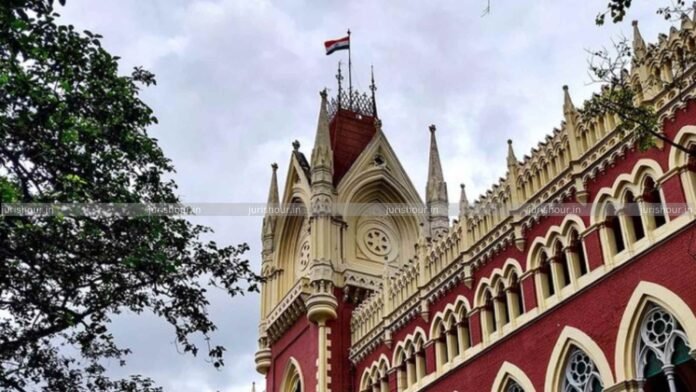
The Calcutta High Court has granted interim protection against coercive recovery in a Goods and Services Tax dispute raising a substantial question over whether the government could use Section 168A of the GST law to retrospectively extend the limitation period for passing an adjudication order under Section 73 for the financial year 2018-19.
The bench of Justice Smita Das De directed the GST authorities to unfreeze the taxpayer’s bank account within 72 hours of the payment and communication of ₹25,594, representing 10% of the disputed tax demand of ₹2,55,938.
The Court restrained the authorities from taking coercive steps against the taxpayer, subject to the stipulated deposit. It clarified that the relief was interim in nature and adjourned the proceedings until December 2026 because an identical legal issue is pending before the Supreme Court.
Buy Now: 150 + Judgments On GST – E-Compilation For August 2026
The petitioner/assessee approached the High Court challenging, among other things, the constitutional and legal validity of Notification No. 09/2023-Central Tax and the corresponding West Bengal State Notification No. 599-FT.
It was alleged that the notifications were contrary to Section 73 of the Central Goods and Services Tax Act, 2017 and the West Bengal Goods and Services Tax Act, 2017. The petitioner also contended that the notifications exceeded the power conferred on the government under Section 168A of the respective GST enactments.
The principal issue before the Court was whether the statutory deadline for passing an order under Section 73(9) for FY 2018-19 could be retrospectively extended through notifications issued under Section 168A, thereby overriding or diluting the three-year limitation prescribed under Section 73(10).
Section 73 deals with the determination of tax that has not been paid, has been short-paid, has been erroneously refunded, or where input tax credit has been wrongly availed or utilised in cases not involving fraud or wilful misstatement.
Under Section 73(10), an adjudication order must ordinarily be passed within three years from the due date for furnishing the annual return for the relevant financial year.
The petitioner argued that proceedings relating to FY 2018-19 could not ordinarily have been initiated or concluded after the expiry of the statutory limitation period.
However, relying upon notifications issued on July 5, 2022, March 31, 2023, December 28, 2023 and January 31, 2024, the GST authorities proceeded to determine the petitioner’s tax liability for the period from April 2018 to March 2019.
The petitioner submitted that Section 168A, which came into force with effect from March 31, 2020, empowers the government to extend statutory timelines only when an action cannot be completed or complied with because of force majeure.
“Force majeure” under the provision includes circumstances such as war, epidemic, flood, drought, fire, cyclone, earthquake or any other calamity caused by nature or otherwise that affects the implementation of the GST law.
According to the petitioner, the extension notifications could not be used to initiate fresh proceedings at a time when no force majeure circumstances were prevailing. It was claimed that reliance on the notifications to revive or extend the limitation period amounted to a colourable exercise of statutory power.
The petitioner consequently sought a stay on the impugned adjudication order and the resulting tax demand.
The petitioner also informed the High Court that the authorities issued a recovery notice on March 11, 2026, under Section 79(1)(c) of the GST legislation in Form GST DRC-13.
The notice resulted in the freezing of the petitioner’s bank account maintained with the Bank of India’s Dangalpara Branch.
It was argued that freezing the bank account while the challenge to the validity of the limitation-extension notifications was pending was unjust and excessively harsh. The petitioner, therefore, requested the Court to quash the recovery action and direct the immediate defreezing of the account.
The petitioner further pointed out that the question concerning the permissible scope of Section 168A is already under consideration before the Supreme Court in M/s HCC-SEW-MEIL-AAG JV v. Assistant Commissioner of State Tax and Others.
The issue before the Supreme Court in that matter is whether the deadline for adjudicating a show cause notice and passing an order under Section 73 for FY 2019-20 could validly be extended through notifications issued under Section 168A.
The State authorities opposed the writ petition and questioned its maintainability.
Senior counsel appearing for the State submitted that the petitioner had approached the High Court at a belated stage on June 8, 2026, after the expiry of the statutory period available for filing an appeal under Section 107 of the GST law.
The authorities argued that the petitioner had an efficacious alternative statutory remedy in the form of an appeal, which could have been filed upon depositing 10% of the disputed tax.
It was further submitted that Section 168A validly empowered the government to extend limitation periods due to disruptions caused by the COVID-19 pandemic. The extension notifications were defended as valid pieces of delegated legislation that were procedural, rather than substantive, in nature.
The State consequently sought an opportunity to file an affidavit in opposition to the petition.
After hearing the parties and examining the available material, the High Court observed that it was prima facie satisfied with the petitioner’s submissions and that interference was warranted at the interim stage.
The Court found that a substantial question of law had been raised regarding the scope of Section 168A and its effect on the limitation period prescribed under Section 73(10) for FY 2018-19.
Justice Das De also referred to the decision of a coordinate Bench in Ajay Kumar Jaiswal v. Assistant Commissioner, State Tax and Others, where limited interim protection had been granted in a similar matter.
In that case, the coordinate Bench had taken note of the jurisdictional challenge, the existence of a prima facie case and an earlier interim order passed in OSL Exclusive Private Limited v. Union of India and Others.
Considering that the same legal issue is pending before the Supreme Court, the Calcutta High Court decided to adjourn the present petition until December 2026.
The Court said that keeping the proceedings pending would avoid the possibility of conflicting judicial decisions on the validity of the limitation extensions issued under Section 168A.
Pending further consideration, the GST authorities have been restrained from initiating or continuing coercive recovery measures, provided the petitioner deposits ₹25,594, being 10% of the disputed tax demand.
The Court expressly directed that the attached bank account must be defreezed within 72 hours after the authorities are satisfied about the payment and the payment is communicated to the concerned respondent.
The respondents have been granted six weeks to file their affidavit in opposition. The petitioner may file a reply within four weeks thereafter.
Membership Required to Access Case Details & Order Copy
To view the complete Case Details and Download Order Copy, you must have an active membership. Please subscribe to continue.

