
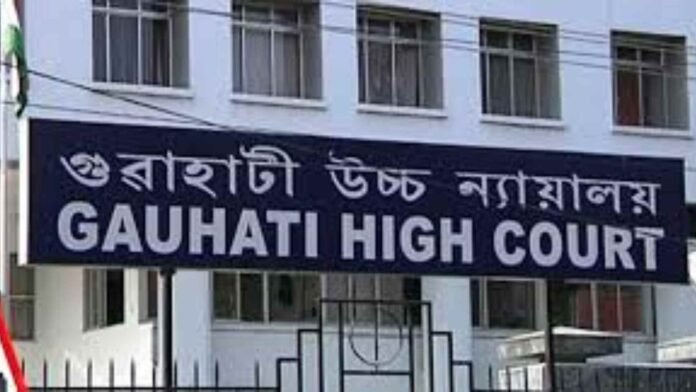
The Gauhati High Court has granted further interim protection in a GST dispute involving a demand of over ₹12.34 crore, while holding that if the company files its statutory appeal within 21 days, the appellate authority must entertain it without raising the issue of limitation.
The Bench of Chief Justice Ashutosh Kumar and Justice Arun Dev Choudhury declined to examine the merits of the dispute in writ jurisdiction, observing that the issues raised by the taxpayer could be effectively decided by the statutory appellate authority.
The petitioner/assessee is a company engaged in manufacturing and supplying road construction materials under the brand name “Bitchem” and registered under GST in several States, received a single consolidated show cause notice dated June 25, 2025 under Section 74 of the CGST Act covering three financial years—2018-19, 2019-20 and 2020-21. The notice was based on findings of a Central Excise Revenue Audit, which allegedly identified discrepancies between the turnover declared in GSTR-9 and the audited figures reflected in GSTR-9C.
Buy Now: GST Judgements E-Compilation – June 2026
The notice alleged a turnover mismatch of approximately ₹68.59 crore and proposed recovery of about ₹12.34 crore towards GST, along with applicable interest and penalty.
The company challenged both the show cause notice and the adjudication order on several grounds.
It contended that no scrutiny notice in Form GST ASMT-10 under Section 61 of the CGST Act had been issued before initiation of proceedings under Section 74. It further argued that the audit materials forming the very basis of the proceedings were never supplied to it, despite repeated requests. The company also asserted that although it had submitted a detailed reply, no effective personal hearing was granted before the adjudication order was passed.
Despite these objections, the adjudicating authority passed a consolidated order dated November 28, 2025, confirming the entire demand.
The taxpayer thereafter approached the High Court seeking to challenge both the show cause notice and the adjudication order directly under Article 226 of the Constitution.
However, the Single Judge declined to adjudicate the merits and instead granted liberty to pursue the statutory appellate remedy. The Court also directed that if the appeals were filed within the stipulated period, they should be decided on merits without rejecting them on the ground of limitation. Interim protection granted during the writ proceedings was directed to continue until consideration of the stay applications by the appellate forum.
Before the Division Bench, the appellant argued that several important legal questions warranted adjudication in writ jurisdiction, including Whether a proper officer can issue a single consolidated show cause notice and adjudication order covering multiple financial years under Sections 73 or 74 of the CGST Act. Whether proceedings could validly be initiated solely on the basis of a Central Excise Revenue Audit, particularly when such audit allegedly lacked jurisdiction over a private company. Whether issuance of a notice under Form GST ASMT-10 was mandatory before invoking Section 74. Whether the Single Judge ought to have decided these jurisdictional and procedural issues instead of relegating the taxpayer to the appellate remedy.
The appellant also argued that the proper officer had failed to independently apply his mind before issuing the demand notice and that the Single Judge had not addressed these substantive challenges.
After hearing both sides, the Division Bench held that all the issues raised by the company could be effectively examined by the statutory appellate authority under Section 107 of the CGST Act.
The Court noted that the Single Judge had already granted liberty to file an appeal beyond the normal limitation period and had also ensured continuation of interim protection until disposal of the stay application. It found no reason to interfere with that approach except to modify the timeline for filing the appeal.
Modifying the earlier order, the Division Bench directed that if the taxpayer files its statutory appeal within 21 days from July 20, 2026, the appellate authority shall entertain the appeal without insisting on limitation.
The Court further ordered that no coercive steps shall be taken against the company until its stay application is decided by the appellate authority, thereby extending interim protection available to the taxpayer.
Membership Required to Access Case Details & Order Copy
To view the complete Case Details and Download Order Copy, you must have an active membership. Please subscribe to continue.
Read More: GSTAT Special Bench to Decide Whether Delay Beyond S. 107 Time Limit Can Be Condoned

