
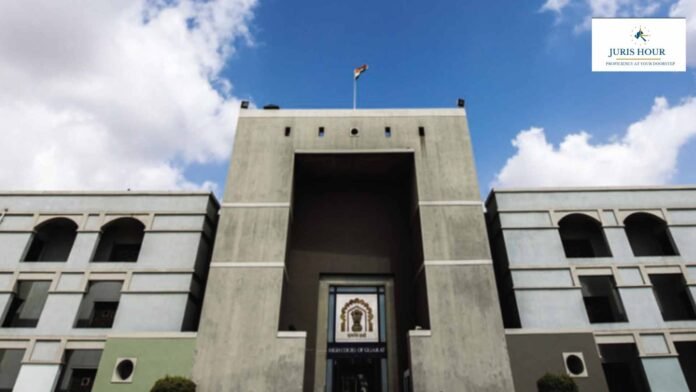
The Gujarat High Court has held that an assessee cannot be denied the benefit of the Direct Tax Vivad Se Vishwas Scheme, 2024 merely because the tax dispute had some connection with a search operation, where the final reassessment proceedings were based on survey material under Section 133A of the Income Tax Act rather than a search under Section 132.
The bench of Justice Vaibhavi D. Nanavati quashed the Income Tax Department’s rejection of declarations filed under the Scheme and directed the authorities to process them within six weeks.
The case arose after the Income Tax Department rejected declarations filed under the Direct Tax Vivad Se Vishwas Scheme, 2024 for Assessment Years 2015-16 and 2016-17. The Department relied on Section 96(a)(i) of the Scheme, which excludes certain disputes arising from assessments made on the basis of search proceedings under Sections 132 or 132A of the Income Tax Act.
The assessee challenged the rejection before the Gujarat High Court, arguing that the proceedings ultimately pending in appeal were not based on search action but on survey material collected under Section 133A of the Act.
The controversy traces back to search and survey actions conducted by the Income Tax Department on the premises of another group. During those proceedings, authorities alleged that the assessee had received accommodation entries and initiated proceedings under Section 153C of the Income Tax Act.
However, the assessee objected to the initiation of proceedings under Section 153C, and the Department itself dropped those proceedings through an order dated December 24, 2019. Thereafter, the assessment was reopened under Section 147 of the Act. The assessee challenged the reopening and subsequently filed an appeal before the first appellate authority.
While the appeal was pending, the Direct Tax Vivad Se Vishwas Scheme, 2024 was introduced with the objective of reducing pending tax litigation. The assessee filed Form-1 on December 31, 2024 seeking settlement under the Scheme. The declaration was rejected on May 16, 2025 on the ground that the dispute was linked to search proceedings.
The assessee contended that the Department had incorrectly applied Section 96(a)(i) of the Scheme. According to the assessee, once proceedings under Section 153C—which directly relate to search actions under Section 132—were dropped, the reassessment proceedings that survived were based on survey material under Section 133A and were carried out under Section 147.
Therefore, the case no longer fell within the exclusion clause applicable to search-based assessments, making the assessee eligible for the Scheme.
The department argued that the survey action was not an independent exercise but was integrally connected to the search operation. It submitted that incriminating material discovered during the search and survey established the assessee’s involvement in accommodation entries and that statements recorded during the investigation supported the allegations.
On this basis, the Department maintained that the case remained covered by the exclusion contained in Section 96(a)(i) of the Scheme.
After examining the record, the High Court noted that proceedings under Section 153C were specifically dropped by the Department itself. The Court further observed that the subsequent reopening under Section 147 was justified by the Revenue on the ground that the earlier Section 153C proceedings had been wrongly initiated because the material relied upon was derived from a survey under Section 133A rather than a search under Section 132.
The Bench referred to the Department’s own order, which acknowledged that the Section 153C proceedings were incorrectly initiated because they were based on impounded survey material rather than seized search material. Consequently, reassessment proceedings were restarted under Section 147.
The Court placed considerable emphasis on the wording of Section 96(a)(i) of the Vivad Se Vishwas Scheme. It observed that the provision excludes only those assessments that are made under specified sections and are based on searches initiated under Sections 132 or 132A of the Income Tax Act.
Importantly, the Court noted that Section 133A, which governs survey proceedings, does not find any mention in the exclusion clause. Therefore, there is no statutory bar preventing a taxpayer from availing the Scheme where the assessment is based on survey material.
According to the Bench, the Revenue could not artificially merge proceedings arising from a search with proceedings arising from a survey to deny the statutory benefit available under the Scheme. If Parliament intended to exclude survey-based cases, it would have expressly incorporated such a restriction in Section 96.
The Court further emphasized that the legal consequences of a search under Sections 132 or 132A are far more severe than those of a survey under Section 133A, and the two cannot be treated as equivalent in the absence of clear legislative language.
Allowing the writ petitions, the Gujarat High Court quashed the orders dated May 16, 2025 rejecting the declarations filed under the Direct Tax Vivad Se Vishwas Scheme for Assessment Years 2015-16 and 2016-17. The Court directed the Income Tax Department to accept the declarations and issue the requisite statutory forms within six weeks from receipt of the judgment.
Membership Required to Access Case Details & Order Copy
To view the complete Case Details and Download Order Copy, you must have an active membership. Please subscribe to continue.

