
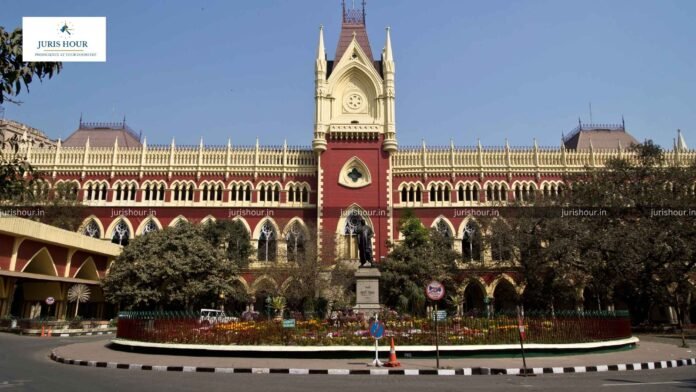
The Calcutta High Court has dismissed the Income Tax Department’s appeal against the deletion of a ₹9.32 crore addition arising from the sale of unlisted equity shares, holding that suspicion and general allegations about shell companies cannot justify treating the sale proceeds as unexplained cash credits without supporting evidence.
A Division Bench of Justice Rajarshi Bharadwaj and Justice Sudip Deb held that the department had failed to demonstrate any legal error or perversity in the Income Tax Appellate Tribunal’s findings.
Buy Now: Direct tax (Income Tax) E-Magazine September 2026
The bench dismissed the appeal at the admission stage, concluding that no substantial question of law arose under Section 260A of the Income-tax Act, 1961.
The Assessing Officer had added ₹9,32,00,000 under Section 68 of the Income-tax Act in respect of consideration received from the sale of unlisted equity shares.
The department alleged that the purchasers were shell or paper companies, lacked genuine business activity and financial capacity, and had provided accommodation entries. It maintained that the nature and source of the credits remained unexplained.
However, the Kolkata “D” Bench of the Income Tax Appellate Tribunal deleted the addition through its order dated September 16, 2025, in ITA No. 726/Kol/2025. The Principal Commissioner of Income Tax-2, Kolkata challenged that decision before the High Court.
The Department argued that the Tribunal had placed undue reliance on documents and banking transactions without properly examining the surrounding circumstances.
According to the Revenue, merely submitting documents and receiving money through banking channels did not establish the genuineness of the share sales. It also contended that acceptance of the investments in earlier assessment years could not prevent the Assessing Officer from scrutinising the sale consideration received in a subsequent year.
The Department relied on the Calcutta High Court’s decision in Principal Commissioner of Income Tax v. Swati Bajaj, reported in [2022] 446 ITR 56, and argued that the Tribunal had failed to apply the test of human probabilities when examining the alleged accommodation entries.
The High Court noted that the Tribunal’s decision rested on a wider evidentiary record.
The company had furnished purchase and sale bills, investment statements, bank statements, purchaser confirmations, income-tax returns, addresses, audited financial statements and other particulars concerning the purchasing entities.
The Tribunal had also recorded that notices issued to the purchasers under Section 133(6) had been answered. The Assessing Officer had not displaced the company’s supporting material through independent and substantive evidence.
Further, the Tribunal considered the company’s regular activity of purchasing and selling investments, the movement of those investments over the years, receipt of sale proceeds through banking channels, and the fact that the investments had not been doubted in earlier scrutiny proceedings.
On the cumulative evidence, the Tribunal concluded that the Revenue had not established that the entire sale consideration constituted unexplained cash credit.
The High Court explained that the applicability of Section 68 depends on the nature of the credit and the material available for the particular assessment year.
An assessee must explain the nature and source of a credit, and that explanation must be tested against the entire evidentiary record. Although the Assessing Officer must consider surrounding circumstances and human probabilities, those principles cannot justify an addition based on suspicion, generalised allegations or unsupported inferences.
The Court found that the Revenue had not shown that the Tribunal applied an incorrect legal test or overlooked any material evidence.
Its allegation that the purchasers were shell or paper companies was not accompanied by independent material establishing that the particular sale proceeds represented the company’s own undisclosed money. In these circumstances, the Department’s challenge effectively sought a fresh appraisal of the facts.
Addressing the Revenue’s reliance on Swati Bajaj, the Court clarified that the judgment does not establish that every sale of unlisted shares, or every transaction involving a company alleged to be a shell entity, must automatically be treated as bogus.
The principles in that decision require a holistic examination of the evidence and surrounding circumstances. The Bench found that the Tribunal had undertaken that exercise in the present case.
Whether the documents established the purchasers’ identity and creditworthiness, whether their responses were reliable, and whether the circumstances justified an inference of accommodation entries were essentially factual questions, the Court held.
The Bench also clarified that acceptance of an investment in an earlier assessment does not create an absolute bar against examining its subsequent sale.
Nevertheless, earlier acceptance remains relevant when the Revenue later alleges that the investments were fictitious from their inception.
In this case, the Tribunal had not treated the earlier assessments as a legal estoppel. It considered them alongside the books of account, investment statements, sale documents, bank records, purchaser confirmations and replies to statutory notices.
The Revenue’s objection on this ground therefore did not raise a substantial question of law.
The Court emphasised that Section 260A does not confer general appellate jurisdiction to reassess evidence or replace a plausible view taken by the Tribunal, which is the final fact-finding authority.
A factual finding may warrant interference where it is based on no evidence, ignores material evidence, proceeds on an inadmissible basis, or reaches a conclusion that no reasonable tribunal properly instructed in law could have reached.
Merely framing factual objections as questions of law does not satisfy this threshold. The Bench found that the Revenue had not demonstrated any such defect in the Tribunal’s decision.
Accordingly, the High Court dismissed the appeal at the admission stage, leaving the deletion of the ₹9.32 crore addition undisturbed. The connected application was disposed of, with no order as to costs.
Membership Required to Access Case Details & Order Copy
To view the complete Case Details and Download Order Copy, you must have an active membership. Please subscribe to continue.

